 Study Guide
Social Studies Chapter 6
|
Social Studies Chapter 6 |
| 1. In most New England towns the meeting
house was used as a place of worship and a place of government.
2. Town meetings were used to make laws and decisions about town workers. 3. Market towns helped farmers by giving them a place to trade their crops for good and services. 4. Britain, Africa, and North America were three points of the "Triangle Trade Route." 5. Whaling and shipping contributed the most to the growth of port cities on the Atlantic coast. 6. Apprentices were young people who learned to do skilled jobs. 7. Planters owned most of the land in the Southern colonies. 8. Most early Southern plantations were built along waterways. 9. Southern plantation owners used their crops rather than money to get goods and services. 10. Planters often used British brokers to sell their farm products back in England. 11. Indentured servants had to work for a set period of time without pay. 12. The Fundamental Orders adopted by the Connecticut colony was the first written system of government in North America. 13. The daughters of planters were taught to read and sew. 14. There were few schools in the Southern plantations because they lived so far apart. 15. In Greenhorn on the Prairie, Harry and Sukey worked hard to build a wilderness farm. Part 2 - Using a Product Map - see text pages 194-195 Part 3 - Be able to restate how the following words or phrases are associated with water transportation:
Part 4 - Identify 5 items imported into the British colonies
- Identify 5 items exported from the British colonies
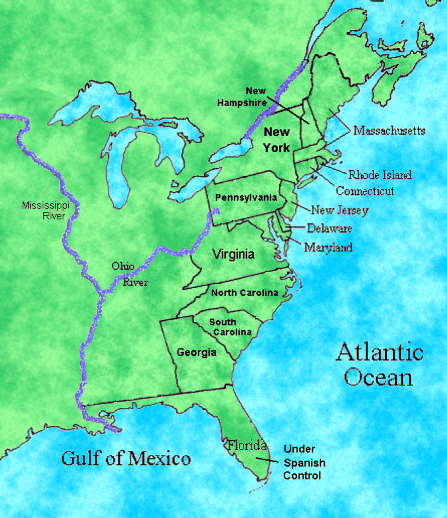
Part 6 - Be able to identify the 13 British colonies, using abbreviations, and classify them into their respective regions, (New England, Middle, Southern colonies) The map link below will help you with this part.
|