|
(Notophthalmus viridescens)
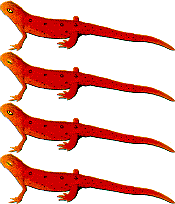
The Red Eft or red spotted newt is highly toxic (we didn't know that when we picked it up!) They are found from South Ontario to Novia Scotia, south through east Texas and Florida. Its habitat is weedy lake shallows and ponds, backwaters of slow moving streams and swamps. The red-spotted newt is an amphibian. Amphibians spend part of their life in water and part of it on land. They have moist, scaleless skin and lay jelly-covered eggs. When it is in the water stage it is colored dark green with dark red spots. When it is in the land stage it is more of a light orange. The red-spotted newt is 3-5" long. It has a brown back with red spots encircled by black and its stomach is yellow to orange. Young newts are called efts and have bright red, rough skin. The newt has small eyes because it hunts its food in water and uses not only sight, but also smell and taste. The red-spotted newt has fingers and toes that are the most sensitive part of the newt for touch. The pupil of its eye is horizontal, which is best to see in daylight. The red-spotted newt moves fast in the water using its fin-like tail, but it walks slowly on land. The skin of the newt is brown and dark yellow. This helps it blend into the aquatic underbrush. The skin is also slimy and helps to protect the newt from drying up. The red-spotted newt attracts its mate with its bright red spots. The red-spotted newt eats worms, insects, spiders, snails, and slugs. They slowly approach their food and then quickly grab it with their mouth. The red-spotted newt is eaten by birds, mammals, fish, and even other amphibians. The red-spotted newt eats small insects such as flies. The red-spotted newt is toxic. Its bright color warns predators that it is inedible. All newts and many salamanders return to the water in the spring of each year. Females lay from 200 to 400 eggs, which hatch in 20-35 days. Within 3 months the larvae transform into a terrestrial, immature stage called the red eft, which lasts for three years but in some cases the larvae turn directly into adults. A similar species is the red salamander. A cousin of the red-spotted newt is the California newt. One-hundredth of a gram of its poison can kill 7000 mice. Want to color a picture of one? go here
|