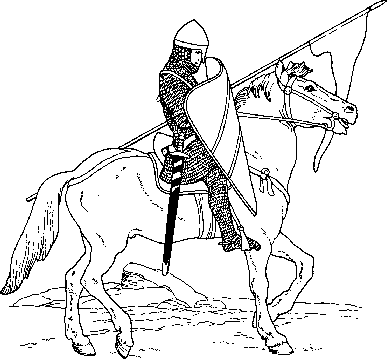
Chivalry was born out of the tremulous years just prior to the Norman invasion of William the conqueror in 1066. It was during these years that mounted soldiers ruled the countryside by virtue of their might. This was the days prior to the feudal system. Great men acquired lands through either inheritance or conquest. The people who lived on the land were considered part of the land itself. These warriors would defend their property and if they felt the need, would attack those lands around them to either increase their wealth or to revenge an attack. These warriors had little or no accountability. They would just as soon attack a church as another warrior�s lands. To a large extent, they each did what they wanted to, fearing only a greater or more powerful lord that they might affront.
To this barbaric estate of being the church finally intervened. Two papal decrees were issued threatening excommunication to those that waged war against the church and also to those that behaved barbarically. The latter decree was very subjective. Slowly the anarchy began to give way as the warrior class began to police themselves somewhat. Dukes, Earls, and Barons began to develop a formal aristocracy. Knighthood, Which had at once been open to any warrior who could afford the horse and weapons of his trade, became part of the nobility. A loose set of rules began to develop to govern the conduct of knights and nobles. These rules were in large part initiated by the church in an effort to curb the warriors appetite for fighting.
The word �chivalry� is derived from the French word for horse or horsemen. Chivalry was the term that came to be associated with the code by which the �horsemen�, or knights, lived. There is no absolute code of chivalry in writing from the Middle Ages although a general body of rules can be drawn from different writings of the period. These general principles of knightly conduct have been restated below into a Code of Chivalry for the 21-Century Man.
Code of Chivalry
1. A noble is Generous - (one who practices �largesse�) A Knight is keenly aware of the needs of those around him and shares what God has blessed him with.
2. A noble is Pure - His thoughts, deeds, motives and language pure.
3. A noble is Honest - even at his own expense. He does not lie, cheat, steal or deceive.
4. A noble is Valiant - He accepts legitimate challenges and makes a stand for what is just and Godly.
5. A noble is Loyal - first to Jesus, then his family, church, household and friends, even when doing so it may cost him dearly.
6. A noble is truly Genteel - being courteous to all no matter what their profession, ethnicity, gender or age may be.
7. A noble is Obedient - and faithful first to Christ his King and then to those placed in authority over him.
8. A noble is Spiritual - taking Christ as his Savior and striving daily to serve him in body, mind and spirit.
|
|
Standard Disclaimer