This 'paper' explains the key ideas of the iso13584_g_m_iim_schema from PLIB's part 24. PLIB is short for Parts Library, which is the common term used to refer to ISO 13584 an International Standard for the computer-interpretable representation and exchange of part library data. PLIB provides a neutral mechanism for transferring parts library data suitable for the exchange of files containing parts, implementing databases of parts library data, and sharing databases of parts library data.
The iso13584_g_m_iim_schema is defined using the EXPRESS language, which is itself defined in an International Standard, ISO 10303-11. Unfortunately, the EXPRESS language has not become widely used, and although it has implementations in several industries and countries around the world, it is still difficult (or expensive) to find experts to help write software to support data schemas in EXPRESS. One of the drawbacks to EXPRESS is that its syntax was designed to be easily parsed by computers, which makes it a little harder for humans to interpret. This paper is intended to help those who are interested in understanding the iso13584_g_m_iim_schema to more quickly find the important EXPRESS entities and entity relationships. Furthermore, this paper attempts to explain these entities and relationships in a manner that does not require a deep understanding of the EXPRESS language.
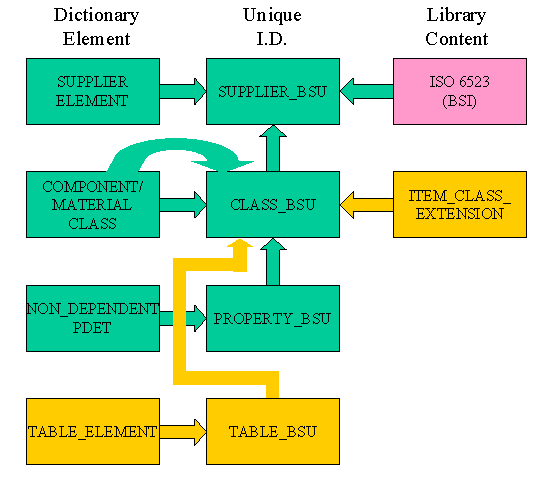
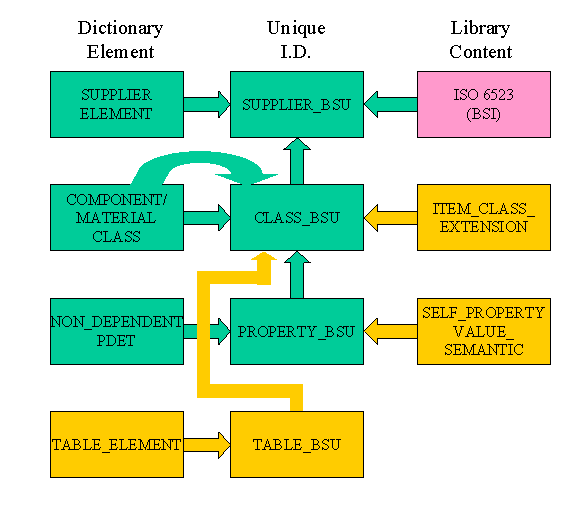
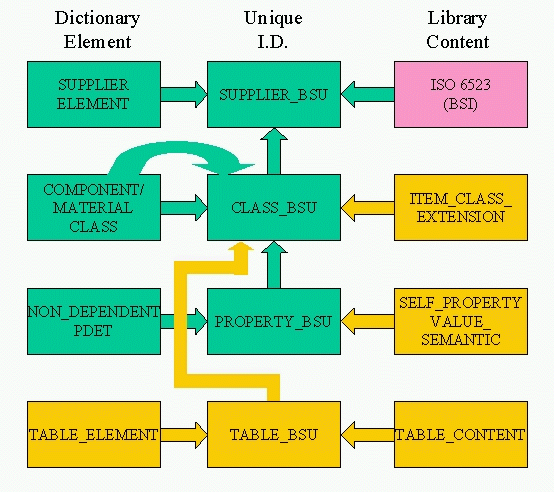
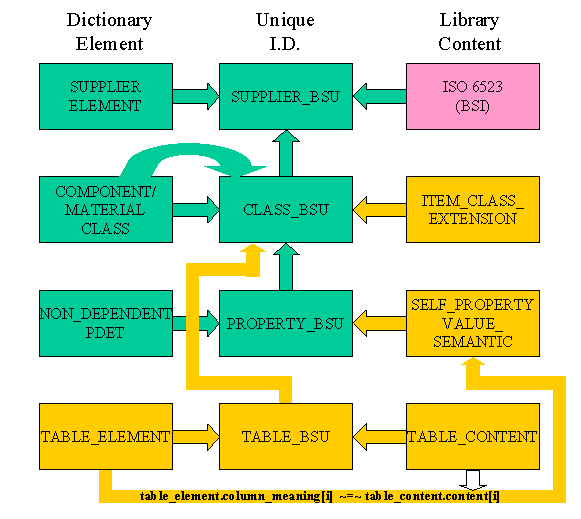
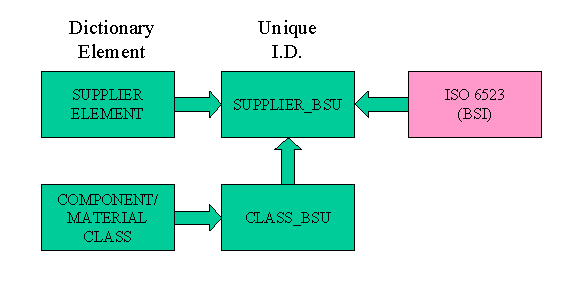
The following figure shows the 11 important EXRESS entities from the iso13584_g_m_iim_schema that will be discussed in this paper along with 14 data relationships and a reference to ISO 6523 that will also be explained.
NOTE: The boxes and two of the arrows in the figure are hyperlinked to other parts of this document.
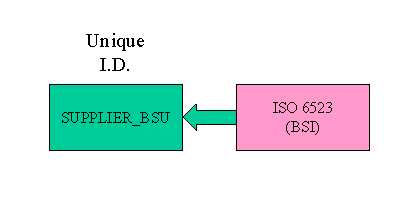
From the Introduction to "Data interchange - Structure for the identification of organizations"
"The increased use of data processing and telecommunications capabilities in commercial, governmental and other applications has made possible the interchange of data in an effective machine-readable and machine-processable form. As this type of automated interchange increases, the need for International Standards covering data also increases and becomes more apparent. This International Standard covering identification of organizations is one of a number of International Standards that have been developed as a means for improving the accuracy and effectiveness of data processing and data interchange.
In the development of this International Standard, it was recognized that a single method for identifying all organizations on an international basis was neither feasible nor practicable. Instead, this International Standard recognizes existing methods of identification and provides a means for systematically incorporating these in a uniform structure for the purpose of data interchange. In this International Standard an organization may be identified by more than one coding method."
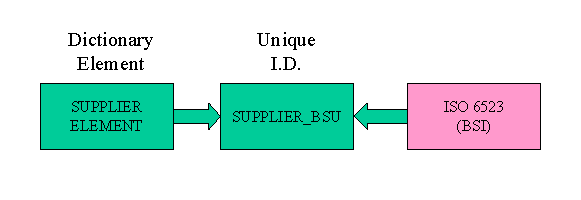
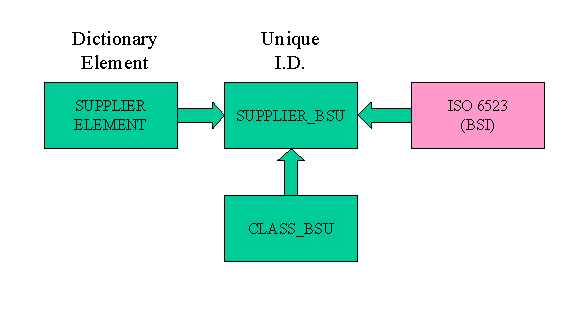
Basically, ISO 6523 defines a four-digit ICD code to identify a registration authority and a 14-character Organization code to identify an organization according to the rules of the registration authority. ICD=0060 indicates Dun and Bradstreet, so by stripping out the dashes and spaces from your companies DUNS number and adding the prefix 0060, you can uniquely identify your organization world wide. PLIB part 26 requires a single slash to separate the ICD code from the Organization code. PLIB part 42 and part 24 store this 'magic number' in the supplier_code of the supplier_bsu element. For example the DUNS number for the Naval Surface Warfare Center-Carderock Division is 05-066-9001, so a supplier_code of 0060/050669001 uniquely identifies my organization worldwide.
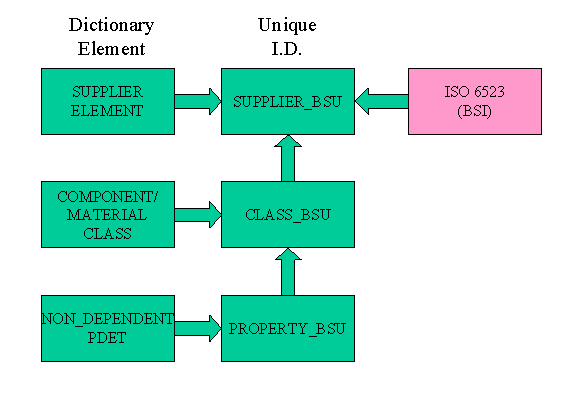
See the Icon View for Property_BSU
EXPRESS Entity View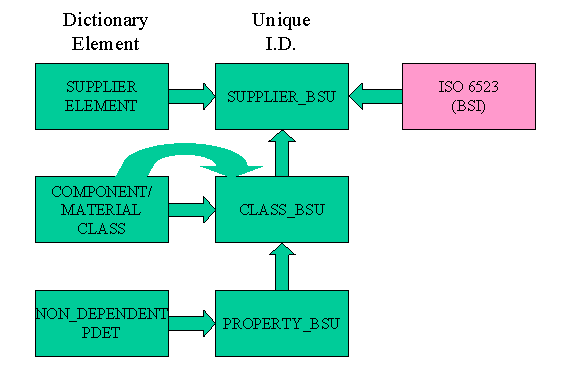
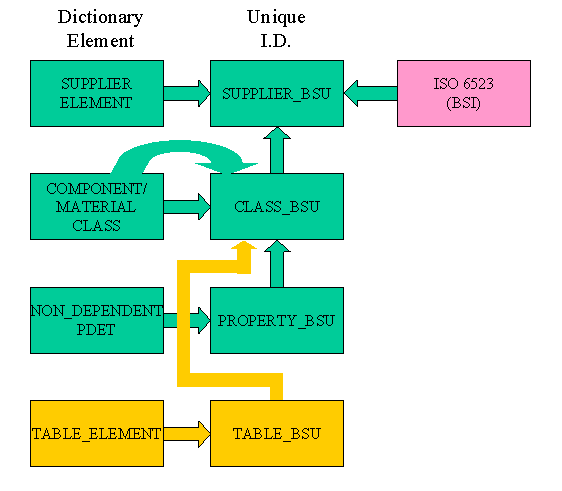
See the Icon View for Table_BSU
EXPRESS Entity View