 |
|
|
|
|
|
|
|
|
|
|
|
|
|
|
|
|
|
|
|
|
|
|
|
|
|
|
|
|
|
|
|
|
|
|
|
|
|
|
|
|
|
|
|
|
|
|
|
|
|
|
|
|
|
|
|
|
|
|

|
|
|
|
|
|
|
|
|
|
|
|
|
|
|
|
 |
|
 |
|
|
|
|
|
|
|
|
|
|
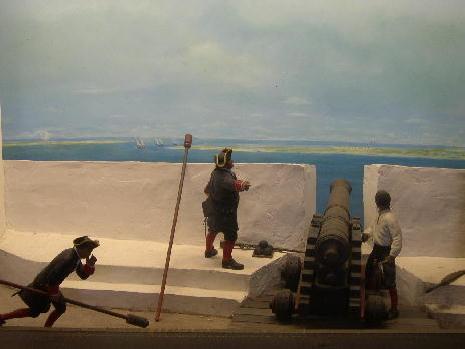
Painting of soldiers preparing to fire one of the guns
|
|
|
|
|
|
|
|
|
|
|
|
|
|
Oyster shell was burned to make lime. Lime plus sand and water made mortar. Tabby was made by mixing oyster shells and crushed coquina with lime mortar, sand and water. This mixture served as concrete to cover the gun deck floor.
|
|
|
|
|
|
|
|
 |
|
 |
|
|
|
|
|
|
|
|
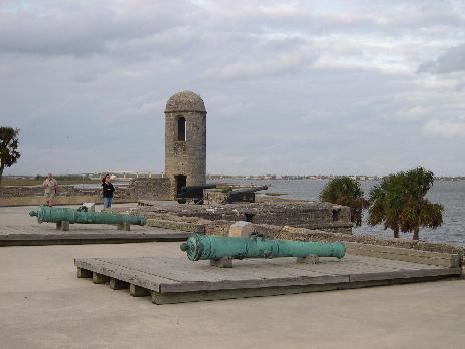
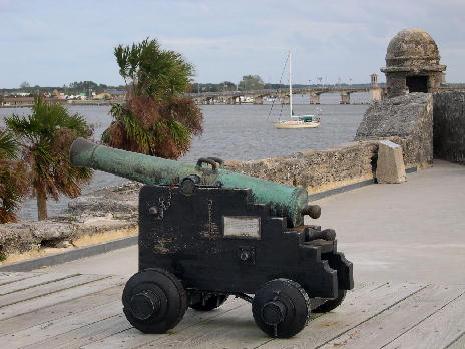
Plaque at the fort:
"Although the Castillo's high walls and moat were a substantial obstacle to anyone trying to capture the fort, the cannon here on the gun deck (or terreplein) were the real strength of the fort. With a range of over a mile, the cannon could strike at ships in the harbor as well as soldiers on land. The Spanish kept the land cleared of trees for 250 yards beyond the fort so that approaching troops had no natural cover or protection. In 1763, the fort had 77 guns."
|
|
|
|
|
|
|
|
|
|
 |
|
|
|
|
|
|
|
|
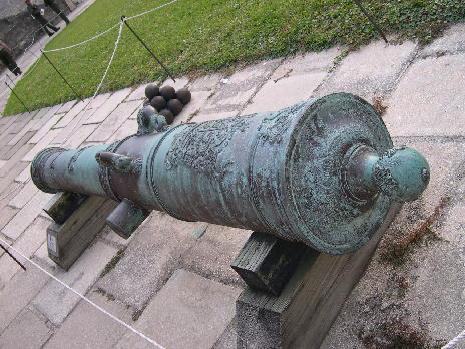
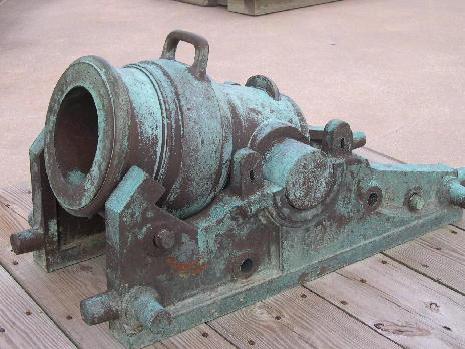
Plaque at the fort:
"Bronze 15-inch mortar, constructed in Barcelona, Spain 1724. This weapon, captured by the United States during the Spanish American War in 1898, is part of the Yale University Art collection. It was placed on indefinite loan to the Castillo de San Marcos in 1971. Maximum range: 2100 yards, 1.2 miles"
|
|
|
|
|
|
|
|
|
|
|
|
|
 |
|
|
|
|
|
|
|
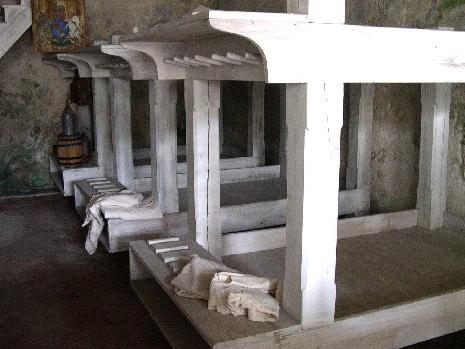
Inside the fort where soldiers slept
|
|
|
|
|
|
|
|
|
|
|
|
|
|
|
|
|
|
RIPLEY'S BELIEVE IT OR NOT
|
|
|
|
|
|
|
|
|
|
 |
|
|
|
|
|
|
|
William Horton, one of the co-owners of Standard Oil, originally built Castle Warden to house his fourteen kids. During World War II, the building became a hotel. Each winter, Robert Ripley would sail his Chinese junk boat into the Matanzas River, disembark and stay in the hotel. When he died in 1949, his family bought the hotel and, in 1950, opened the first Ripley's Believe It or Not Museum. There are now over thirty such museums world wide, "filled with the extreme, exotic, mystical and amazing from around the world."
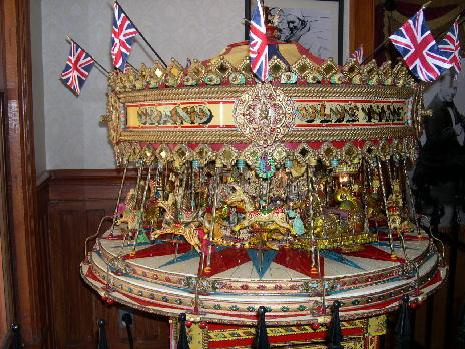
The carousel to right is one of the more normal looking items in the museum. Much is gross, outlandish, or just weird.
|
|
|
|
|
|
|
|
|
|
|
|
|
|
|
|
|
|
HENRY FLAGLER'S INFLUENCE ON ST. AUGUSTINE
|
|
|
|
|
|
|
|
|
|
|
|
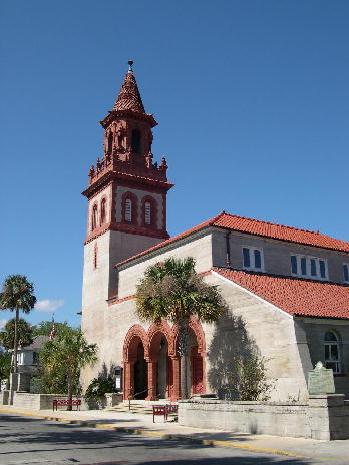
Henry Flagler first came to St. Augustine in the winter of 1883 with his second wife Alice Shourds Flagler for their honeymoon. He was co-owner of Standard Oil. He fell in love with the town and envisioned what a great tourist town it could be for New Yorkers who might want to escape the cold northern winters. The piece of land Flagler wanted for his hotel was occupied by the Methodist Church. Being an astute business man, he worked out a deal whereby he swapped land with Grace United Church and paid for their new church building to be constructed on the new site.
|
|
|
|
|
|
|
|
|
|
 |
|
|
|
|
|
|
|
|
The architectural style of the Methodist church is Spanish Renaissance Revival. The mahogany doors weigh over 800 pounds each. It is one of the first buildings to use the poured concrete method.
|
|
|
|
|
|
|
|
|
|
|
|
|
|