 |
| The MINICOOPER |
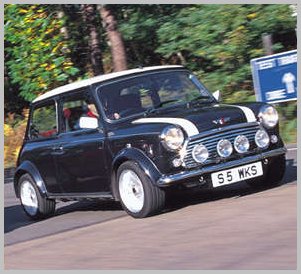
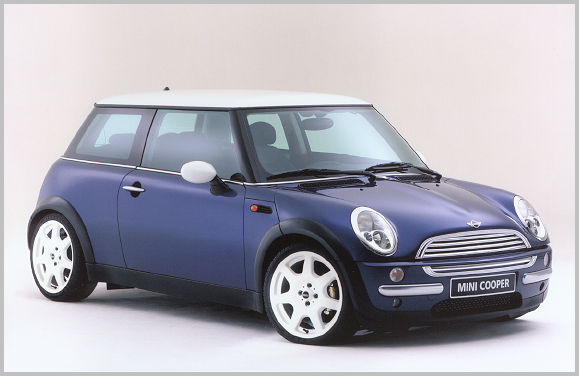
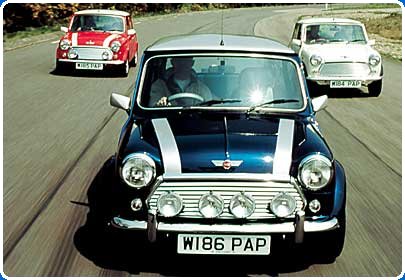
In the late 1980s, John Cooper Garages was supplying Cooper conversion kits to a new generation of Mini enthusiasts, especially in Japan. This clearly demonstrated that there was growing demand for a Mini Cooper with the same performance and kudos as the original. John Cooper Garages worked alongside Rover to re-engineer the A series engine in a way which would justify its Cooper badging, first developing the 1275cc carburettor version and then the 1.3 injection model. The relaunch of the Mini Cooper was an immediate success. With S, and then Si, conversion packs available from John Cooper Garages, followed by the introduction of a completely new Mini Cooper S, then Grand Prix, Cooper S Touring, Sport 5, Cooper 'S' Works, Cooper SE and Cooper Sport SE, the Mini Cooper S variants again proved to be the fastest, biggest-little car in the world today. |
|
 |
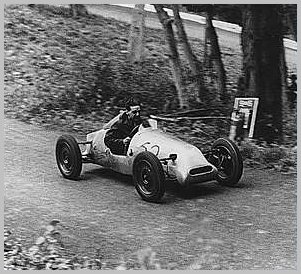
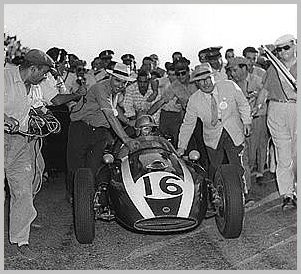
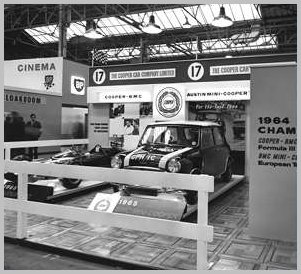
| It has been fifty years since Charles Cooper and his son John founded the Cooper racing name that was to become synonymous with the now famous Mini Cooper. Working from a small BMC garage in Surbiton, they initially designed and built the famous Formula III Cooper 500, the first racing car with a rear-mounted engine which went on to win many Championships with legendary names like Stirling Moss behind the wheel. The Cooper Car Company expanded through the late 1940s and early 1950s and continued to produce race winning cars. The Company consolidated and built upon its early successes with Formula III, going on to be successful in Formula II and sports car racing before ultimately reaching the pinnacle of racing in Formula I. With Jack Brabham driving, Cooper Cars won the World Championship twice - in 1959 and 1960. The era of the rear-engined racing car, pioneered by John Cooper, and the pedigree of the Cooper name, was established and here to stay. Coopers had by now enjoyed great success in nearly every racing formula. |
 |
 |
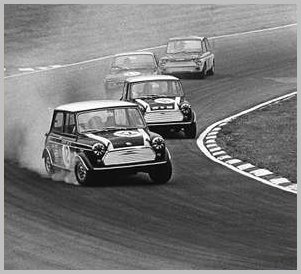
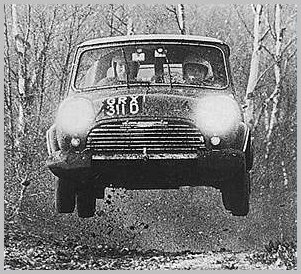
| It was not long before the racing potential of the recently-launched Mini was realised. With the blessing of Sir Alec Issigonis, the car was soon re-engineered for saloon car racing and rallying. The Mini Cooper was more successful than anyone would have believed possible, becoming the first British car to win the European Rally Championships while taking the chequered flag at the Monte Carlo Rally three times. The Cooper name was by then firmly and irrevocably linked to the Mini. It became an icon of the swinging sixties with film stars, royalty, pop and rock stars all clambering to get their hands on this famous little car. BMC went on to produce 150,000 Mini Coopers until production finally ceased in 1971. |
 |
 |
 |
 |
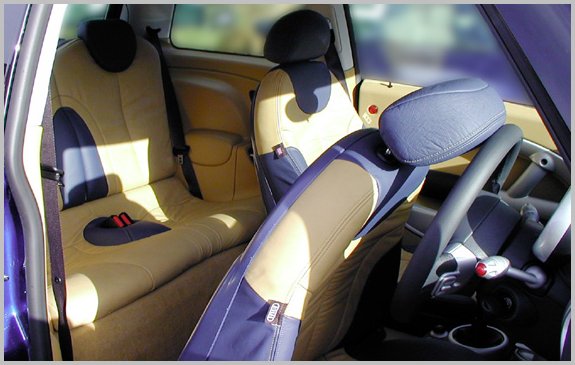 |
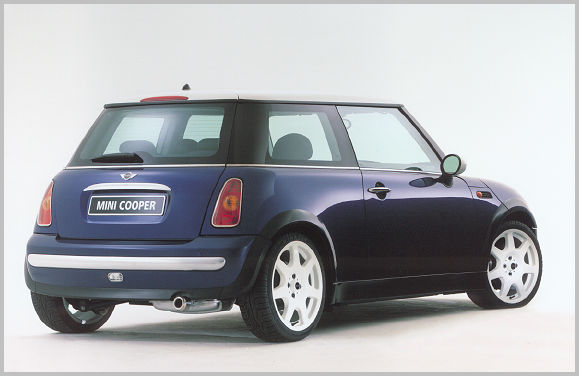
| 2000 saw the last of the Classic Mini's roll off the production line, with the new BMW MINI Cooper launched in July 2001. |
 |
| By Robert Cuschieri |
 |