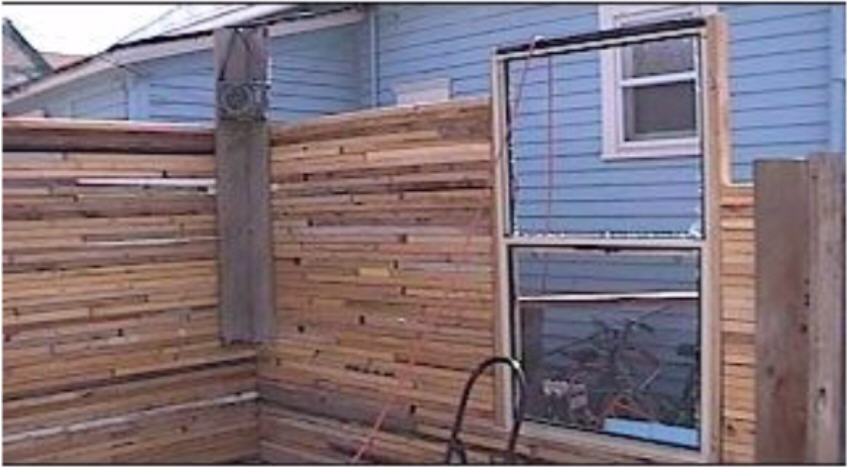
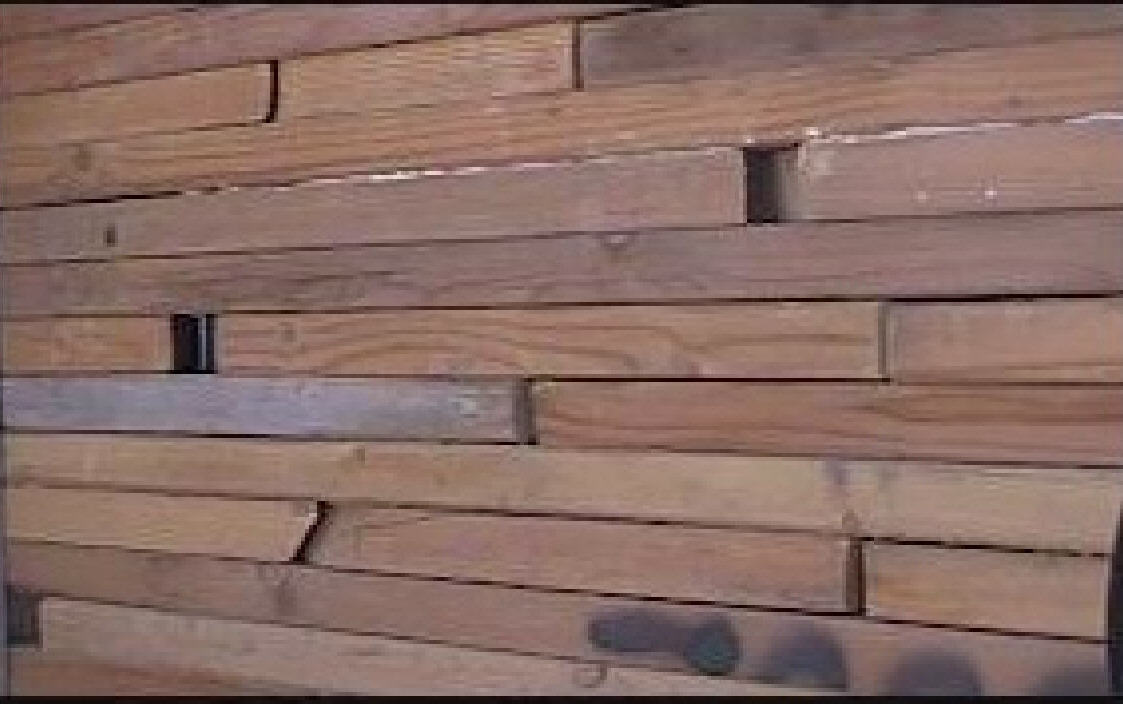
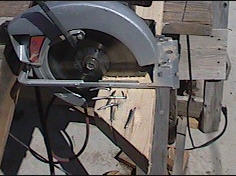
This is the story of the garage that Lane built, almost entirely by himself, and almost entirely out of recycled 2x4 and 2x6 lumber. It began about 50 years ago when I read an article in a popular magazine about building by lying pieces lumber of ramdom lengths on their sides and nailing them on top of one another, log cabin style. I kept the idea in the back of my mind, always hoping to do it myself. Finally the time came when I needed a workshop so I did a little more research, only to discover that this type of building dates back more than 100 years. It is called "Cribbing" and was widely used for grain storage buildings. I knew that there was a tremendous amount of wasted lumber in dumsters at construction sites, and that it was free for the asking. What I didn't know was that, instead of the drops being only 2" to 20" long, they were 2" to 20 FEET. They were also more plentiful and easier to gather than I had anticipated. The 20' x 30' building has a concrete floor, a full electrical system, insulation, and sheet rock. The entire project cost less than one-half of what a contractor- built unit would have cost.
| THE COMPLETED GARAGE
|
|---|
 |
 |
 |
 |
The finished building is 600 square feet. Look below to view step-by-step photos documentating the entire construction process.
|
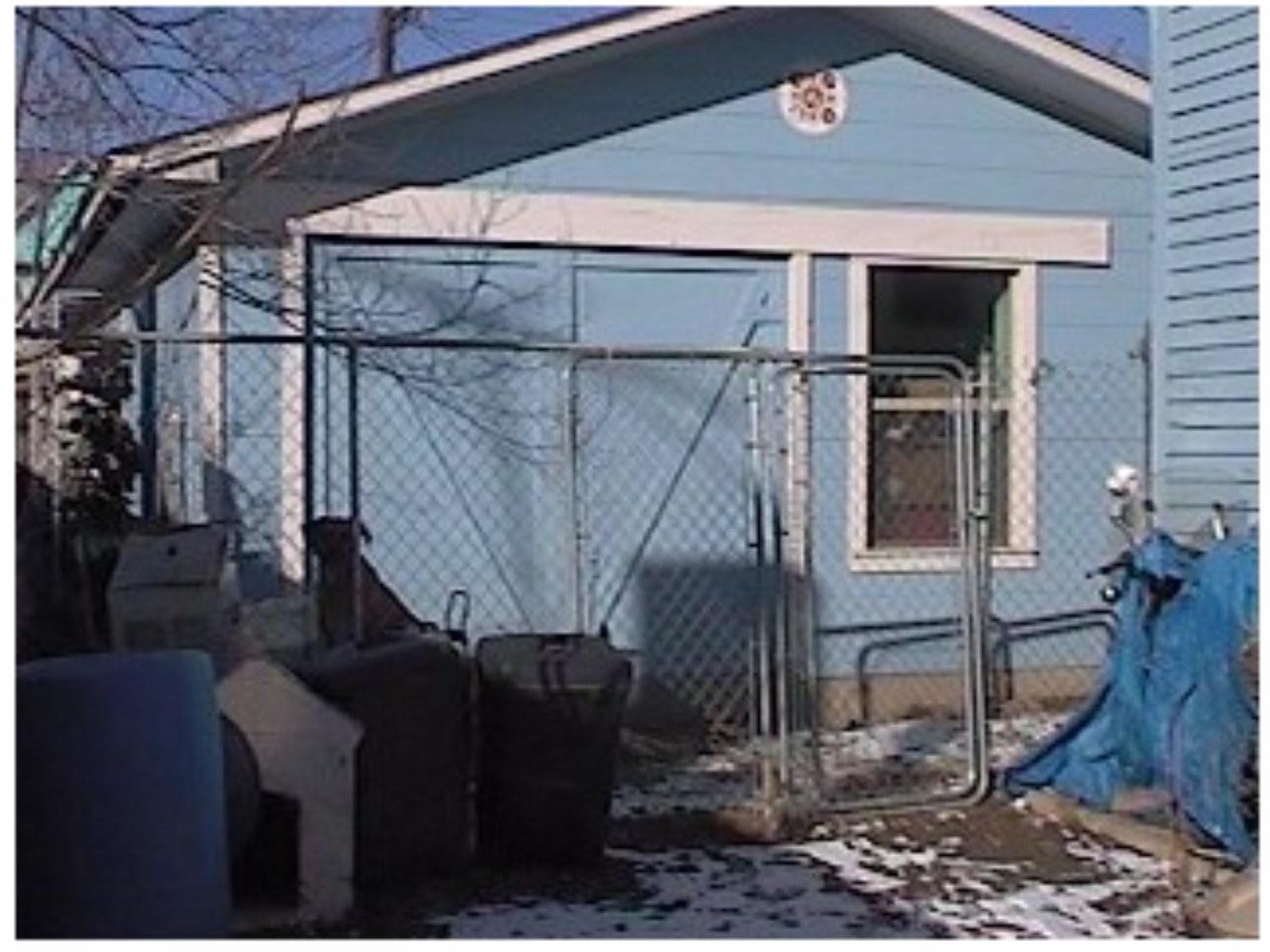
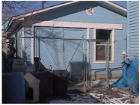
| View of the completed shop; the garage doors line up with the driveway of the house. |
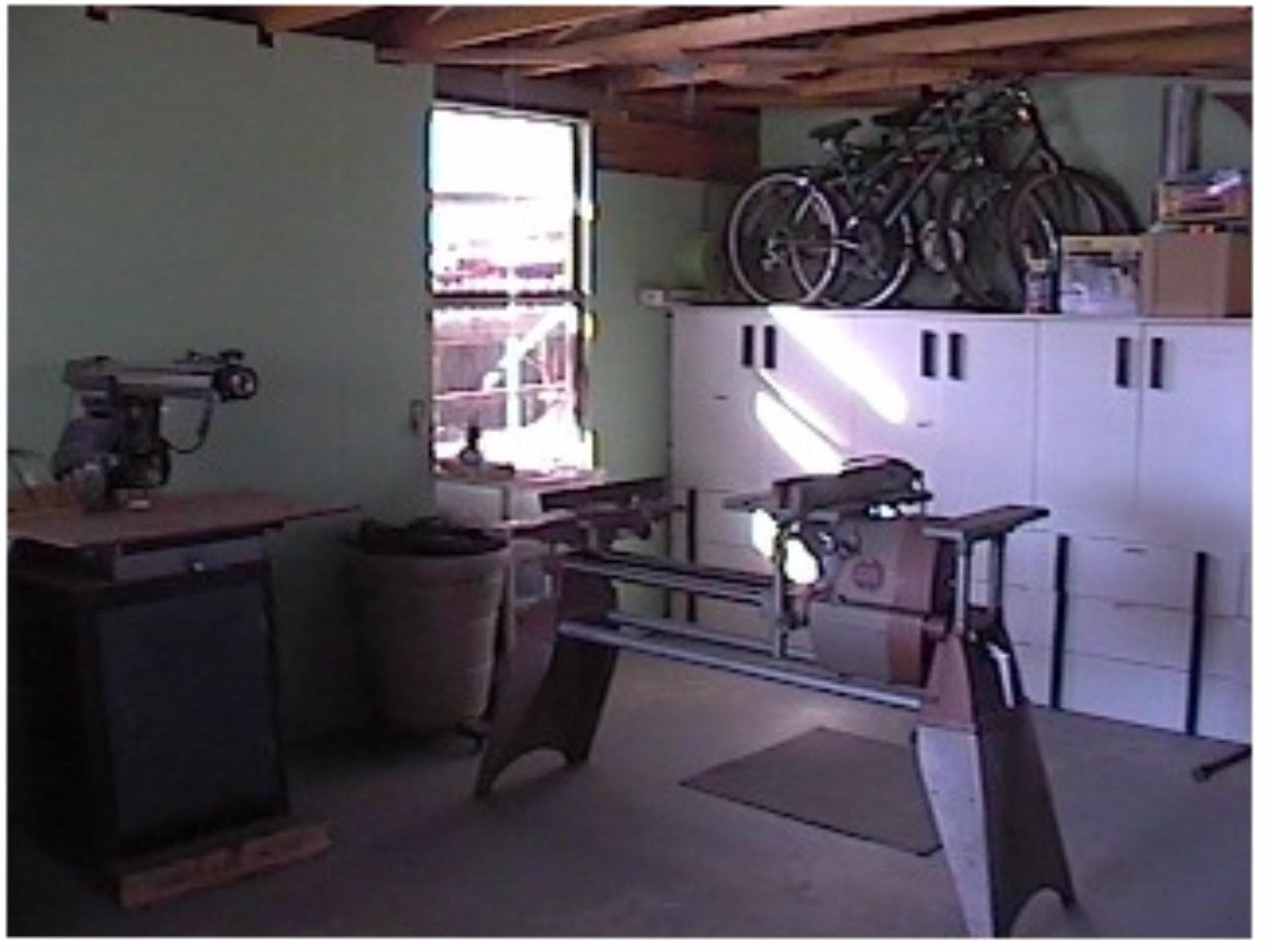
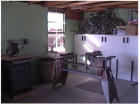
View of the northwest corner of the completed shop; cabinets go all the way acros the north wall. |
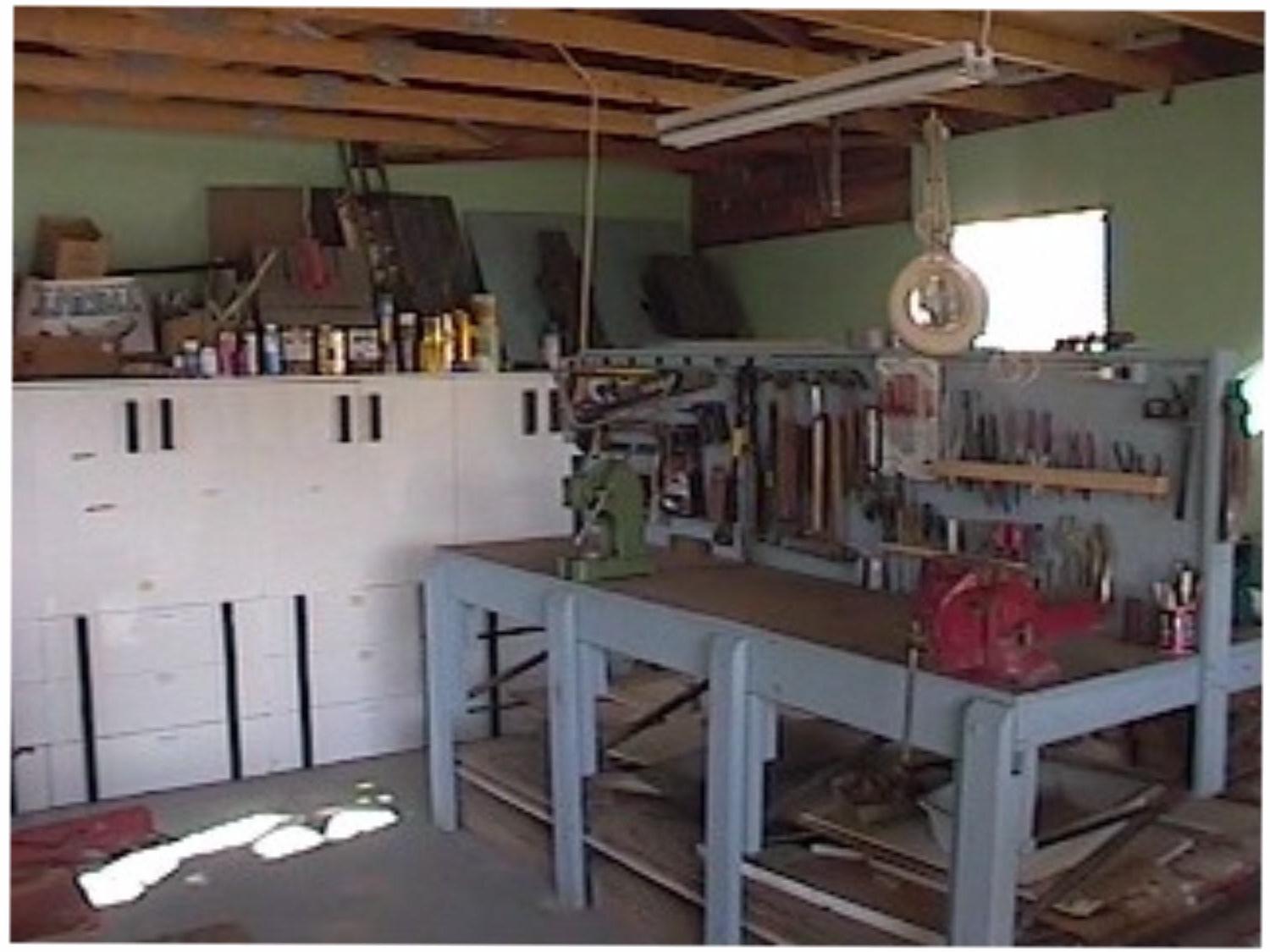
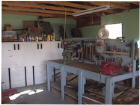
View of the northeast corner; Workbench is large enough to have 4x8 plywood stored underneith. |
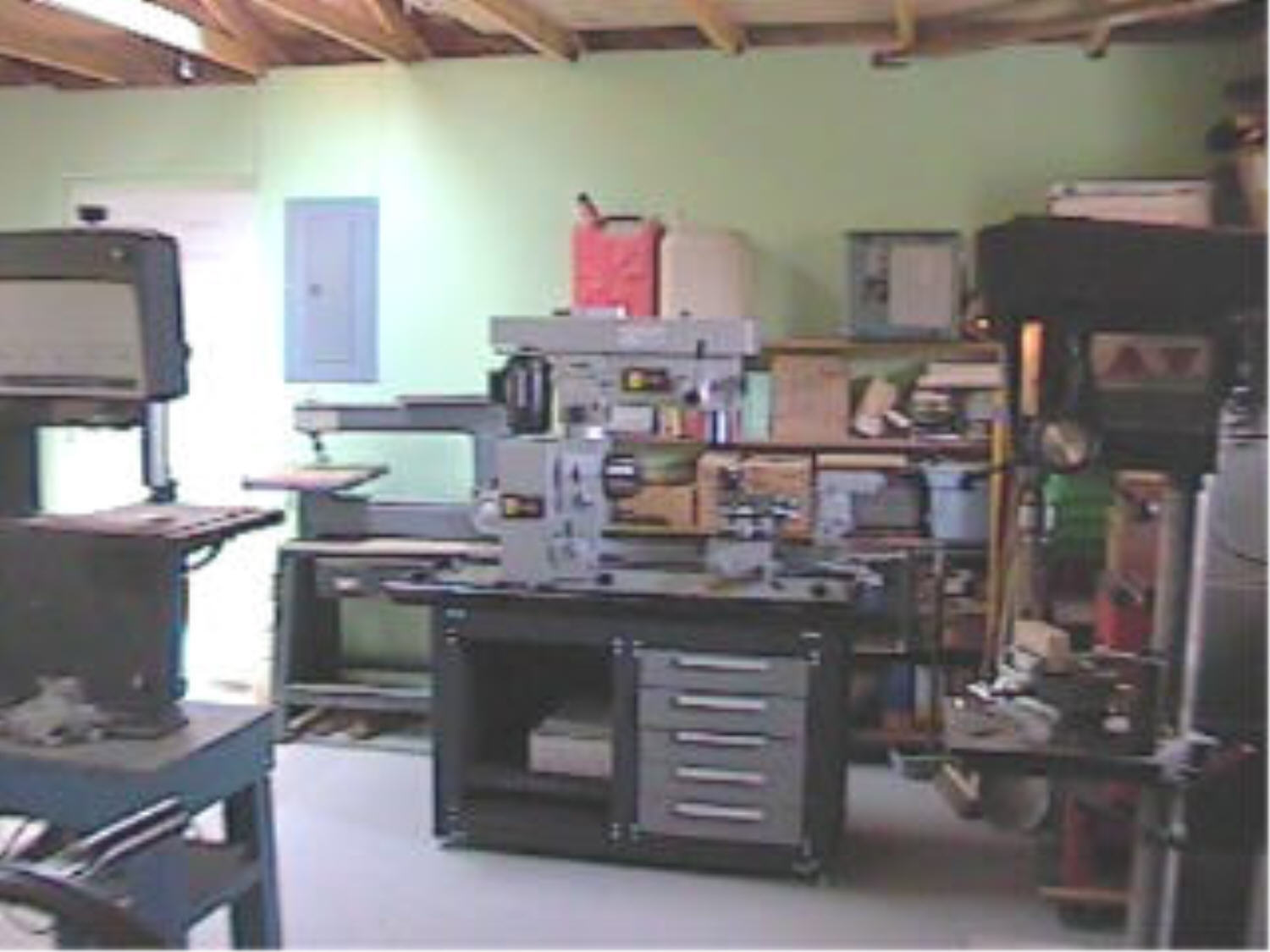
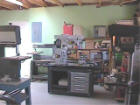
View of the southeast corner; southwest is garage door and storage area. |
Thank you for your interest. |
| PREPARATIONS
|
|---|
 |
 |
 |
 |
 |
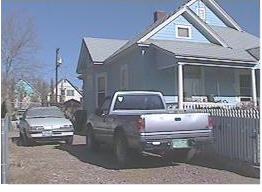
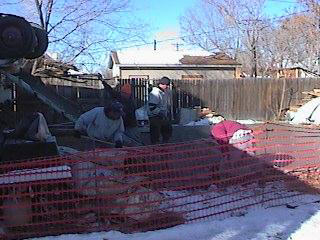
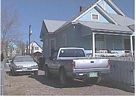
| The house where the garage was to be built entirely of recycled lumber |
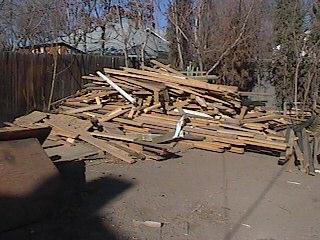
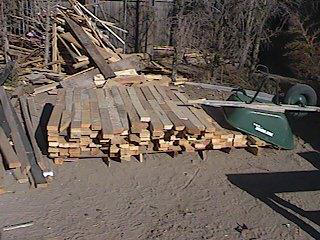
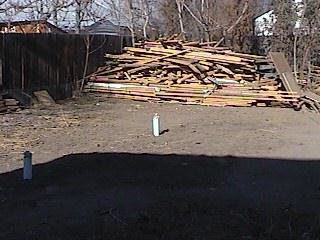
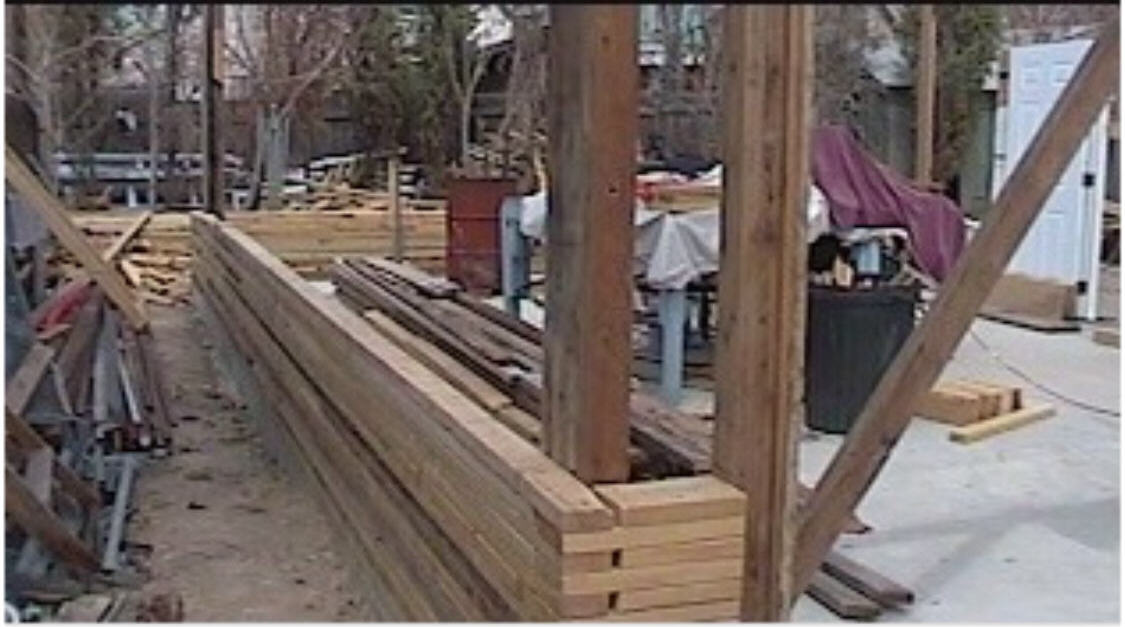
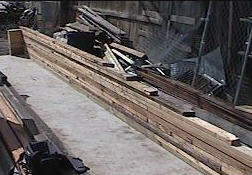
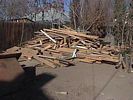
The wood was gathered, nails pulled, and it was restacked by size and length. |
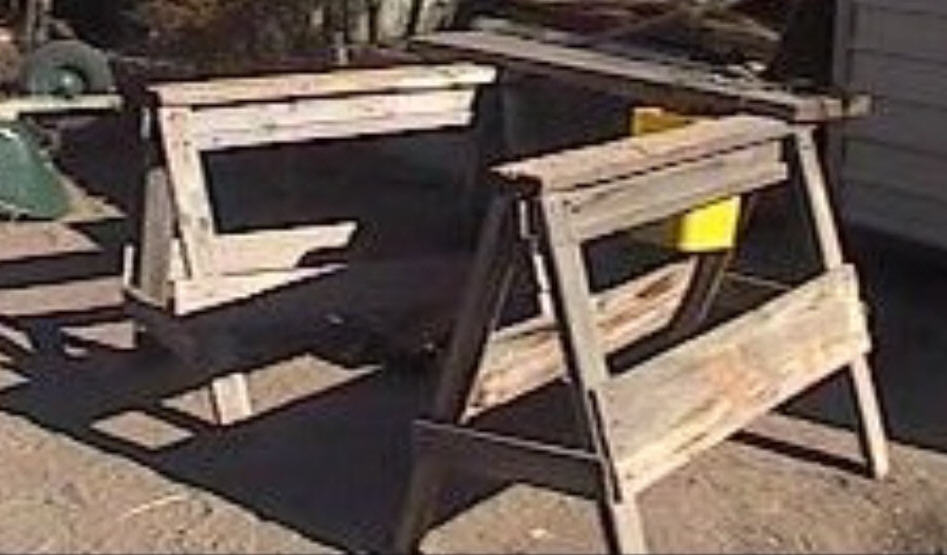
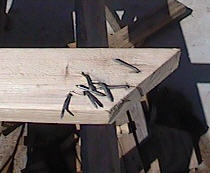
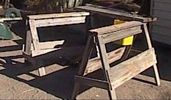
A special hi-tech nail pulling table had to be built. |
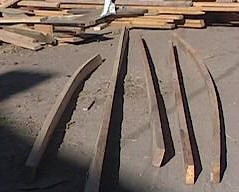
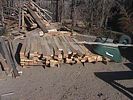
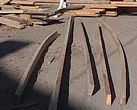
There were warped, twisted, and bowed boards to use. |
| POURING THE SLAB
|
|---|
 |
 |
 |
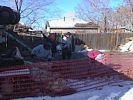 |
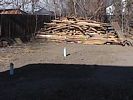
| The site was leveled and a french drain was installed |
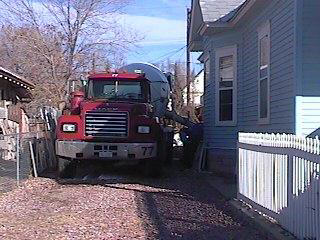
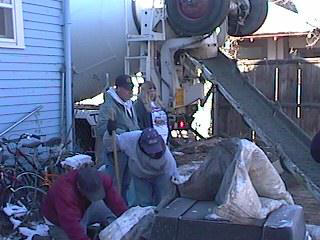
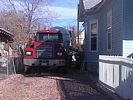
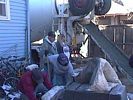
The concrete contractor took it from there. |
| BEGINNING TO LAY BOARDS
|
|---|
 |
 |
 |
 |
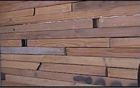 |
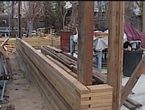
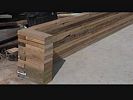
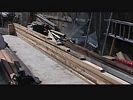
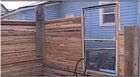
| The first course was new, pressure-treated lumber, laid on sill seal, and bolted down with conventional J- bolts. After that, the salvaged boards were laid down and nailed in place. |
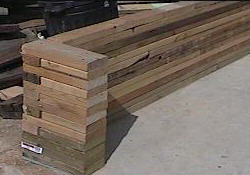
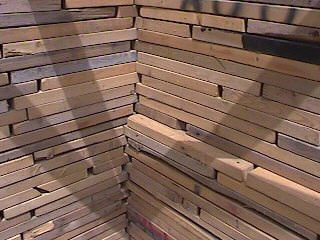
As a test, one corner was built all the way up. |
Small gaps were intentionally left between joints. |
| ANOTHER LOVE'S LABOR LOST
|
|---|
 |
 |
 |
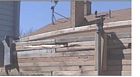 |
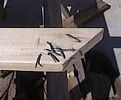
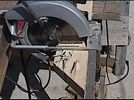
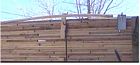
| With wood so very available, there were much better ways of dealing with boards that had a lot of nails, especially at the ends, than pulling the nails. |
Warped boards could be glued, then held in place with jigs until the glue dried, but this too, was a waste of time because it was easier to go out and get more boards. |
| OVER THE TOP
|
|---|
 |
 |
 |
 |
 |
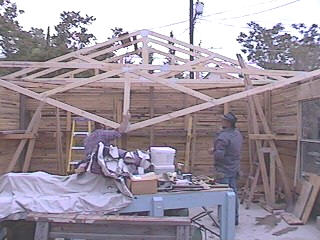
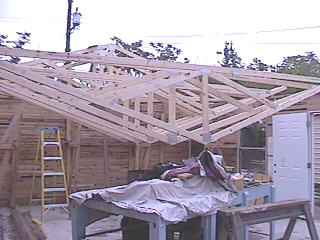
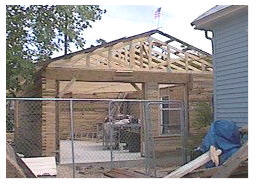
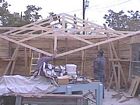
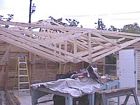
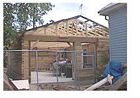
| It took a crew of experienced professionals to put up and align the 14 trusses that would top off the garage. |
Guys, Guys, I specifically said, "Pointy side UP". |
As is the custom, Old Glory gets flown from the highest point of the project. |
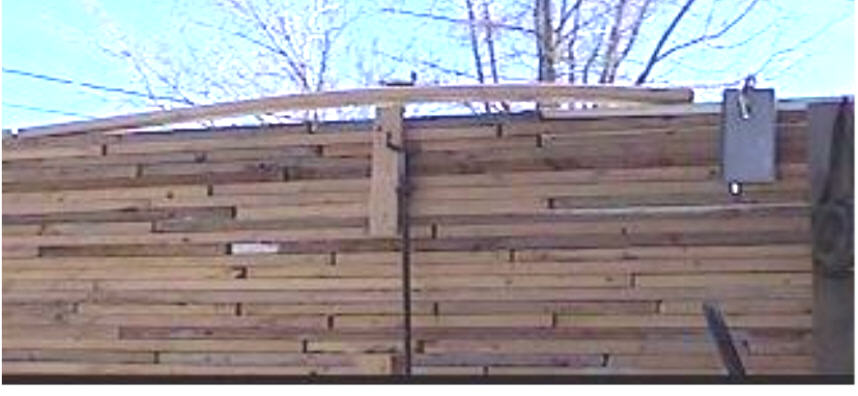
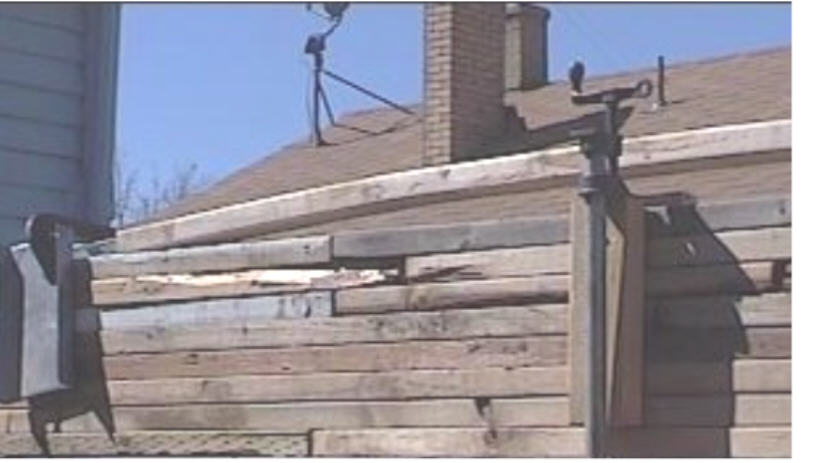
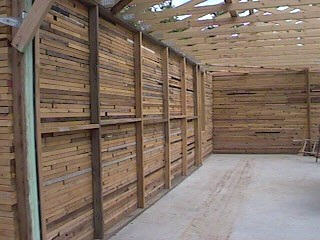
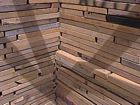
When we ran out of 2x6's, we simply reduced the wall size to 2x4. This step is at the level that future cabinets will be installed. |
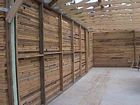
Later, firring strips were added to allow for insulation, wiring, and sheetrock on the interior walls. |
| THE BLUEPRINTS
|
|---|
 |
 |
 |
 |
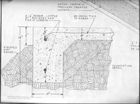 |
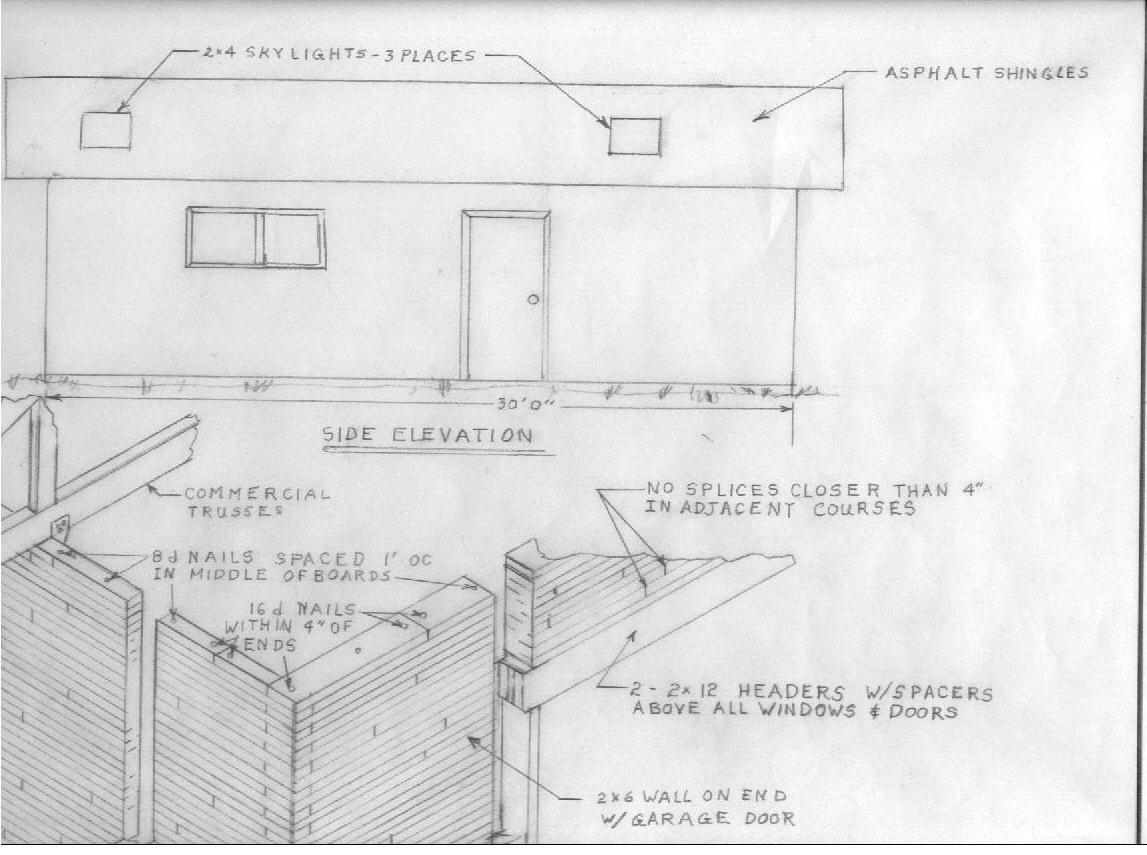
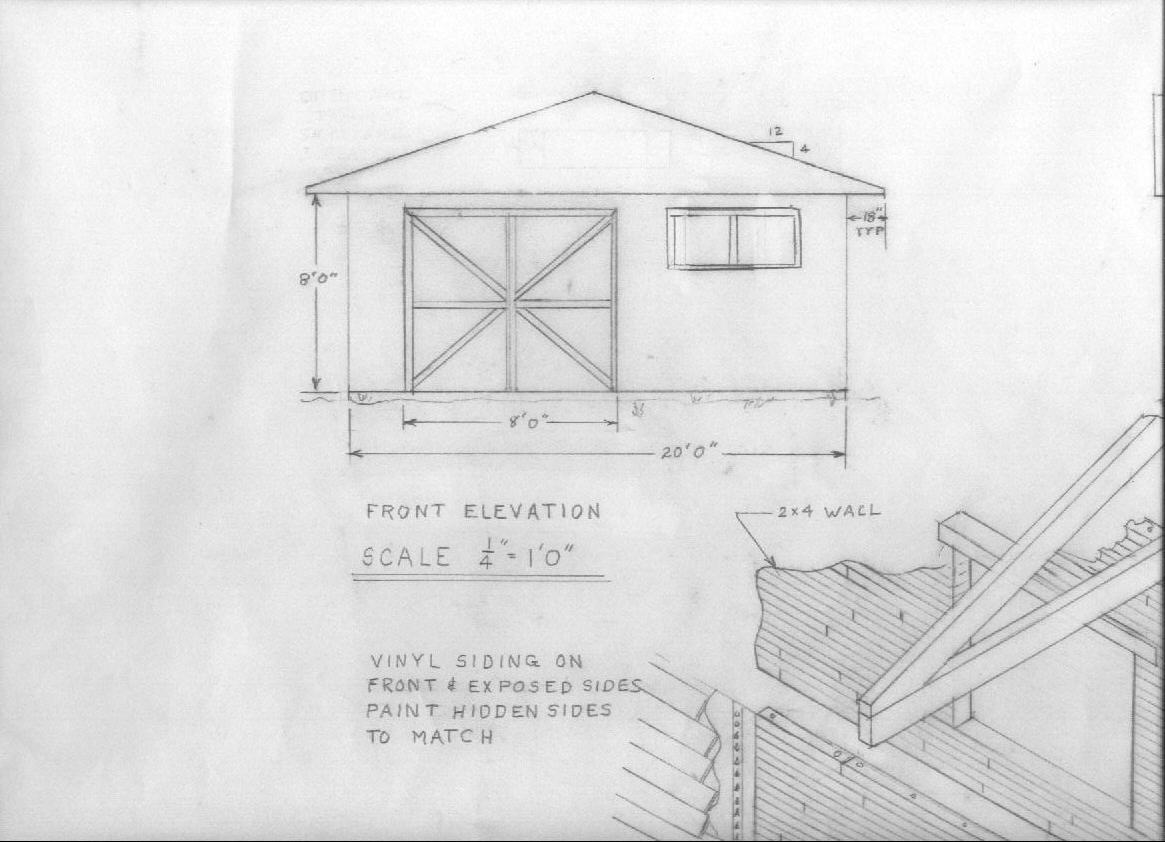
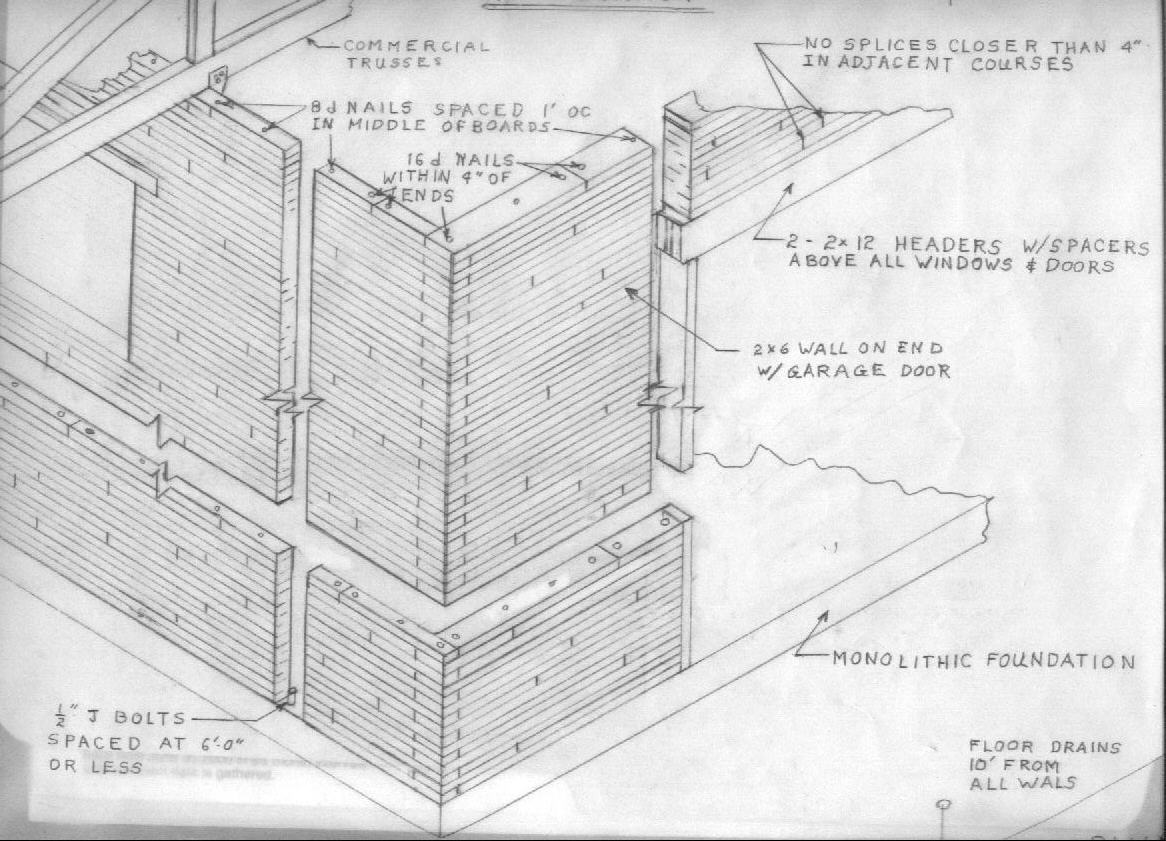
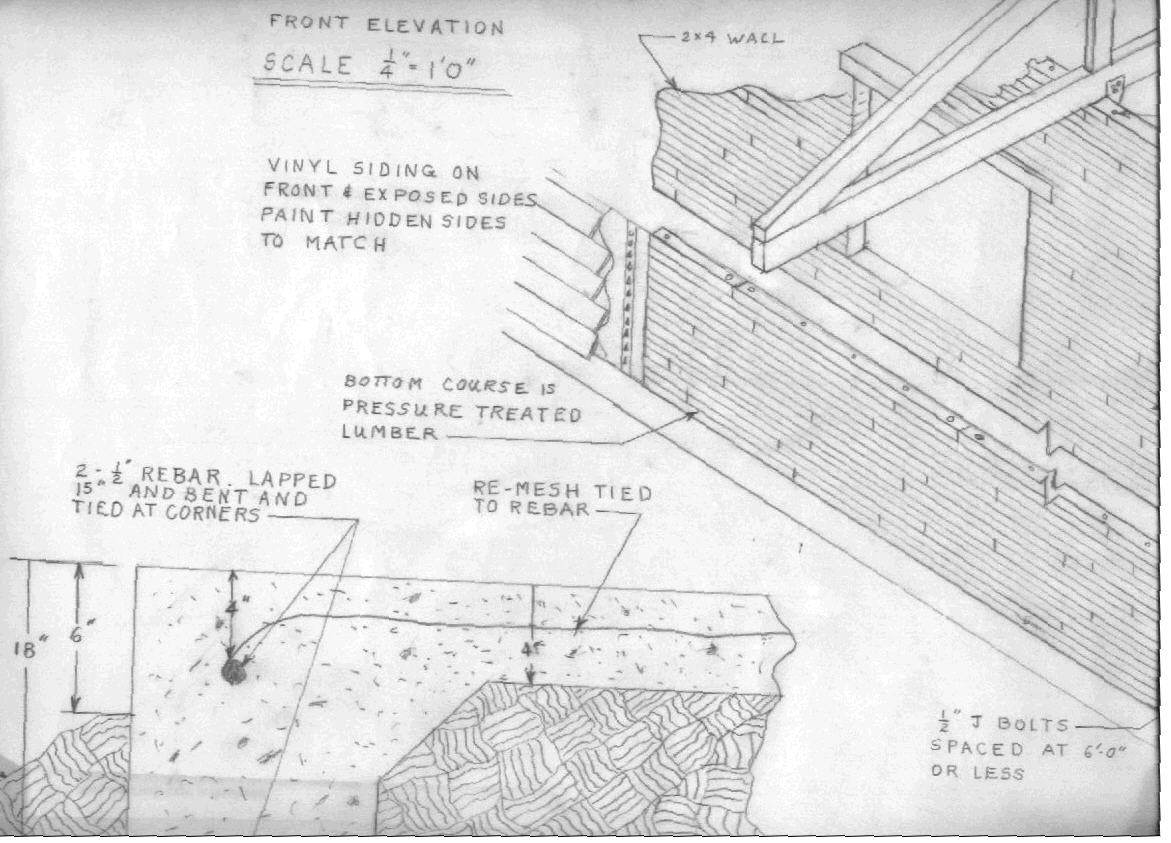
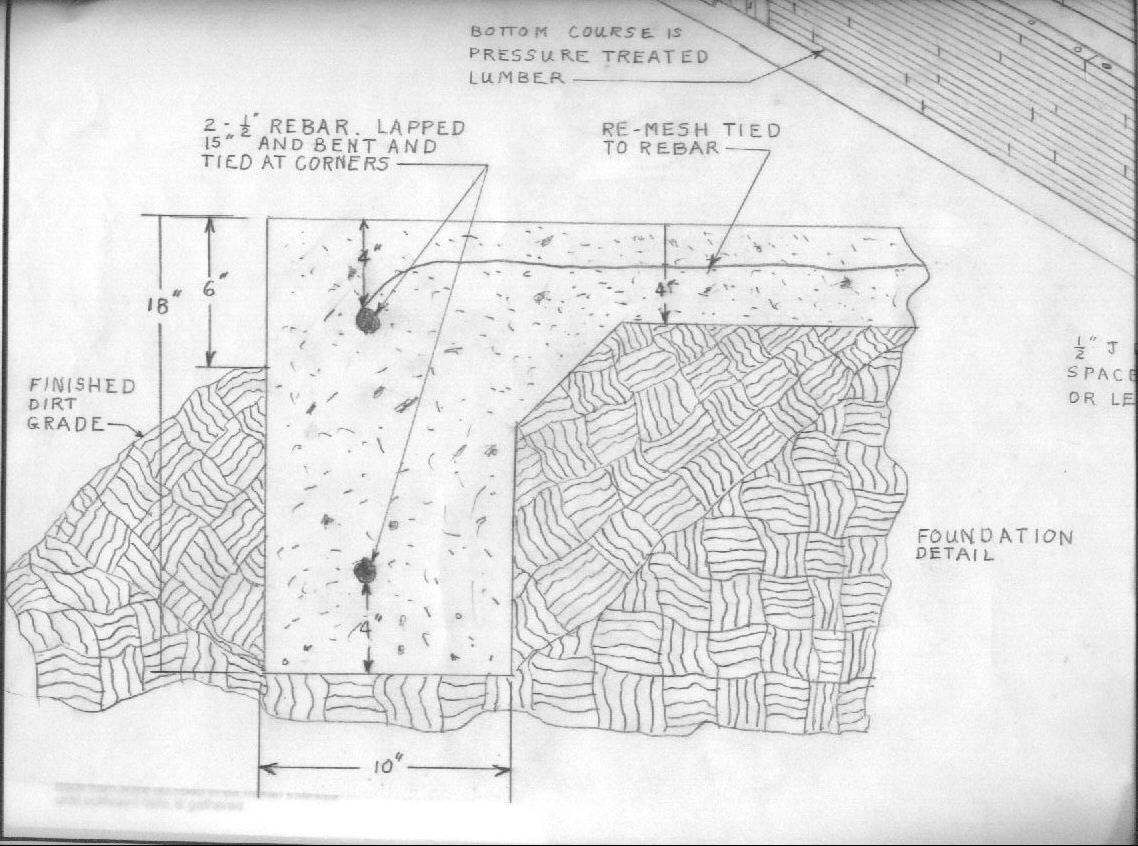
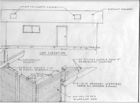
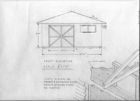
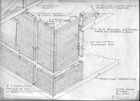
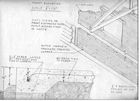
| I had to find an engineer who was familiar with this "Cribbing" method of construction who would review and stamp my plans before the city would grant me a permit. |