|
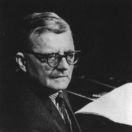
To me he seemed like a trapped man, whose only wish
was to be left alone, to the peace of his own art and to the tragic destiny
to which he, like most of his countrymen, has been forced to resign himself.
- Nicholas Nabokov 1949
Biographical Information:
Born St. Petersburg, Russia - 1906
Educated, from a well-to-do family, studied with intelligentsia's
children
He was encouraged to study music by his family
In 1919 he pursued music at the Petrograd Conservatory
Shostakovich's father passed away in the early '20's,
coupled with the onset of communism and oppression in Russia, began hard
times for Dmitri
He turned to composing to get away from his troubles:
1925 he composed his first symphony
His reasons for composing were also financial because
with the death of his father, he had to support himself and his mother
He was creative, but was only commissioned to write standard
formats of the contemporary composition (pressures of official requirements)
Shostakovich's ideals of humanitarianism made him successful
in creating a musical language of immense emotional power.
He wrote string quartets, concertos, instrumental and
vocal works, film scores, theatre music, and ballets, of course symphonies,
other orchestral works, and piano music
Suffered failing health in his later years
Was a teacher of music at Petrograd Conservatory for
many years
pplied to join Russian army twice during ww2 and was
denied twice
Since he couldn't serve he did odd jobs for soldiers
such as digging trenches
He loved Russia, loved his countrymen, embodied their
struggle in his works
Later life he traveled throughout Europe and the U.S.
His works have been performed throughout the world, 15
symphonies total
Died Moscow 1975
|