|
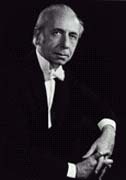
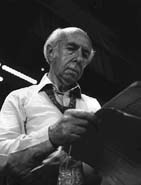
"Composing is my life blood." - Morton
Gould
Musical Analysis:
Morton Gould wrote his Holocaust Suite in 1978 as a present day response
to the horrors which the Jewish people of Europe had to endure while Nazi
Germany was in power.
The piece consists of six different movements which represent different
aspects or events of World War II. The movements are:
1. Main Theme
2. Crystal Night
3. Berta & Joseph's Theme |
4. Babi Yar
5. Warsaw Ghetto Surrender & Finale
6. Elegy |
The first movement of the piece starts out and the primary instruments
we hear are the brass with the background instrumental provided by the strings.
This arrangement gives the piece a solemn, ominous sound which leaves
the audience with an eerie feeling. We can almost see the war torn streets
of Nazi Germany as the orchestra plays the first movement.
The second movement, Crystal Night sounds almost like a march. Gould
wrote this movement to sound as though the German soldiers were marching
through the streets to find the Jewish citizens who were in hiding.
The third movement, Berta & Joseph's Theme contrasts with the other
movements on the piece in that it is a slow, soothing section of the music
which gives the listener another look into the Holocaust from the eyes
of two Jews who have found a way to detach themselves from all of the
death and destruction around them.
Babi Yar begins with the brass and woodwinds playing a slow, ominous
line of music.
This section sounds like a calm before the storm; a storm in the form
of Nazi soldiers sent to exterminate a race.
The Warsaw Ghetto Surrender & Finale is carried by the brass and string
sections.
In this section we can almost see the lines of Jews waiting to be herded
onto trains and taken to their most certain death.
The movement sounds solemn and slow almost like a funeral march. It gives
the piece a final tragic element which can be felt down to the listeners'
bones.
The final movement of the piece serves as an elegy for those who were
murdered by the merciless Nazi soldiers.
It is carried by the string section and gives the piece a solemn sense
of closure. The listener can almost see the total destruction and misery
the European Jews were forced to endure during WWII.
Morton Gould masterfully composed a tribute to those who lost their lives
in the Holocaust.
|