Happy New Year.
12/03/08
We tested the pinhole cameras. Some were rather good - comendations will be issued next term (NG, +?)
There was also the promised test on springs and light.
HW Books tidied, graphs stuck in etc.
Books were so disordered as to be unmarkeable..... We spent some time trying to sort them out.
Then we started to look at colour.
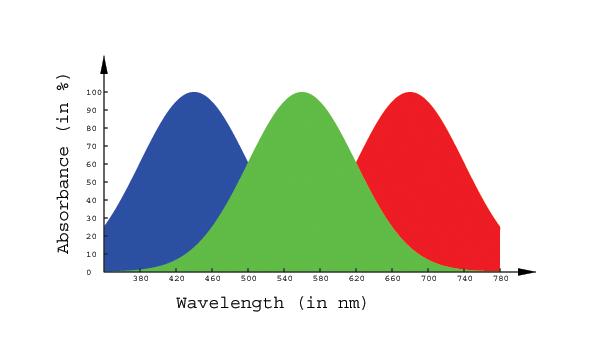
The primary colours are red, green and blue. Mix all three together and we see white. This is due to us having seperate red, green and blue colour sensitive cones in our retinas. When they all fire off simultaneously, we see white.

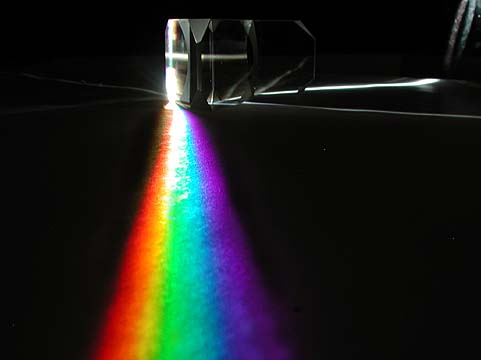
However, white light from the Sun comes with all of the the colours of the rainbow present (RedOrangeYellowGreenBlueIndigoViolet). Light can be split into its constituent parts by using a prism, this also occurs naturally in a rainbow.
Red objects appear red because they absorb all light except red, which they reflect. Shine green light on a red object and it will look black. A red filter only allows red light ot pass through it. A blue filter only allows blue light to pass through it. Put a red filter in front of a blue one and no light at all can get through.
Light always travels in straight lines unless it hits something.
We can use this principal to make a pinhole camera.
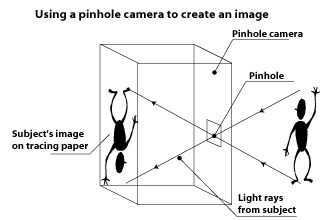
Light travels into a box only through a pinhole and shines on an opposite screen. An upside down image of the object you are looking at therefore forms on the screen.
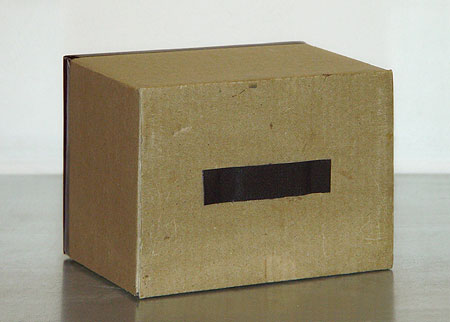
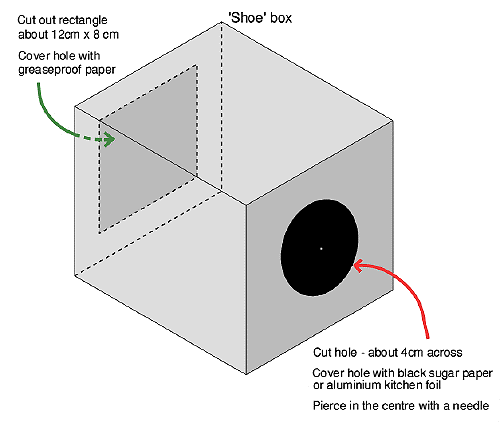
Any light proof box can be used to make a pinhole camera.
HW Make a pinhole camera for testing next week.
and HW Revise for a small test on springs, pressure and light so far.
Position of an image in a plane mirror and curved mirrors.
We did some experiments using mirrors. The first showed that a flat mirror creates an image which appears to be behind the mirror (the same distance that the object is in front.
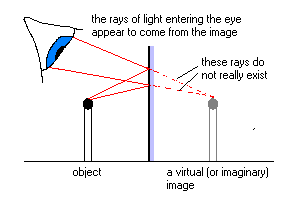
We then looked at the effects of curved mirrors.

Mirror images are virtual, and always left to right inverted.
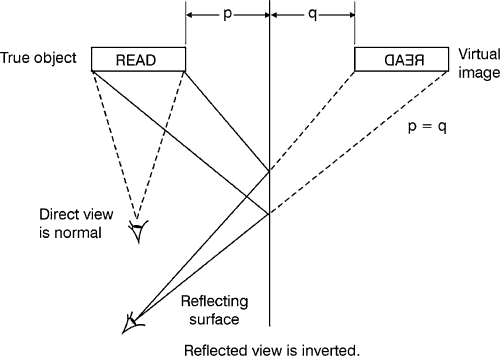
HW Build a
Consolidation of the last 4 weeks is required.
Light.
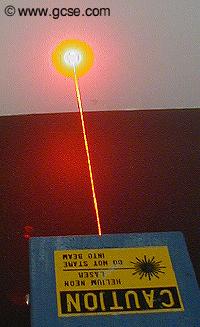
We looked at a laser to illustrate the point that light is invisible, unless it actually enters your eye.
You can only see the path of the beam when talcum powder or dust reflects some of the light into your eye.
Light always travels in straight lines unless it hits something.
We then did a little experiment using flat (plane) mirrors.
You found that the angle of incidence always equalled the angle of reflection. Remember that all angles are measured from the normal line.
HW Check that you have all the work required in your books for this term - catch up any that is necessary. Note, results from the experiments are available for you to download.
With GWO (for the last time).
Some more air pressure demos, then pressure vs. volume.
We did some further experiments on pressure, this time the pressure exerted by a gas when we squashed it into a smaller and smaller volume.
We found that if you squashed the gas into half of its original volume, the pressure doubled; the same number of particles are trapped in a smaller volume and so collide with things more often, exerting a greater pressure.
This file contains the results
HW Graph and conclusion
Liquids and gases can also exert forces on objects, and hence pressures (Pressure = Force/Area)
The particles in a liquid or gas exert a force on solid objects when they collide with them and bounce off.
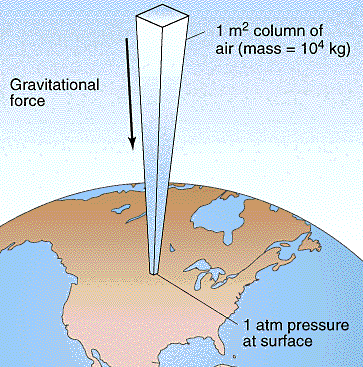
The pressure in a gas or liquid rises as you go deeper into it.
We are many km below the top of the Earth's atmosphere and the pressure exerted is quite large (100000N/m2)
You saw a vacuum pump suck all the air out from inside a metal can. The pressure on the outside was then enough to crush the can. Usually, the inner and outer pressure is equal and opposite.
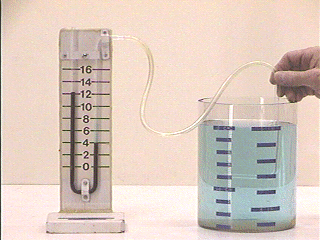
We did a data logging experiment to test how the pressure exerted by water varies with its depth.
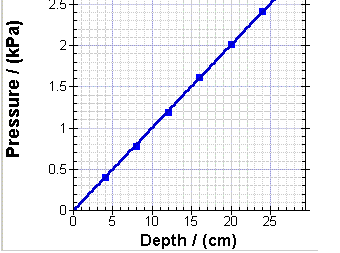
The results showed that the pressure in the water was proportional to the depth under the surface.
This makes sense, as there is a greater weight of water pushing down from above the deeper underwater you go.
These are the results that I got (for absentees and any others who need them.)
Pressure = Depth times Density times gravitational field strength
The above formula allows you to work out the pressure due to any fluid.
HW Plot your graph of pressure vs. depth, stick it in and make sure your notes on the crushing can etc are complete.
GWO took you for finishing off springs and introducing pressure.
We did an experiment on pressure using plasticene and sticks.
We covered the introduction to pressure. An experiment was performed where the same sized force was put onto various objects pushing into plasticine.
It was found that the objects with the smallest surface area made a much larger indentation into the plasticine. This is because they were exerting a larger pressure.
Pressure (N/m2)= Force (N) / Area (m2)
All sharp cutting devices use a low surface area to be able to cut into materials with very little force.
HW P43-46 Qs 1-5
GWO took you for springs in series and parallel.
We covered springs in series and parallel. By testing them.
2 springs in parallel extend half as much as one on it's own (the spring constant is doubled). 2 in series extend twice as much (the spring constant is halved).
Books in.
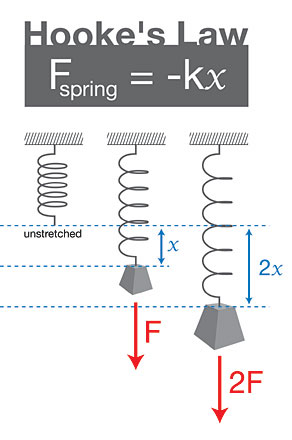
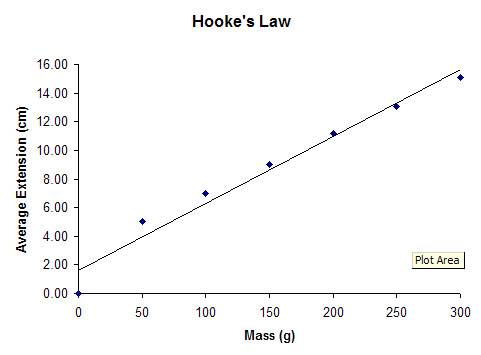
We performed an experiment to see how the extension of a spring varied as applied larger and larger forces onto it.
It was found that force was proportional to extension for the most part. The force divided by the extension gives us the spring constant, k of the spring which tells you how stiff it is.
Spring constant(N/m) = Force(N)/Extension(m)
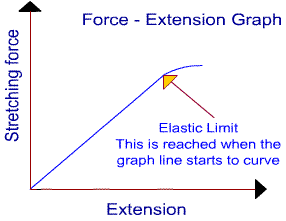
A very large force can permanently deform the spring meaning it has passed beyond its elastic limit. Hookes law no longer applies after the graph has started to curve.
HW Complete the experimental write up and questions from the book.
21/02/08

07/02/08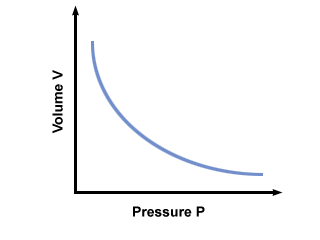
31/01/08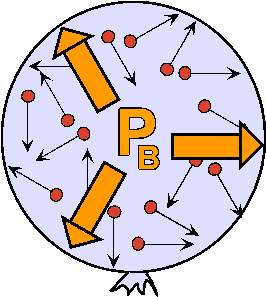
24/01/08
17/01/08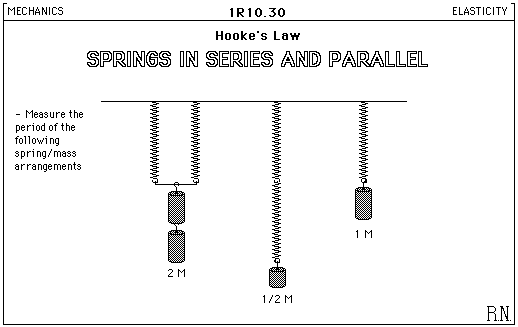
10/01/08