�
� Series
Wiring� � � � � � �
� � � � � � � � � � �
� � � � � � � � � � �
� � � ��
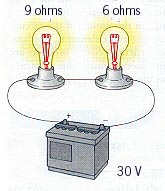
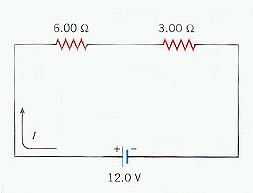
What is the equivalent
series resistance Rs? |
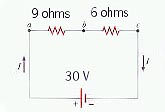
� � � � � Rs = 9 + 6
� � �� � � � � = 15
W
� |
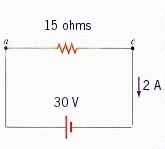
� � � � �I �= 30 / 15
� � � � � ��= 2 A |
�
� Series Wiring Example� � �
� � � � � � � � � � �
� � ��
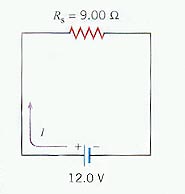
� � � � � �What is the power dissipated
� � � � � � in the 6 ohm resistor? |
� � � � |
�I �= 12 / 9
� � = 1.33 A
----------------
�P = �I2 R �
� � = (1.33)2 (6)
� � = 10.6 W |
� �Resistors in Series: �The
Extension Cord�� � � �
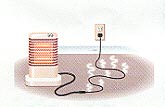
Which resistor gets hotter?
|
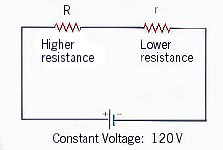 |
I = V / (R + r) �
----------------------------
PR �= �I2
R �
� � � = [ V2 /
(R+r)2 ] R
----------------------------
Pr � �= �I2 r
� �
� � � = [ V2
/(R+r)2 ] r |
�� �Blowing a Fuse � �
� � � � � � � �
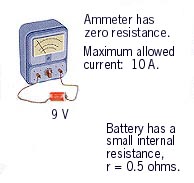
� � � � � � � � � �I =
9 / 0.5
� � � � � � � � � � �=
18 A |
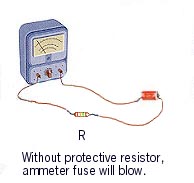
What is the least R which will
prevent the fuse from blowing? |
� Parallel Wiring� �
� � � � � � � � � ��
� � �� � � � � � � �
� � � � � � � � � � �
� � �
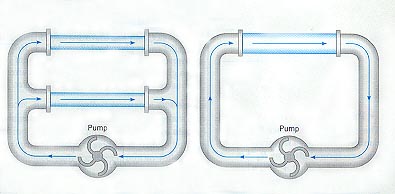 � �
� �Two pipes in parallel can be replaced by one. �The single
pipe
� �will have less resistance than the pipe with the least
resistance. |
� Light Bulbs in
Parallel� � � � � � � �
� � � � ����
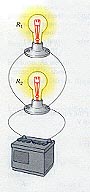
Light bulbs
connected
in parallel. |
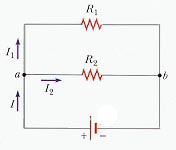
Equivalent resistance of this
parallel combination found
through the relation
1 / Rp = 1 / R1 + 1 / R2 |
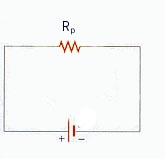
Rp is the single resistance
which is equivalent to R1
and R2 in parallel. |
�� House Wiring is
Parallel�� � � � � �
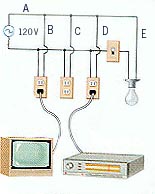 |
�Which connecting wire, A, B, C,
�D, or E, will be the first to become
�dangerously hot �if too many
�appliances are turned on?
How can overheating be
prevented, even if all the
appliances in the house are
turned on? |
� �Circuit
Breakers�� � � � � � �
� �
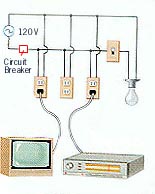 |
�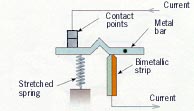
� Brass expands more than steel �
� As temperature increases, the
��bimetallic strip arcs to the left,
� settles into groove, and the
� spring pulls the metal bar down. |
� �Four Resistors in
Parallel� � � � � � � �
��� � �� �
| Find the resistance between A and B:
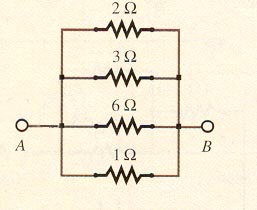 |
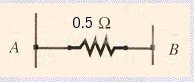
1 / Rp = 1 / 2 + 1 / 3 + 1 / 6 + 1 / 1
� �Rp = 0.50 W �
----------------------------------
VAB �= 12 V
What is the current in each resistor?
What is the sum of all currents?
|
�Three-Way Light � �
� � � � �� �
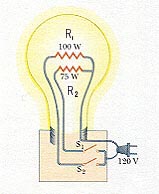
� � �What is the resistance
� � �of each filament? |
P = V2 / R
V = 120 volts for each filament
------------------------------------------
R1 = resistance of 75-W bulb:
75 = (120)2 / R1
R1 = (120)2 / 75
� � � �= 192
�W
------------------------------------------
R2 = resistance of 100-W bulb:
100 �= (120)2 / R2
R2 = (120)2 / 100
� � � � = 144
�W |
�Equivalent Resistance of Series and
�Parallel Combination of
Resistors�
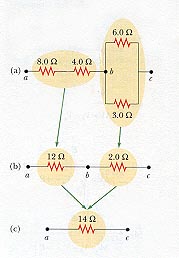 |
Parallel combination:
1 / Rp = 1 / 6 + 1 / 3
� � � � =� 0.5
� � Rp = 1 / 0.5�
� � � � � = 2
W
---------------------
|
�
� Series and Parallel
Circuits� � � � � � �
� � � � � � � � � � �
��
| What is the total resistance between Points A and
B?
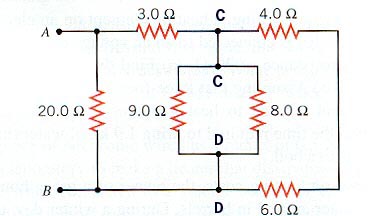 |
4 + 6 = 10
--------------------------------------
1 / Rp = 1 / 9 + 1 / 8 + 1 / 10
� �Rp = 2.98
W
-------------------------------------
�2.98 + 3 = 5.98 �
-------------------------------------
1 / Rp = 1 / 5.98 + 1 / 20
� �Rp =
4.60�W |
� �A Series-Parallel Circuit Problem: �Part
One� � �
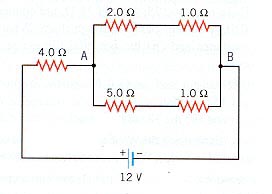
�What is the potential difference between
�Points A and B? |
1 / Rp = �1/3 + 1/6
�
� �Rp = 2
W
-------------------------
�Total: �6
W
-------------------------
�I = 12 V / 6
W
� �= �2 A
-------------------------
Ohm's Law:
VAB = (2 A) (2
W�)
� � � � = 4 V |
�
A Series-Parallel Circuit Problem: �Part Two�
� � � � �
�What is the current in the
5-W resistor? |
I = V / R (Ohm's Law)
-------------------------------
From Part One:
VAB = 4 V
-------------------------------
R = 6 W �(lower
branch)
-------------------------------
I = 4 V / 6
W
� = 2 / 3 A
This is also the current
in the 1 W
resistor. |
>
�
� Series and Parallel
� Connections�
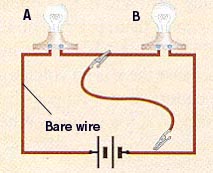
�What happens when the wire
� is connected? |
� Kirchhoff's Junction Rule
� � � � � � � � � � �
� � � � � � � � � � �
� � �
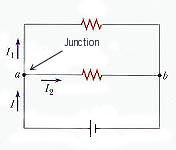 � � � �
�Junctions are places where
�wires are connected together. |
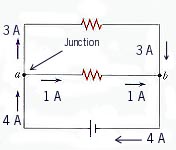
Kirchhoff's Junction Rule:
Total current into a junction
is equal to the total current
out of the junction. |

� �Gustav Robert Kirchhoff
� � � � � � �(1824-1887) |
�� Kirchhoff's Loop Rule
� � � � � � � � � � �
� � � � ��
�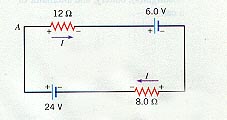
� A loop is a circuit, which is any
� closed path with batteries and
� resistors. |
The sum of the potential differences
encountered around a closed circuit
equals zero.
---------------------------------------------------
Traveling clockwise from A:
-12 I �- 6 - 8 I + 24 = 0
� � � � � � �
�or.............
Traveling counter-clockwise from A:
-24 + 8 I +6 + 12 I = 0
|
��� Kirchhoff's Rules
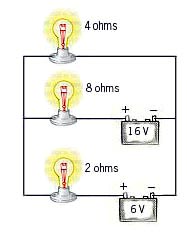
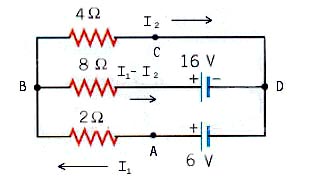
Problem Part One: �
���
 � �
|
� � � � � |
���� Kirchhoff's
Rules Problem Part Two: � � � �
� � �
� � � � � � Loop BCDB: �
� � � � � � -4 I2 + 16 + 8 (I1
- I2) � = 0 � � � � �(1)
� � � � � � -4 I2 + 16 +8 I1
- 8 I2 � �= 0 � � �� �
(2)
� � � � � � �8 I1
-12 I2 � � � � � � �
� � ��= -16 � � � (3) |
Loop ABDA: �
-2 I1 -8 (I 1- I2) -
16 + 6 �= 0 � � � �(4)
-2 I1 -8 I 1 + 8�I2 - 10 � �
�= 0 � � � �(5)
-10I1 + 8�I2 � � � � �
� � � � ��= 10 � �
�(6)
----------------------------------------------
Solve Equations 3 and 6:
I1 = 3 / 21 A
I2 = 30 / 21 A
|
 � �
� �