| Throwing Pottery on a wheel is the most challenging form of pottery making and the most fun. You can spend countless enjoyable hours at this hobby.and produce beautiful pieces of art.
Prices on ready-made Pottery Wheels can run several hundred dollars, which makes them too expensive for a hobby. But this wheel can be made for about $200.
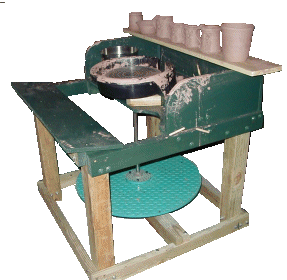
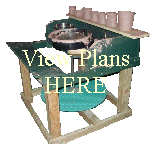
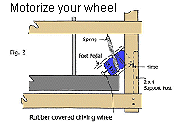
The wheel shown is kicked powered which is best for a beginner. But if you're reluctant to spend that much energy,we show a method of electrically powering the wheel.
The first step is to gather the material. Besides the lumber, screws and bolts you'll need a couple of heavy bearings and a steel shaft. The bearings usually can be purchased where power tools are sold. This includes some larger mail order houses. The shaft is just a length of cold-rolled steel rod.
For the potter's wheel shown I just went to a machine shop, told them the size and length shaft I needed, and then went to Grainger for the bearings to fit this shaft..
You also can buy "kits" for a potter's wheel as well as individual parts such as the "head" (throwing wheel) made of metal. (usually aluminum) Should you use a metal head, get it before you select the shaft and bearings to make sure all the parts match.
Cut the 4 x 4's to length and start assembling the frame. (Fig.3) Do this on a level surface and keep the corner posts plumb and square to the cross braces. Lag screws and washers are used to join the frame. Stagger the screws to avoid splitting the wood and drill clearance and pilot holes for them.
The two crosspieces under the seat (Fig. 3) are ripped at an 80-degree angle to create a slope. (A completely horizontal seat will create pressure on the back of your leg when you kick the wheel.)
The inside 2 x 4 brace is located flush with the top of the 4 x 4 corner posts. While the outside brace under the seat is positioned to have the upper edge ¾ in. above the posts.
Note: The bottom side braces extend past the 4 x 4 corner posts and over the ends of the front and back braces. The upper side braces are shorter and the ends are flush with the front surfaces of the front posts. Attach the plywood seat with the wood screws, countersinking the heads so they can be covered over with wood putty. You want the surface of the seat smooth and snag free. Cut the splash pan from marine or exterior grade plywood. Screw it to the top cross braces, but allow a space of ¾ in. at the back and both sides, so the side and back pans are flush with the outside of these members. The back and side pans are held in place with wood screws.
With the frame assembled, fit the shaft and bearings in place. (Fig 1) Cut a hardwood 2 x 4 to fit between the side splash aprons and find the center. Position a pillow block bearing on this center and bolt it in place.
Locate the bearing and block on the frame assembly with the center of the bearing 3 ½ in. from the front edge of the splash pan. Drill a 1-in. hole through the pan below the bearing hole. Drop a plumb line down through the hole from the center of the bearing to locate the bottom bearing. Be sure your assembly is square and level. Cut the 4 x 4 cross-piece (14), notch it to fit over the lower side braces and mark the spot where the plumb line contacts it. |