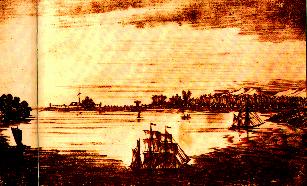
"The entrance to Iloilo is beautiful. From afar can be seen the white city set in water, a nymph of galvanized iron, a modern creation, poetic in spite of its iron uniform. Opposite Iloilo there is an island where families go for picnics... There are various vessels with foreign flags...We anchored and were tied down beside a Spanish gunboat in front of the house of a consignee."
Jose Rizal
August 4, 1896
300 years before Ferdinand Magellan came to the Philippines,Iloilo had already been the major setting of historical unfolding in the country. Legend points to Datu Paiburong, one of the ten Bornean datus, who bartered his gold for the land called "Irong-Irong", because of its nose-like shape, from the local Ati chieftain.
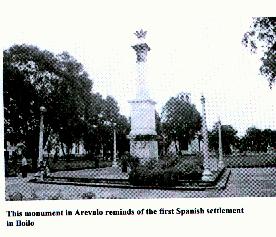
in 1566, the Spaniards, under Miguel Lopez de Legaspi, came to Panay and established a settlement in Ogtong (now Oton). In 1581, the seat of Spanish power was transferred to La Villa de Arevalo, a sitio. By 1700, due to recurrent raids by Moro pirates, Dutch and English privateers, the seat was again moved to the village of Irong-Irong located close to the mouth of a river where they built a strong fortification. The Spaniards shortened the village's name to Ilo-Ilo.
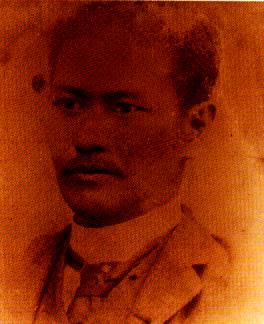
The rapid growth of the place triggered by the opening of the Port of Iloilo to the world in 1855 made Iloilo the biggest center of commerce and trade in the entire Visayas and Mindanao area, second only to Manila. In 1890, under the Bacerra Law, the City of Iloilo was established. By virtue of the Royal Decree of 1896, the city was bestowed a Coat of Arms with the inscription: "La Muy Leal Y Noble Ciudad de Iloilo." The city was also proudly known then as the "Queen City of the South." One of its famous sons was Graciano Lopez-Jaena, one of the country's greatest national heroes, who was the Editor of La Solidaridad, a nationalist publication during the Philippine Revolution.
During the American period, the city prospered with the construction of good roads, a railway line, airport and other infrastructures. An environment and atmosphere conducive to commerce and industry had been maintained throughout the years after WWII up to the present. Iloilo's solid financial resources, existing industries, and most of all, the resiliency of its people, contributed to the economic dynamism which is expected to propel the city to greater economic prosperity in the future.