 |
| Salvador, Bahia Monday, 23 February 1998 00:57 GMT: 'A Banda
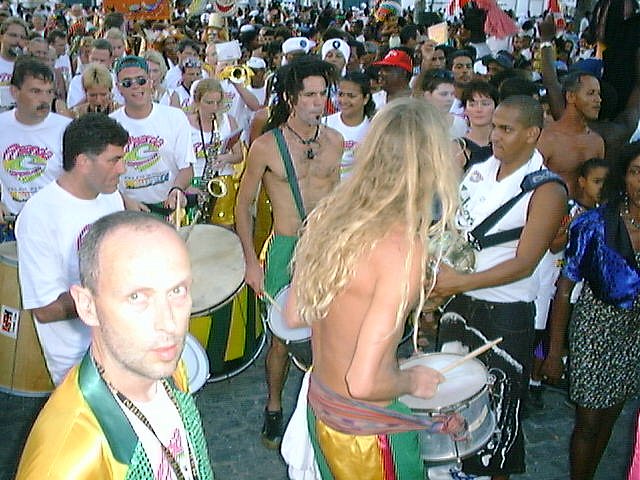
really is a great success. I don't think anyone
believed the city's black population would care
to hear or see a bunch of gringos, but they do,'
writes Hugh Matthews of the Danish group
A Banda.
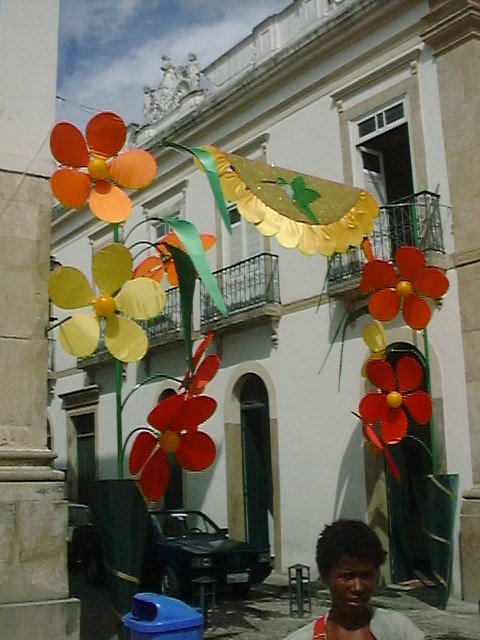
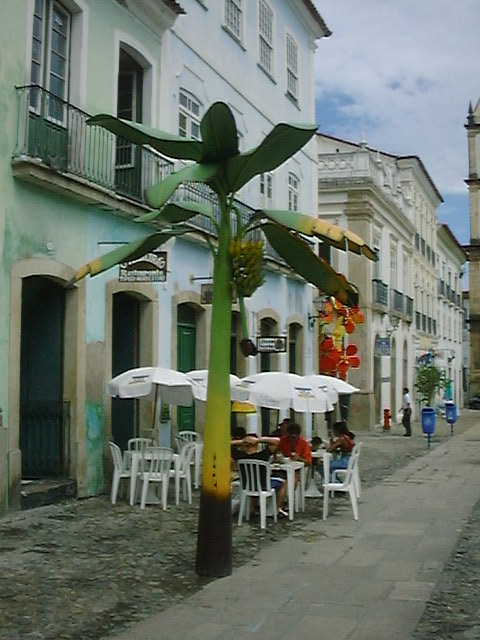
These flowers light up at night. They 'grow' on practically every Pelourinho street corner.
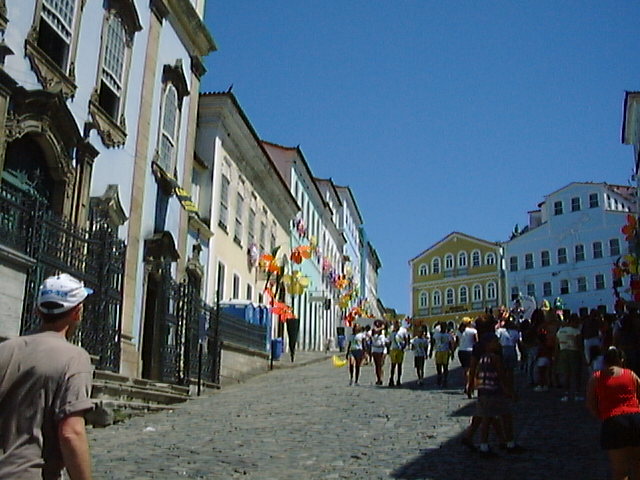
Pelourinho in daylight. The square is closely linked to black history in this part of the world. Slaves, were bought, sold and publicly flogged here. The houses -- or rather their facades -- were renovated a few years ago, but paint fades quickly in the tropics.
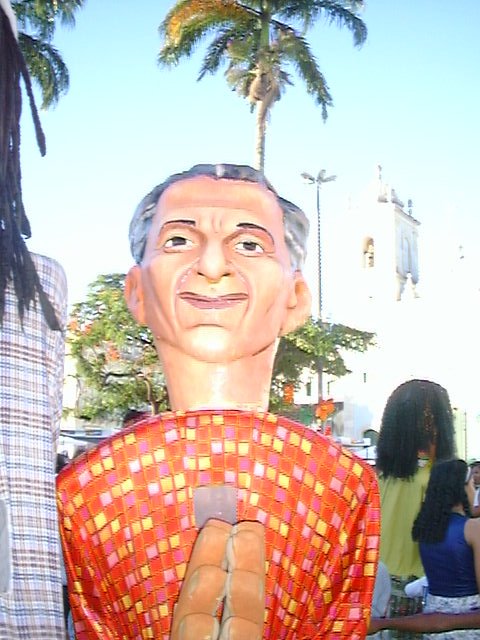
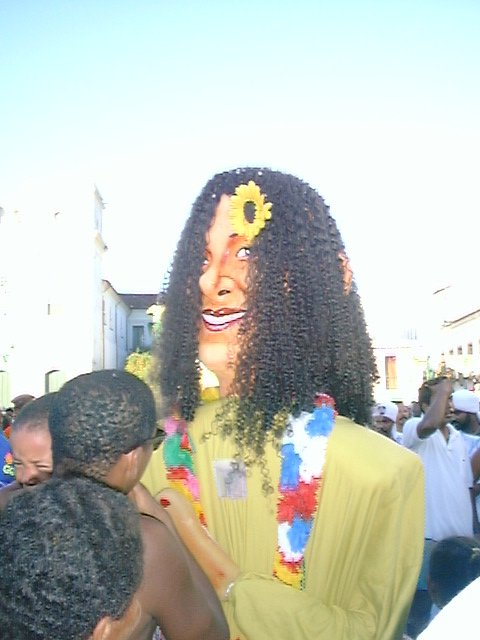
This figure probably
represents a politician. Politics gets into most
public events.
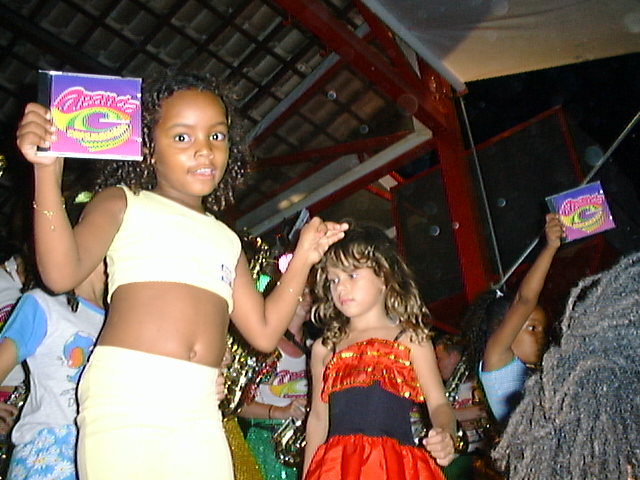
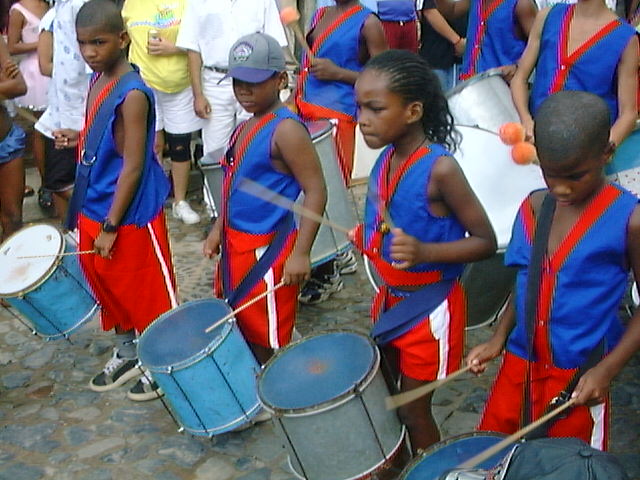
Children are really in the centre of things at Pelourinho's family carnival all the ugly elements (including the street kids) are neatly kept out of the way. Most Brazilians love to be photographed.
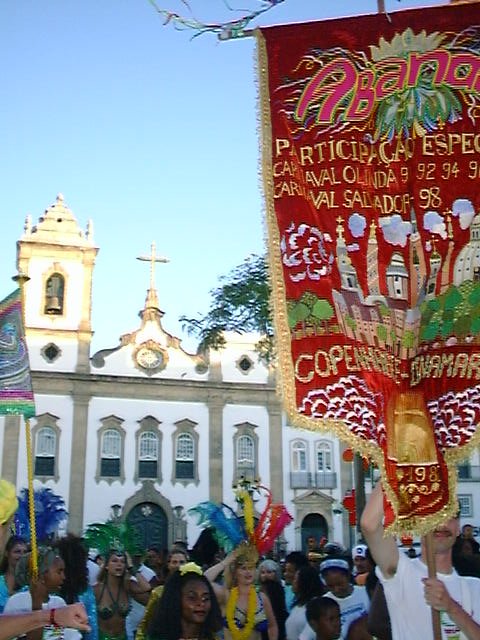
A Banda's banner -- made in Africa, by the way -- shows that we, too, have a bit of tradition. |
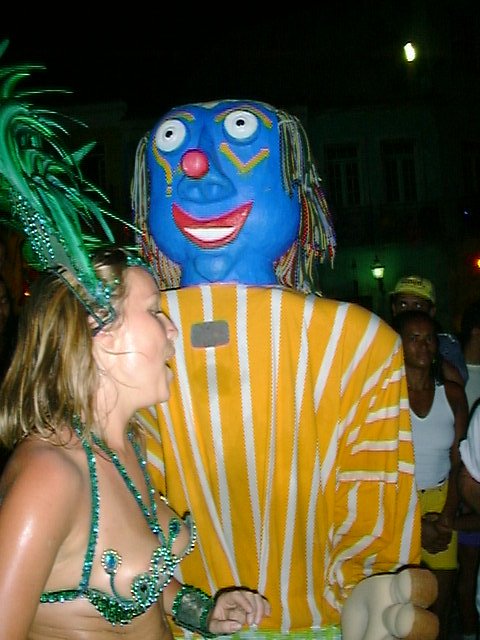
A Banda's Sara confronts one of the stars of the evening parade.
Young fury. A lot of local children are members of groups started by organisations which work to improve the lot of the city's black population. Everyone learns to dance as soon as they can stand on two feet.
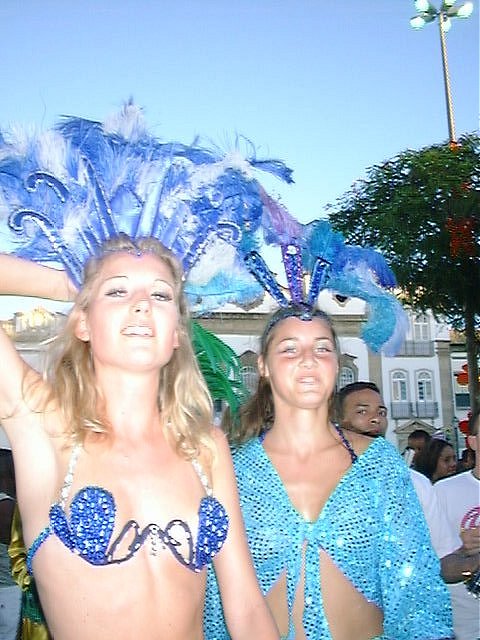
A Banda's dancers Mette and Lisbeth on Terreira de Jesus.
A Pelourinho sidestreet. Quiet before the storm.
A Banda's maestro Ole Rømer with some of his subjects on Terreira de Jesus.
The modern carnival, with all that goes with it, goes on in the rest of Salvador. Hundreds of thousands of people follow Trio Eletricos -- basically a lorry or bus chassis covered in massive loudspeakers with a stage on the top -- an experience you never forget. |