Cuban Music
A CultureQuest
|
Are you interested in Cuban music?
Want to know a little more about the history of Cuban music?
Until
the last decades of the 18th Century, Cuba was a relatively underdeveloped
island with Native Indian (Cubanas) tribes and an agrarain economy. It
also became an important stopover for European explorers as they were moving
westward to Latin America, Central America, and even North America. The
colonization by the Spanish empire of the New World and the
cultivation of sugar that began at the turn of the nineteenth century
transformed Cuba into a plantation society. While still having a
strong Spanish and European influence, and the demand for African slaves and African labor, which
had been introduced into Cuba from Spain at the beginning of the 16th
century, increased dramatically. The slave trade with
the West African coast exploded, and it is estimated that almost 400,000
Africans were brought to Cuba during the years 1835-1864. Thus
started the infusion of African culture and music combined with Spanish
European influences.
In the 19th and 20th Century what is mostly known as Latin music
is considered Cuban music but has also been infused with musc from other
carribean islands most prominently Puerto Rico. |
Choose reference to explore:
Time line in History
Here you will find an exhausitive, but informative timeline from basically the 1400s to contemporary times. for Americans the history of Cuba, music or otherwise is usaully divided in three categories: Pre-Columbus, The two centuries of Spanish westwrd colonization, and contemporary. Ironicaclly, the political relationship with Cuba since the 1960s has inhibited our knowledge of what is happening in Cuba today....musically or otherwise.African Influence
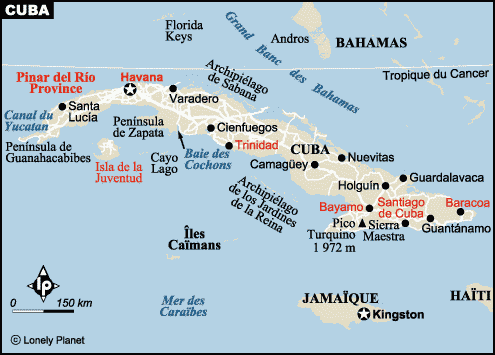
Geographically, Cuba was an imprtant port for the Explorers from pre-Columbus time until the end of the 19th century. However, the often overlooked part of its colonization history is the growth of the sugar cane industry and the tremendous influx of African slaves. In addition to affeting the cultural landscape these African slaves brought with them new music and instruments. All of which converged in the music known as Cuban music and Latin music.Post mid 1800s history
In this period we see the convergence of three cultures: Native Indians, Europeans ( Spanish), and Africans. Eventually this convergence, as expressed though music brought Latin music, instruments, and unique dances across Latin America and the United States.