MAPUA Institute of Technology
Multimedia Arts and Sciences
Art History
Using the Principles of Art
1st Term AY 2007-2008
Using the Principles of Art
Artists use the language of art in different and often highly imaginative ways.
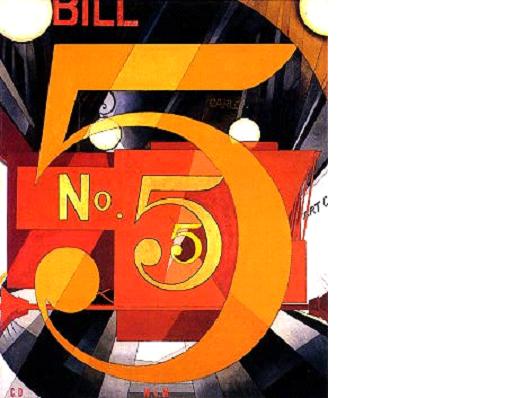
Notice painter Charles Demuth’s view of a fire engine racing through a rain-swept
city at night:
Objectives:
1. Create the “idea” of your name through a design made up of the letters of your name or nickname;
2. Apply the principles of art in your design
Materials:
• Pencil, ruler, eraser
• Sheets of scrap paper
• Sheet of white drawing paper (18 x 24 inches)
• Watercolor paint and several brushes
• Tempera paint and mixing tray
Directions:
1. On scrap paper, practice making block letters of different sizes and shapes. Focus only on the letters in your name or nickname;
2. Working lightly in pencil, create a design with the letters on the sheet of drawing paper. Arrange for some of the letters to overlap and some to go off the page. Fill the entire sheet of paper;
3. Using the ruler, divide your paper into eight equal rectangles. Number the eight boxed areas lightly in pencil in any order you like;
4. Using the pencil and eraser, draw in or erase lines to rearrange the shapes in AREA 1 so they have for FORMAL BALANCE. Fill in some of the shapes with pencil;
5. Using a VARIETY of hues of tempera, paint the shapes in AREA 2.
6. Using no more than three hues, paint the shapes in AREA 3. Repeat one of these colors over and over to add HARMONY;
7. Identify the most interesting shape in AREA 4. Using the brightest hue, paint this area to give EMPHASIS to this shape. Paint other shapes with dull hues;
8. Using the pencil and eraser, rearrange the shapes in AREA 5 to create RHYTHM. Use watercolors to paint the shapes.
9. Using watercolors, paint the shapes in AREA 6. Increase the PROPORTION of one of the colors you use. Notice how doing this emphasizes that color;
10. Using the pencil and eraser, rearrange the shapes in AREA 7 to create a sense of MOVEMENT in any direction. Use watercolors to paint the shapes. Pick colors that will add to the feeling of movement;
11. Rearrange similar shapes in AREA 8 to create a PATTERN. Pick one color of tempera to paint the shapes in Area 8. Paint the nearest shapes. Paint the other shapes, adding white to lighten the value of the hue. In this way the shapes will appear to create rhythm;
12. Display your design and identify the different principles of art found in each area.
13. Deadline: Aug 6, 2007.
• Tempera paint and mixing tray
Directions:
1. On scrap paper, practice making block letters of different sizes and shapes. Focus only on the letters in your name or nickname;
2. Working lightly in pencil, create a design with the letters on the sheet of drawing paper. Arrange for some of the letters to overlap and some to go off the page. Fill the entire sheet of paper;
3. Using the ruler, divide your paper into eight equal rectangles. Number the eight boxed areas lightly in pencil in any order you like;
4. Using the pencil and eraser, draw in or erase lines to rearrange the shapes in AREA 1 so they have for FORMAL BALANCE. Fill in some of the shapes with pencil;
5. Using a VARIETY of hues of tempera, paint the shapes in AREA 2.
6. Using no more than three hues, paint the shapes in AREA 3. Repeat one of these colors over and over to add HARMONY;
7. Identify the most interesting shape in AREA 4. Using the brightest hue, paint this area to give EMPHASIS to this shape. Paint other shapes with dull hues;
8. Using the pencil and eraser, rearrange the shapes in AREA 5 to create RHYTHM. Use watercolors to paint the shapes.
9. Using watercolors, paint the shapes in AREA 6. Increase the PROPORTION of one of the colors you use. Notice how doing this emphasizes that color;
10. Using the pencil and eraser, rearrange the shapes in AREA 7 to create a sense of MOVEMENT in any direction. Use watercolors to paint the shapes. Pick colors that will add to the feeling of movement;
11. Rearrange similar shapes in AREA 8 to create a PATTERN. Pick one color of tempera to paint the shapes in Area 8. Paint the nearest shapes. Paint the other shapes, adding white to lighten the value of the hue. In this way the shapes will appear to create rhythm;
12. Display your design and identify the different principles of art found in each area.
13. Deadline: Aug 6, 2007.
 Objectives: