 |
 |
|
 |
|
 |
 |
|
| This page is for the TRUE lovers of Ole Time Calypso,. i will try and take you back to a time when the calypso was flowing around the globe like water in a stream,. you will hear tunes from such people you never knew sang calypso and get a few memory lane surprises, so i hope you will enjoy this ride down memory lane, without further do let de Calypso Play On ! |
 |
 |
|
|
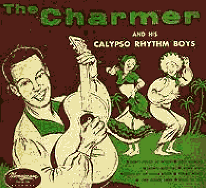
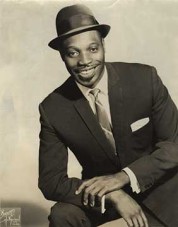
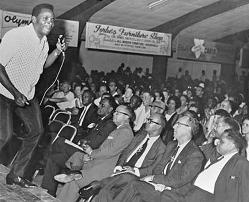
| Here you will get a taste from "The Charmer" most know nowaday as Minister Louis Farrakhan |
 |
 |
 |
 |
|
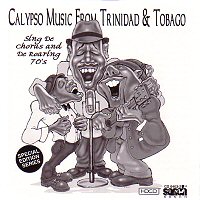
| Two eras of calypsos from Trinidad & Tobago recreated to preserve the integrity of the performances of each period. �Sing De Chorus� covers the 30s and 40s and �De Roaring 70s� presents calypsos influenced by the Black Power era politics.
The name of the original performer of each calypso is listed. |
| Various Artistes in a 90s tribute to Calypso greats recreate the early periods of Calypso history. In order to preserve the integrity of the music of that era, a totally acoustic ensemble was used to reproduce the original sound and tenor of these songs. |
|
 |
|
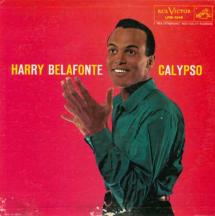
| Harry Belafonte was born in New York in 1927; of West Indian extraction (father from Jamaica, mother from Martinique).
In the 60's, Belafonte, though popular, was a controversial figure; labeled a fake by folk purists; as theatrical and pretentious by critics; as a Tom by some civil rights activists, as a threat by forces opposing civil rights. Facts speak for themselves. Belafonte never claimed to be a folk performer in the manner of Leadbelly. Instead, he adapted the traditional music he loved into his own idiom, such as calypso and did so successfully. making it into his own style. I can remember one saying that, one reason the Calypso in thise days did'nt kick off as well as it did for belafonte is that,. some people just could'nt understand the raw dialect of a westindian singer, for as harry, they could understand much better. |
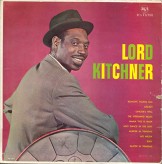
| From the 1940s until his death in 2000, Lord Kitchener remained a dominant figure in calypso and the winner of numerous Road March awards. He constantly experimented with new musical styles and offered guidance to several generations of novice calypsonians. |
 |
 |
|
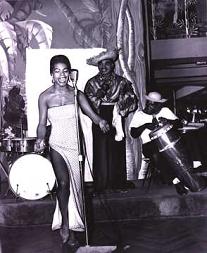
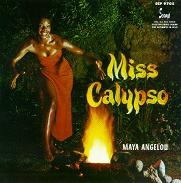
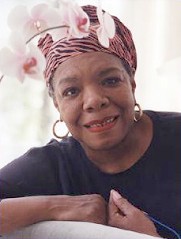
| Maya Angelou is an American writer well known for her many volumes of poetry and her memoirs, especially the volume I Know Why the Caged Bird Sings. She is little remembered for her early career as a dancer and calypso singer. Angelou had a Trinidadian grandfather and became familiar with calypso at home. During the early 1950s, she sang and danced calypsos in local nightspots in San Francisco. While on tour with a production of Porgy and Bess, she spent a period in Paris, where she was one of the first artists to perform calypsos in nightclubs. She returned to the United States at the height of the 1956-57 "calypso craze."
Calypso Heat Wave In 1957 she recorded an album titled Miss Calypso and appeared in the Hollywood film Calypso Heat Wave (Columbia Pictures, 1957). She also headlined a calypso revue in Las Vegas and New York, performed in Harlem's Apollo Theater, regularly sang in nightclubs and appeared in Geoffrey Holder's 1957 Caribbean Calypso Festival in Brooklyn. In 1959 she gave up touring as a singer to pursue a career as a writer. Miss Calypso Original Release Date: 1957 |
 |
 |
 |
 |
 |
 |
|
|
|
|
|
|
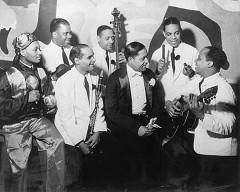 |
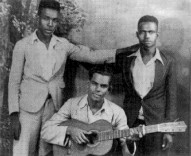
| Gerald Clark and Caribbean Serenaders,..Macbeth the Great, Felix Pacheco, Gregory Felix, Rogelio Garcia, Sir Lancelot, unidentified musician and Gerald Clark. |
|
| These recently uncovered recordings are from a series of shows held at New York's Town Hall, in this case on December 21, 1946. They are the only (so-far) known recordings of the At Midnight concerts from 1946-48.
Calypso was reaching its zenith of popularity in the United States at this time, although often from watered-down versions of the original songs, performed by white artists. Lomax, seizing upon the times, invited Lord Invader (Rupert Grant), a very popular Calypso singer, up from his native Trinidad to record and perform the actual island music for American audiences. Here, he is teamed with two fine American Calypso singers, MacBeth the Great and the Duke of Iron. They are backed by Gerald Clark and his Invaders, a pick-up group used for many American recordings of this music. |
 |
 |
|
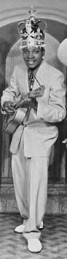 |
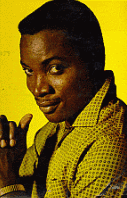
| The Mighty Sparrow won the Calypso King title on seven occasions between 1956 and 1974. He then ceased to compete. In 1992 he reentered the competition to prove that he was still the best; his victory further enhanced his reputation. Sparrow remains the best-known calypsonian of all times and continues to perform throughout the world. |
 |
|
|
|
 |
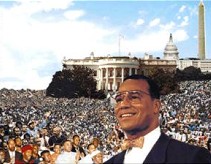 |
| Farrakhan was born Louis Eugene Walcott on May 11, 1933 in the Bronx and was raised in the West Indian community in the Roxbury section of Boston. His mother emigrated from St Kitts in the Twenties. His father was a Jamaican cab driver from New York.
At age 16, he started his calypso career by appearing in a nightclub in Boston as the Charmer The controversial leader of the Nation of Islam, Louis Farrakhan, was in the Fifties a leading calypso singer in the United States. Recently a new compact disc has been issued that collects all 12 of his recordings as the Charmer issued on Monogram label, The Charmer, Calypso Favorites 1953 - 1954, The twelve selections feature a fascinating mix of the popular Trinidad calypsos and original compositions. The popular like "Ugly Woman", "Brown Skin Girl", "Mary Ann", "Hold 'Em Joe" and "Take Me, Take Me." To popular calypsos, the Charmer often added a distinctive twist to the lyrics. |
|
|
|
|
|
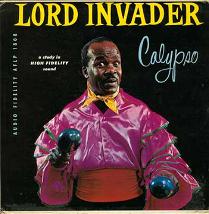 |
| Invader, the composer of "Rum and Coca-Cola," frequently performed with Gerald Clark's band in New York. He sued Leo Fiest for publishing his song and received a settlement in 1955. |
|
|
| Clips |
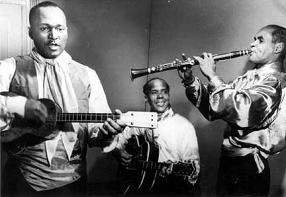 |
| Lord Invader (cuatro), Gerald Clark (guitar) and Gregory Felix (clarinet). |
|
| Clips |
|
 |