 |
|
|
|
|
|
|
|
|
|
|
|
|
|
|
|
|
|
|
|
|
|
|
|
|
|
|
|
|
|
|
|
|
|
|
|
|
|
 |
|
 |
|
|
|
|
|
|
|
|
|
|
|
|
|
|
|
|
|
|
|
|
|
|
 |
|
|
 |
 |
|
 |
|
|
|
|
|
|
|
|
|
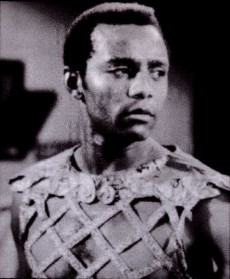
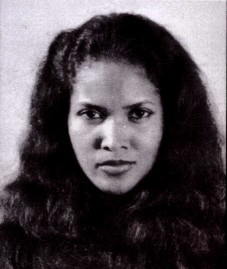
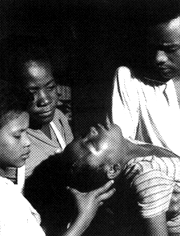
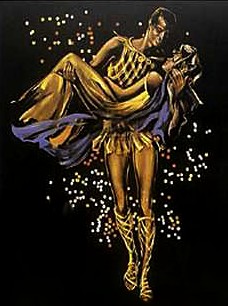
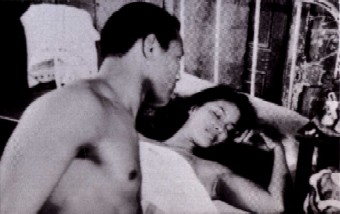
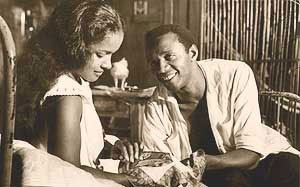
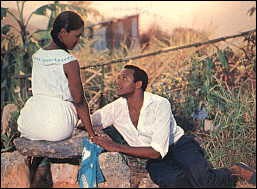
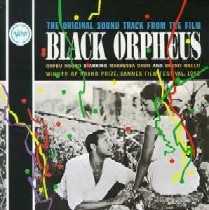
| This movie explodes onto the screen in a riot of color, music, dancing and drama so intense that it blows our minds. It's a retelling of the ancient Greek myth of Orpheus and Eurydice, brilliantly transplanted to the favelas of Rio de Janeiro during Carnival week. The pulsing samba rhythm throughout the movie is so hypnotic that more than once I had to get up and dance while I was watching it at home. And what else could be more hypnotic than Brazil during Carnaval? "Black Orpheus" brings us a marvelous cast of black actors lead by Breno Mello in the title role and Marpessa Dawn as Eurydice; she is fleeing Death in the form of a sinister stalker and takes refuge with her cousin Serafina, winningly played by L�a Garcia. But Orpheus has a fianc�e in the persona of Mira, a sexy bombshell played by Lourdes de Oliveira, who doesn't appreciate Orpheus falling in love with the beautiful and desperate Eurydice. Mira and her friends are the Furies relentlessly hounding Orpheus in the middle of Carnaval, while he tries to protect Eurydice who is being relentlessly stalked by Death. But Death and the Furies are too strong for both of them, and Orpheus can only be reunited with Eurydice in another world. The marvelous setting in the hills above Rio, the vibrant cinematography, and above all, the brilliant samba music by Luis Bonfa and Ant�nio Carlos Jobim, all come together to work on our senses until we are totally caught up in the film. This movie is not so much for watching as for experiencing. And even after all the tragedy, we leave the film on a positive note watching the exuberant dancing by three very young children, who remind us that in the midst of death we remain gloriously alive. |
|
 |
|
 |
|
|
 |
|
|
|
|
|
|
| In sync with the mythology, Orfeo is known as much for his musical talent as he is for swooning women -- the word among the idolizing neighborhood children is that his early morning strumming makes the sun rise. But his love for Eurydice -- who is coincidentally staying right next door with her cousin Sarafina (Garcia, a charming actress) -- is undeniably true. In the Greek myth, Eurydice is killed from the bite of a viper and Orpheus goes to the underworld to retrieve her soul and bring her back to life. This is well-paralleled in Black Orpheus. Through the nighttime chaos of the Carnaval celebration, Eurydice is stalked by Death (de Silva, in a silly costume of black tights). Camus broadens the film's scope beyond its tragic forbear with jabs at contemporary Brazilian politics (the few white actors play godlike positions of power, the missing persons department is hauntingly empty and filled with countless stacks of paper). It's questionable how effective these scenes play, considering the first three-quarters of the film are exquisitely free of any social commentary. This didn't seem to matter to the Academy of Motion Picture Arts and Sciences, Cannes or the Hollywood Foreign Press Association, all of whom lauded Black Orpheus as one of the year's best films. Interestingly, Camus' picture is known more for what it changed in the world of music than for what it changed in the world of celluloid: Soundtrack composers Antonio Carlos Jobim and Luis Bonfa introduced the style of bossa nova to popular culture and almost instantly became international superstars. This end, it seems, is how the music-loving Orfeo would have wanted it, anyway. |
|
 |
|
 |
|
|
|
|
 |
|
|
 |
|
|
|
 |
|
|
|
|
|
 |
|
|
|
 |
|
|
|
|
|
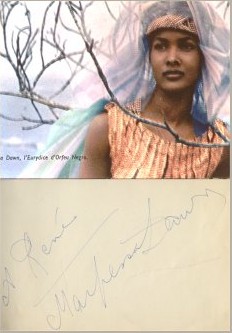
Autograph from Marpessa Dawn |
|
|
Cast & Role
Breno Mello Orpheus ( Man with Marpessa )
Marpessa Dawn Eurydice ( Above: in White Dress )
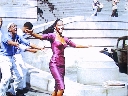
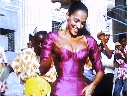
Lourdes DeOliveira Mira ( Above: in Purple dress)
Lea Garcia Serafina
Adhemar DaSilva Death
Alexandro Constantino Hermes
Waldetar DeSouza Chico
Jorge Dos Santos Benedito |
|
|
 |
|
|
| Now sit back relax and enjoy the lovely sound clips directly from the soundtrack |
|
 |
|
|
1. Generique (Folklore Traditional)
2. A Felicidade
3. Frevo
4. O Nosso Amor
5. O Nosso Amor (Tambourine And Accordian)
6. Manha De Carnaval (Morning Of The Carnival)
7. Scene Du Lever Du Soleil
8. Manha De Carnaval (Morning Of The Carnival)
9. Schenes De La Macumba (Folklore Traditional)
10. O Nosso Amor
11. Manha De Carnaval (Morning Of Carnival)
12. Samba De Orfeo
13. Batterie De Cappela (Folklore Tradtional) |
|