 |
 |
| Caterham Barracks |
|
 |
|
| 1877----1960 |
 |
 |
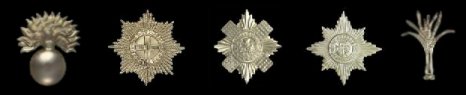
| My Introduction to Life in the Guards (continued) All during the day of Monday 22nd October 1945 (it is burned into my memory) we trudged backwards and forwards from Roberts block to our new billet in the K company huts, one of about six around the perimeter of the Grove Lines football field. When we entered the hut for the first time I was aware of the length of what appeared to be a big �Scouts� Hut� with glaring white scrubbed wooden floor,s and lots of windows all sparkling like diamonds! Two big solid fuel stoves stood like blackleaded dustbins waiting for their first meals of glowing coke, when we eventually got settled in. I noticed a large square board up in the roof joists, and from the meshed centre of this, there was drifting the muted strains of a girl crooner with orchestral backing warbling the latest �hit� of that time�..�Symphony� I suppose we did break off from our labours to be fed, but all I can remember is the shock of realising that I was going to be living in this shed with all my squad companions for the rest of my recruit training and the prospect was a little daunting. We were allocated our bed spaces by the Trained Soldier, much to the chagrin of one or two Boys who were rapidly emerging as the �bully boys� of the squad - they had charged straight over to the hut corner to claim �prime� spots�.. only to be promptly turfed out with �You can flipping well come out of there � that corner is reserved for me!� I noticed that there was a marked absence of mattresses or �biscuits� on the bare bed springs, but in the afternoon I realised why as we were marched over to a large barn like structure filled to the eaves with bales of straw, where we were each issued with large man sized canvas bags, open at one end and fitted with tapes also. �Fill your bags with straw lads, and the careful way you pack them will decide how well you sleep at nights, because these are your mattresses, they are called �palliasses���but there is nothing friendly about these flipping donkeys!� (quite funny hearing this for the first time and we all giggled dutifully, but how many times did he repeat this old chestnut I wonder?) We were still expected to fold our battledress trousers and blouses, plus our greatcoats under our blanket for pressing whilst we slept, and wonder of wonders �it worked! The process called for us to brush up and down each garment pleat with copious amounts of water with our shaving brushes, holding the completed folds together with such aids as out forks and button sticks. The heat of our sleeping bodies on the top of each �pile� of garments would dry the damp garments and set the creases � there were no luxuries of steam irons or even ordinary flat irons in those early days, but our sharply creased trousers and blouse sleeves would not have suggested any deficiencies in that area, for they were as sharply defined as any Depot Squad instructor could desire. After the evening tea meal we had a nightly period of instruction in our barrack hut known as �Shining Parade� For this procedure we had one blanket spread out on the palisade and tucked in with �hospital corners� (we hoped!) and over this expanse we spread our ground sheet. In front of the bed stood our kit bag folded over at the top to reveal our name and regimental number. Armed with all our cleaning materials and our uniform articles requiring attention, we then sat astride our beds with braces slipped down and hanging down each side of our body (why?) - using the same white one pint china mug that we used at meal times, but now filled with water, we started the two hours task of polishing brasses, blancoing web equipment (using our shaving brushes!) etc. During this monotonous ordeal the TS would strut up and down the length of the billet, asking questions on Regimental History, Battle Honours etc whilst slapping the sides of his legs with his swagger cane. We didn�t realise at the time of course, but one of the benefits of being in a Brigade squad was that these sessions gave us a good grounding in the history, customs and battle honours of all five Regiments in the Household Brigade and NOT just our own, as prevailed in the Men�s� Regimental squads. (although I believe they did touch lightly on the regiments other than their own). At the end of our first day in the new billet, we had our first couple of hours �exposure� to our squad instructor, Sgt Smith of the Welsh Guards, a very smart man with sandy hair and a clipped gingerish moustache. He told us quite a bit about his background before he was called up for war service, and a lot more about his travels with his Welsh Guards battalion during the recent conflict. At one point he told us a few thing s also about our TS (also a �Dusty� Smith) which he would not have revealed himself. Indicating the wound stripes on the left sleeve of the TS, he asked him to roll up his trousers to reveal some ugly scars in both legs � reminders of the injuries he had sustained whilst on active service with the Grenadiers. Although both of our Guardians were strict disciplinarians and dedicated to the �nth degree�- there were odd moments during those evening s in the hut, when each of them would mention his �Release Group� number with a certain amount of longingevident in the way they spoke of them. During the time of National Service, each new entrant to the army was allocated a Release Group number, which indicated the order in which he could expect to leave the colours to join the reserve as that particular number came up. I had a release group too, but when I showed it to the TS (it was shown in the front of each man�s AB64) he pointed out that the number 72 appertaining to my release group, also had the letters DR after it - which translated to indicate �Deferred Regular� (in other words I had to �soldier on� when number 72 came up). At one point during that first evening, the door opened, and Sgt Smith barked out �Squad shun! � sit up straight� The new arrival was a craggy faced man in a Khaki Great coat, wearing one of those caps which I yearned to wear � namely those with a peak covered with rows of stitching and which seemed to have a front which towered up for ever! He had three chevrons on each sleeve and sported the silver �Order of the thistle� badge of a Scots Guards full Sgt. He carried a Pace stick under his arm. He promptly told us to sit at ease, introduced himself as Sgt Waight, our Superintendent Sgt, and came round the hut stopping at each bed for a few words with each boy � when he asked me what part of Wales I came from, he raised his eyebrows in a quizzical arch when I answered ��Leeds, Sergeant� before he continued on to the next bed � I think that was the first of many moments which I would have during the next year, when I would become more determined to seek a transfer to an �English Regiment� � but there were to be many obstacles to overcome along the way. When the two Sgts left the hut, the TS introduced us to the first required practice which had to rigidly adhered to � �Falling in and Out!� Whenever one of us wanted to leave the room (for whatever reason) he had to go to the doorway, slamming both feet together to the position of attention, and bellow out at the top of his voice � �Leave to fall out Trained Soldier please?� The TS would then answer �Yes, please� a similar procedure applied when re-entering the room. This practice applied to all places and occasions whether they be inside or outside on the Drill Ground. It became second nature eventually, and it was deemed to be normal behaviour when joining or leaving anywhere. On Tuesday morning at the stipulated time of five minutes before the actual time of getting on parade, Sgt Smith�s squad assembled for the very first introduction to weeks of foot drill on the small Roberts block square, only interspersed by frantic moments as we hurriedly changed into PT kit, ie � blue cotton shorts (not very short in my case) and white PT vest wearing our brown canvas laced up PT shoes and carrying rolled up towels. We would then be double marched up to the old Barracks gym and handed over to the tender care of huge men in tight navy blue trousers and blue-red-blue striped jerseys. These amateur Charles Atlases were the Depot PT staff � all of them from one of the five Regiments, but acting under the direction of a Staff Sgt Major Instructor from the Army Physical Training Corps. We endured one hour of PT than were doubled back for foot drill and so on -throughout the long days of our training. PT included all the usual things like vaulting horses, medicine balls, climbing ropes, wall bars etc, but just now and again a large Coir mat would be placed in the centre of the Gym floor and the squad had to crowd on to it. When the PTI blew his whistle, we all had to engage in the most bruising encounter devised by some fiend at Aldershot, and known as a �Melee� (but referred to by Guardsmen as �Milling�) The aim of the exercise was to attempt to be the last person left standing on the mat, when the whistle blew again, and the gasping � halt and lame� amongst our numbers would gaze with mild hatred at the bruiser left standing with puffed out chest in the mat centre! We were confined to barracks for the first six weeks of our Depot days, each day following the pattern described, namely � Drill, PT, Shining, PT, and Drill, Drill, Drill! Just in case we expected a well earned period of inactivity at the weekends, we were to be sorely disappointed, for this was the time considered best to parade at the MI room for our �jabs� which were oddly referred to as �25�, �75� etc (depending on the strength of dose I presume) � they were cruel inconveniences which resulted in painfully swollen upper arms, and making the most humdrum tasks awkward to perform over the weekend. \One Saturday in particular stands out in my memory, for this was when we all were vaccinated with Small-Pox vaccine (children of the twenties and thirties had none of these vaccinations etc) Before the war, I was hospitalised twice for weeks on end with scarlet fever, and once - (when my parents nearly lost me) with the dreaded Diptheria! For our vaccination, we all queued up one behind the other and filed past two men � a medical orderly and The Depot MO. With our hands on hip we presented our bare upper arm first to the orderly, who, horror of horrors, made an incision with a scalpel which he then wiped with iodine � those of us who hadn�t fainted (and there were a few!) moved on to the MO who blew a bubble of vaccine on to the cut with a glass tube, which he then used to poke the vaccine well into the cut. (I shudder to think of that old fashioned method, which was considered the norm in those days) Many of us developed a reaction to the vaccination in varying degrees of seriousness, for my part, I managed to find myself in the Depot hospital for a period of about four days with a violent reaction which the nursing staff called �Vaccine Fever� In most cases, a large black scab formed at the site of the vaccination, and this was protected with as strip of plaster, but one had to very carefully guard against the scab being knocked off prematurely, as all sorts of complications could be the result. One poor wretch found himself in Millbank Military hospital facing what passed in those days for Plastic Surgery I suppose, just because his scab had been knocked off leaving a deep hole in his arm which showed no signs of healing � he was away for quite a while I believe. As for the rest of us, \when the scab eventually dropped off, the resultant scar was what everyone refers to as a �vaccination mark� � on odd occasions when I catch sight of mine in a mirror these days, I think of what that little white mark cost in terms of old-fashioned medical procedures and a fair amount of discomfort! As we were attached to K company Scots Guards, we had to parade outside the Company office hut on Thursdays to receive our pay - drawn up in three ranks and standing easy, we listened intently for our name being called out, at which we would answer �Sir!� and march in smartly, halting at attention in front of a blanket covered trestle table, behind which would be sat my �baby faced� Scots Guards officer of recent memory who received my salute, and the CQMS. Our weekly pay was 5/- (25p) in the hand, and about 3/- left in credits. Aside from our money, every fortnight a soap coupon was issued to use when purchasing the same at the NAAFI. I seem to remember vaguely that we were issued with sweets coupons also, but I could rarely afford such luxuries as chocolate etc � and of course we were forbidden from smoking until we reached the manly age of 17 years As the weeks passed by, the pace on the drill ground intensified as Sgt Smith prepared us for the Adjutant�s 6th week.inspection. It all depended on our success or otherwise which would influence whether or not we would be allowed a �walking out pass� at last. The day of our dreaded inspection came round at last, and after the midday meal, Sgt Smith fussed over us one minute like a mother hen, then snapped at us like an old sheepdog the next, but he was not about to suffer his first 6th week failure was he? We duly formed up for inspection and waited for the arrival ot the inspecting officer. On the first stroke of 1400hr - accompanied by the clinking of spurs and the metallic clicks of the RSM�s boots, both these worthies arrived, to be greeted by our instructor bringing the squad to attention and calling out���Sgt Smith�s Boys� Squad � six weeks squadded,, ready for your inspection � Sir!� The Adjutant, resplendent in riding breeches, highly polished boots and Sam Browne Belt was a Coldstream Officer � Captain Darrell, (who I was to meet in later years when he was a Brigadier), he was accompanied by the RSM of the Guards Depot � RSM Hamilton, Scots Guards. After inspecting the squad by walking up and down our ranks as we stood in open order, the Adjutant gave Sgt Smith the command to �Carry On� and we promptly went through all our drill movements, including quick and slow marching, forming, and saluting on the march etc. On conclusion of the Squad�s demonstration of Foot Drill movements, each individual then had to march up to the Adjutant, standing at attention three paces from him and salute - after calling out his number, rank, Name and regiment, he would wait for the command to �carry on� by the Adjutant � then, after saluting again, he would turn about and rejoin the squad, We must have come up to the prerequisite standards as required by the Household Brigade and The Adjutant, because Sgt Smith took great delight in congratulating us afterwards., and telling us not to let our standards slip from what we had achieved so far. We were now to be given a �walking out� pass which would allow us to leave the confines of The Depot on the following Saturday afternoon from �After Duties� (this included coal drawing duties at 1330 hra ) - so we would have to get a move on afterwards to get dressed and take advantage of our new privileges which ended at 2000hrs (yes � we all had to report back by 8pm!). Meanwhile it was a case of - �Mothers of Croydon, lock up your daughters � the lads of Dusty Smith�s squad are coming to town!� Continue |
 |
| Copyright � 2006 Rodney J Angell- Baker |
 |