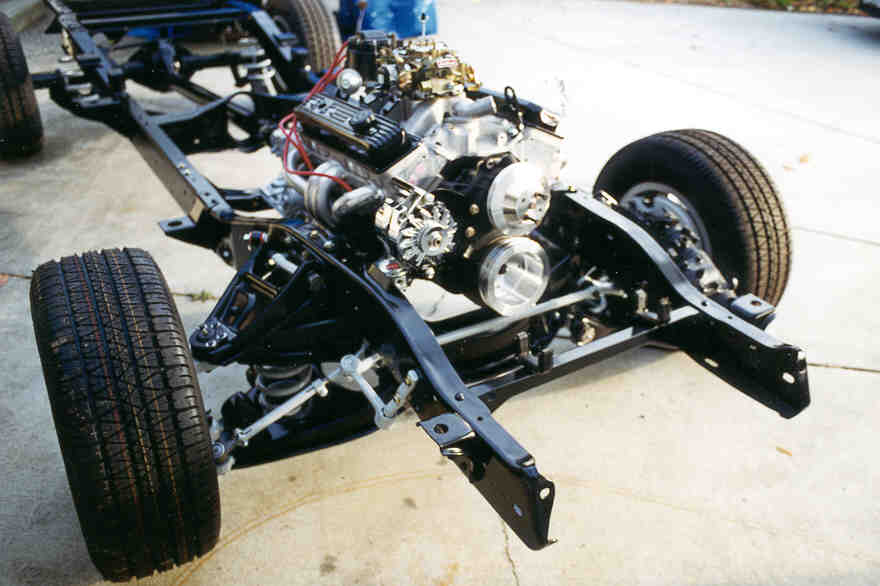
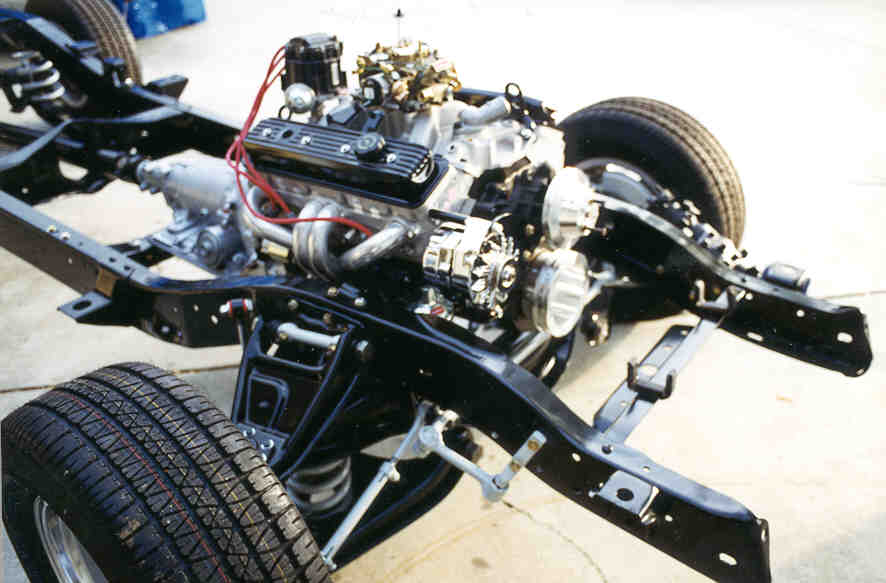
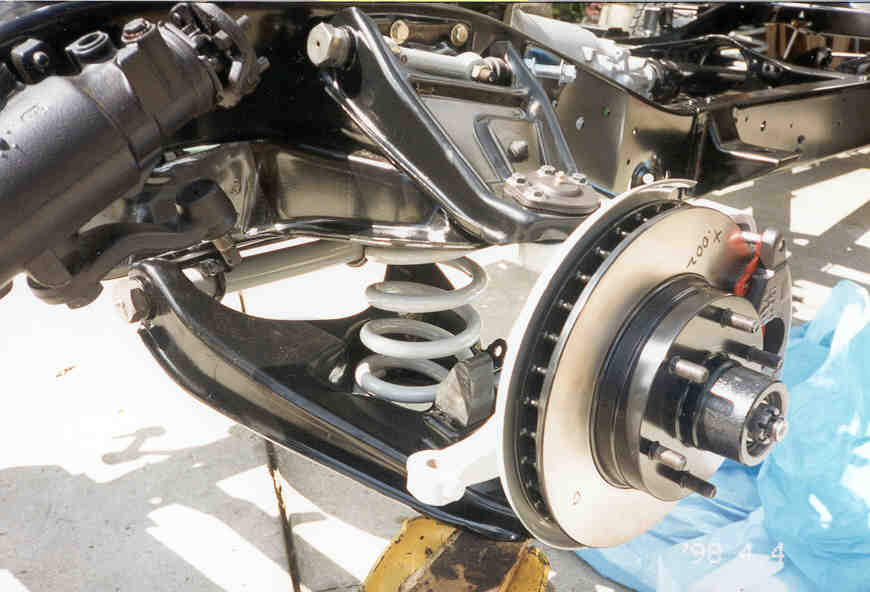
| I stripped the chassis down to the frame and carefully checked each joint for cracks or other damage. I also measured the frame to ensure everything was still square and wasn't 'tweaked' from all the use over the years. I then completely cleaned the frame with a right angle grinder with a cone wire brush. This worked very well in removing 30+ years of grease and mud. I drilled out the rivets holding the original transmission cross member and relocated the new cross member in its proper location. I used the engine-transmission to establish the correct location before marking and drilling the frame. (Tip: I found the best way by far to drill the relatively thin frame walls was with a step drill. The drill is designed for this type of drilling operations (i.e. thin materials) and works extremely well. The holes are round, not wobbled, and are neatly chamfered by the subsequent drill step.) I also used this time to accurately measure my drive shaft. I then brought the drive shaft down to my driveshaft company where they shortened and installed the new GM yoke and universal joint. (Needed for the TH 700R-4 transmission) I used my right angle die grinder and a flat mill file to break all sharp edges and corners. My powder coater recommended this to get the best adhesion of the powder to the frame. Apparently the electric currents generated to attract the powder to the frame a very low at sharp corners and edges which results in thin paint. My frame was ready for powder coating. I decided to use a semi gloss (60 degree) black. The frame was media blasted then hung on a fixture and rolled into a walk-in oven. The frame was heat cycled for several days which forced out all the entrapped contaminates in the joints. The frame was media blasted again, powder coated and cured. |