lesson seven
Climate change is important. NOAA uses microfossils to study our changing climate. http://www.ncdc.noaa.gov/paleo/parcs/atlas/beringia/fungus.html
The search for microfossils and gold in my area is being helped by bulldozers. The bulldozers are cutting in new roads. Panama is building a new urban area in the 35 kilometers of hilly farmland between the cities of Panama and Chorrera.
Starting a microfossil collection:http://www.fortunecity.com/greenfield/ecolodge/25/microf~1.htm
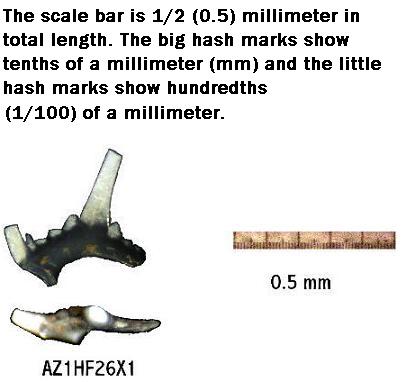
Conodonts:
http://www.geocities.com/CapeCanaveral/Hall/1383/2TopCone.htm
 http://www.le.ac.uk/geology/map2/abstractsetc/cavhet.html
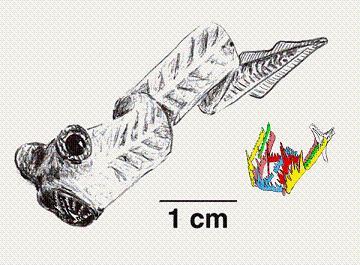 http://www.renmanart.com/index.html
http://www.emc.maricopa.edu/faculty/farabee/BIOBK/BioBookPaleo3.html
Geology Web Links: http://geologynet.com/topten.htm#topten
Pocket Sieve Set

High quality pocket sieves are very useful for testing small samples either in the laboratory or on site. The brass sieve has a range of interchangeable mesh discs of different aperture sizes. It is supplied complete with a sieve brush and belt pouch.
link: http://www.endecotts.com/sieves/sieve_types.htm#pocketsieve
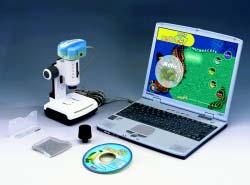
DigiScope 150 & 300
link: http://www.scientificsonline.com/default.asp
Easy and Affordable - Designed & Manufactured by a Real Microscopy Company! Designed for Younger Students with Software Developed to Engage Their Minds Professional Coated Glass Optics - Not Plastic! Superior Image Quality & Resolution PC & MAC Compatible
Built-In CMOS Digital Camera SuperBright LED Illumination 2 Stages for Viewing Regular Microscope Slides and Larger Objects Exclusive Activity Manual with 32 Science Inquiry Based Activities Completely Portable - Use Anywhere as a Stand-Alone Microscope
Designed specifically for younger students with input by professional educators, the DigiScope 150 and DigiScope 300 Digital Microscopes from Motic Instruments will take you and your class on a journey of microscopic discovery the likes of which they have never experienced before. Both are simple to set up and easy to use.
Developed using the same advanced digital microscopy technology found in our high-end Boreal and Motic Digital Microscopes, these beginner models are LED field microscopes with built-in CMOS digital camera.
The DigiScope 150 features a 10x to 50x manual zoom lens that provides on-screen magnification of 42x to 210x. The lower magnification provides a larger field of view.
The DigiScope 300 features a 20X to 100X manual zoom lens.
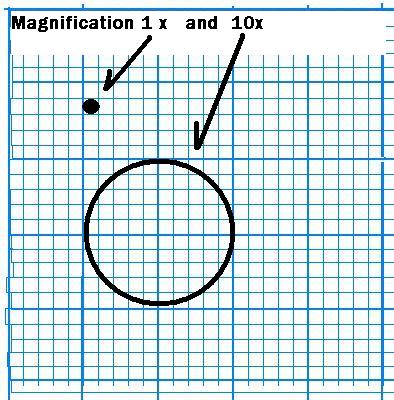
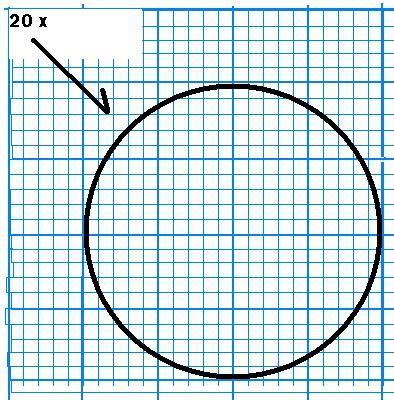
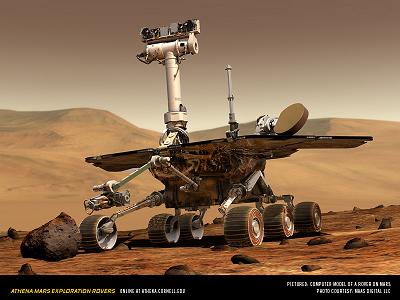
On the planet Mars we have robotic geologists looking for water deposits. The robots have a digital camera that has a microscope.
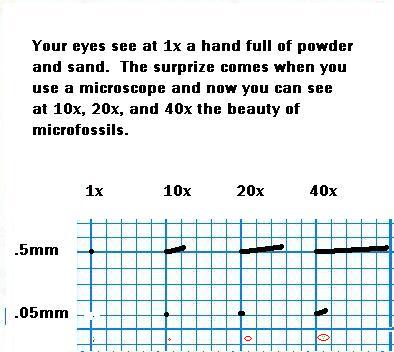
Microscopic imaging (MI):
The MI can resolve objects as small as 0.1 mm, with a pixel scale of 0.03mm/pixel. The full field of view is 32 mm, so objects up to this size can be seen.
The MI was designed to emulate a 10x hand lens, the type commonly used by field geologists.
link: http://athena.cornell.edu/
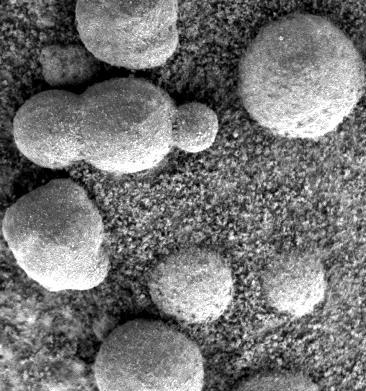
Microscopic water formed mineral deposits found in old dried up Mars shallow sea bottom.
More great Mars rover data and planet Mars photos at:
MER Analyst's Notebook
link: http://anserver1.eprsl.wustl.edu/
Homework:
How many kinds of shells and microfossils did you collect?
Extra homework:
How many stars and constellations do you see at night?
Clock to star hour or sidereal time Panama
Month 8pm 6am
--- 1--- 3--- 13
--- 2--- 5--- 15
--- 3--- 7--- 17
--- 4--- 9--- 19
--- 5--- 11--- 21
--- 6--- 13--- 23
--- 7--- 15--- 1
--- 8--- 17--- 3
--- 9--- 19--- 5
--- 10--- 21--- 7
--- 11--- 23--- 9
--- 12--- 1--- 11
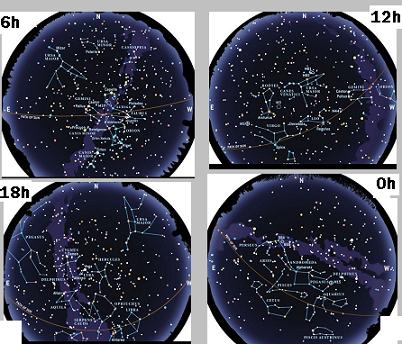
links:
http://www.astronomy.com/
http://skyandtelescope.com/