Ideas for Biofuels
The Need:

1. The world’s increased use of and dependence on imported oil;
2. Peaking of the world’s oil production in 10-30 years with unacceptable rising prices already occurring;
 3. Mounting concern
over national, energy and homeland security relating to energy issues;
3. Mounting concern
over national, energy and homeland security relating to energy issues;
4. US loss of basic industries and high quality industrial jobs;
5. Location of most remaining oil reserves in unstable regions of the world;
6. Increased world-wide environmental pollution from the production, transportation, refining, distribution and combustion of fossil fuels and the use petrochemical products;
7. Increasing loss of top soil, desertification and wildlife habitat through shortages of shelter, food and water in many regions of the world;
8. Stabilization of greenhouse gases is becoming a world-wide priority; and
World opinion supports action now. (i.e. Thomas Friedman in a 6/27/04 NY Times column). He calls for a:
Joint Chinese-American Crash Program for Developing Alternative Energies. Roughly 30,000 new cars merge onto the roads in Beijing every single month. Every day, the newspaper headlines in China area about energy shortages, blackouts and brownouts. U.S. officials estimate that 24 out of China's 31 provinces are now experiencing power shortages.
China's foreign policy today consists of two things -
Taiwan and

searching for oil.
China's oil imports jumped last year alone by 30 percent. This is not a healthy situation. Environmentally speaking, in 10 days in Beijing I saw blue sky once. The other days were a gray, polluted haze. Developmentally ,China's growth is soon going to be restrained, if it isn't already, by a sheer shortage of energy.

Strategically ,China and America could soon find themselves in a dangerous head-to-head competition for fuel.
He continues by proposing a:
grand China-U.S. Manhattan Project - a crash program to jointly develop clean alternative energies, bringing together China's best scientists and its ability to force pilot projects, with America's best brains, technology and money. "When it comes to renewable technology and sustainable energy, China could be the laboratory of the world - not just the workshop of the world," said Scott Roberts, Cambridge Energy Research Associates analyst in China. Why not?”

Solutions
There are many approaches to the major challenge of reducing dependence on oil to power the US and world’s economy.
American solutions include:
1. Recommendations developed by the Energy Future Coalition (www.energyfuturecoaltion.org);
2. Recommendations to be released by the National Commission on Energy Policy later this year: www.energycommission.org
3. Renewable energy policy recommendations by the American Council on Renewable Energy (the concepts outlined below will be the biomass contribution) which will also be released before the end of year. [email protected]
Taken in concert, these policies, recommendations and guidelines will, in a major way, reduce US dependence on oil. It is estimated that about half the contribution will come from increased efficiency with the remainder being met by alternatives to oil. It is the intention of the “Biomass Revolution” to see a 50% reduction in US oil utilization within 25 years. This is not possible without embracing the soil and water concepts outlined below.
Conservation and the Efficient Use of Energy
The low hanging fruit in advancing the energy usage in any society is the efficient use of that energy. While we should not delay the “Biomass Revolution” in the transition to a carbohydrate economy, optimized efficiency must a full partner in all the concepts and technologies presented.
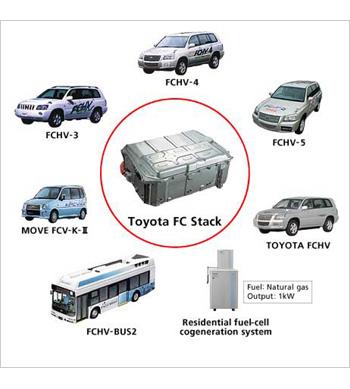
Toyota has begun limited marketing of its hydrogen-powered fuel-cell hybrid SUVs (based on the Highlander model) in the United States and Japan.
link: www.toyota.com/tomorrow
July 2004 GM ad:
"GM Hybrid-Powered Buses - In Seattle, the local transit authority has begun taking delivery of 235 GM hybrid-powered buses. ... This single fleet is slated to save over 750,000 gallons of fuel annually.
If the nine largest U.S. cities replaced their 13,000 conventional buses with GM hybrid-powered buses, they would save over 40 million gallons of fuel annually.
Link: www.gm.com"

Biomass and Coal

– A New Natural Partnership
This Partnership will result in symbiotic benefits because of the ability to:
1. Co-fire and co-gasify coal and biomass with complementary benefits; and, as described below
2. Incorporate hydrated ammonia (ammonia with an attached water molecule) into charcoal as gas to produce a dry powder that, when introduced into the stack gases of a coal fired power plant, will absorb much of the CO2, sulfur dioxide, and nitrous oxides, and
3. Produce a high quality, charcoal based, natural fertilizer from the resulting ash.

“Living Soil” --The Essential Foundation
This revolutionary advance must include full recognition that soil, organic matter, nutrients, microbiological activity and water quantity/quality are absolutely essential to ensure the sustainability of the biomass energy economy and the biomass revolution. This is made possible by:
1. A better understanding of the ancient “production” of black earth – Terra Preta – by incorporating human and animal waste with charcoal;
2. The ability to pyrolyze woody biomass to make high quality charcoal and a synthetic gas that can be processed through catalysts (Fischer Tropsch technology) to produce a variety of biofuels including biohydrogen (The Fischer Tropsch technology was used to help power Germany’s WWII war machine and is now the primary technology used to power South Africa’s economy);
3. Incorporating hydrated ammonia (ammonia with an attached water
molecule) into charcoal as gas to produce a dry powder that, when
introduced into the stack gases
 of a coal fired power
plant, will absorb much of the CO2, sulfur dioxide, and nitrous oxides
resulting in a high quality, charcoal based, natural fertilizer (this
technology has been well demonstrated by the University of Georgia); and
of a coal fired power
plant, will absorb much of the CO2, sulfur dioxide, and nitrous oxides
resulting in a high quality, charcoal based, natural fertilizer (this
technology has been well demonstrated by the University of Georgia); and
4. Combining this natural fertilizer and essential minerals with organic matter produced by the anaerobic digestion of animal and human wastes will provide a “super natural fertilizer” to revitalize soils while sequestering atmospheric CO2 in a stable form for hundreds of years (similar procedures have been used for millennia in the production of Terra Preta). Incorporating high quality charcoal into composting operations will also produce benefits, but these are somewhat offset by the lost of methane in this aerobic digestion process.
5. Implementation of the Conservation Security Program (CSP) legislated by the Congress and being implemented by USDA’s Natural Resource Conservation Service (NRCS). The controlling factor in the CSP is the Soil Conditioning Index indicating the trend of carbon sequestration in the top four inches of the soil profile. The CSP provides valuable opportunities to determine the viability of the above concepts. If other practices prove more valuable they should be followed.

The Critical Synergy Between Living Soils and Water
Living Soils cannot effectively function without water, but there are mutually reinforcing synergies, i.e.;
1. Watershed protection through the sustainable growth of biomass in living soils -- holding water instead of soils being washed away;
2. The higher rate of water absorption in pliable, living soils with high levels of organic matter;
3. The continued use of cover crops or no/minimum tillage, or other forms of conservation tillage, to ensure there is some level of protective biomass in the soil on a year around basis. Periodic aeration of the soil and avoidance of compaction is also important;
4. Water conservation through advanced irrigation systems;
5. Hydropower systems that are particularly attentive to watershed and soil protection while allocating water at critical times to ensure healthy soils;
6. Desalinization could be prohibitively expensive but, where necessary, using renewable energy technologies when possible, with the possibility of using advanced nuclear systems operating in a cogenerating mode (electric power and thermal energy to desalinize saline water), maybe economically feasible; and
7. There are certain crops, with new ones being developed, that can be grown in brackish water and harvested for their biomass value.
Living soils and adequate water will even make the deserts bloom productively.

Types of Biomass That Will Prosper in Living Soil
1. Feed grains such as corn, milo, wheat and barley;
2. Oil seeds such as soybeans, mustard and canola used in conjunction with peanut and tree oils, tallow and animal fats, used cooking oils as well as yellow and trap greases, for the production of biodiesel
3. Sugar crops such as sugar cane and sugar beets;
4. Starch crops such as cassava and other root crops;
5. The cellulosic residues (leaving the vast majority of these crops to provide food and fodder for human and animal consumption) from these crops such as corn stover, wheat and rice straw, cotton gin trash, and sugarcane baggase that can be harvested at a rate that will not deny the soil essential organic residues;
6. A wide range of grasses and hays such as switch grass and alfalfa;

7. Hybrid trees such as poplar and willow;
8. The full range of trees that grow in forests and wood lots;
9. The residues from these trees after the higher value lumber and wood pulp have been recovered;
10. Thinning and underbrush from forests requiring careful management to avoid devastating forest fires (revitalizing forest soils with Terra Preta should be part of this recovery process);
11. Thinning and trimmings from rights-of-ways, parks, yards and gardens; and then the final residues --
12. The clean biomass/organic fraction of municipal wastes that now goes to overtaxed land fills can be used when this material is essential free of heavy metals and harmful chemicals. It is also possible to use this organic waste, when properly processed, on forested and wood lot lands.
These sources of biomass, with a vital soil structure and adequate water supplies, will provide all the biomass needed to satisfy the world’s needs for food first -- and then for liquid fuels. If a shortage should occur, the world can then sustainably harvest aquatic biomass from the streams, rivers, bays, seas, and oceans. These bodies of water have been the ultimate depository of soils and nutrients over millions of years. These aquatic plants are largely water, so processing facilities must remove the water before transport, and the energy balance must be carefully calculated before advancing this concept. There are promising demonstrations underway.
In addition to biofuels, many of these biomass resources can also produce biopower and thermal energy and a wide range of biobased products – almost anything that is not a mineral or a metal can be, and in many cases are, being produced from biomass. Almost anything made from petrochemicals can be made from biomass.

Conversion Technologies
With assurances that we can sustainably grow all the biomass necessary,
when combined with available biomass/organic waste, to meet the feedstock
needs of this “Revolution,” we can then unleash the technologies to
convert these feedstocks to renewable biofuels. They include:

Ethanol from feed grains, starch and sugar crops, using well proven, fully commercial technologies that are improving at the rate of 2%/yr over the past quarter century. The use of living soils, water conservation, biobased fertilizers, biofuels in farm equipment, and additional technological advances will further increase the efficiency of the process. Production is approaching 10 billion gallons/yr world wide.
Significant advances in commercial ethanol plant technology, beyond incremental improvements, include:
- Conversion of the fiber, as part of corn kernel, or corn stover, using different hydrolysis techniques, into sugars that can be fermented into ethanol within existing facilities; and
- The Integrated Farm Energy and Feed Systems that uses commercial
ethanol technology to produce wet distiller’s grains. There is no need to
increase capital costs by installing driers and thermal oxidizers (to deal
with evaporative emissions and odors off the driers) since the wet grains
are fed directly to the cattle
 with improved feeding
efficiencies. Not drying the grains also saves a great deal of energy
while the thin stillage portion of the wet grains is converted into
energy. To achieve these benefits, the ethanol plant adjoins a covered
feed yard with cattle standing on slotted floors, passing the animal waste
into a storage basin where it is then transferred to anaerobic digesters.
There, the manure and urine joins the thin stillage to be converted to
methane to power the entire enterprise. This combination boosts the energy
efficiency from 2.27:1 (a most advanced ethanol plant) to 46.65:1. The
feed yard and waste collection system are in place in Mead NE. The entire
facility will be operational in 2006.
with improved feeding
efficiencies. Not drying the grains also saves a great deal of energy
while the thin stillage portion of the wet grains is converted into
energy. To achieve these benefits, the ethanol plant adjoins a covered
feed yard with cattle standing on slotted floors, passing the animal waste
into a storage basin where it is then transferred to anaerobic digesters.
There, the manure and urine joins the thin stillage to be converted to
methane to power the entire enterprise. This combination boosts the energy
efficiency from 2.27:1 (a most advanced ethanol plant) to 46.65:1. The
feed yard and waste collection system are in place in Mead NE. The entire
facility will be operational in 2006.
The advances and others, to include higher-starch yielding crops, with major economic and environmental advantages, will likely continue to keep feed grains-to-ethanol plants competitive with technologies to convert cellulosic biomass into ethanol well into the future – unless a more dynamic approach, like a “Manhattan” type project, is launched by the government. This then, highlights the importance of the “living soils and water sections of this paper.
A thermal-chemical process converting a wide range of organic wastes into biogases, biooils and additional soil-building charcoal (this technology is operational in Missouri);
A dilute acid, enzymatic hydrolysis and fermentation technology converting cellulosic biomass into ethanol (this technology is operational in Canada);
A gasification technology converting cellulosic biomass into synthesis
gases that are processed through Fischer Tropsch technology to produce a
high quality, biomass-based, diesel fuel (this technology producing diesel
has been fully demonstrated, and, for the past quarter century, has been
used to produce 80,000 tons/yr of methanol from
 garbage in Germany); and,
The use of concentrated acid to convert cellulosic biomass into fermentable sugars to produce ethanol and other biofuels, and the fermentation of synthesis gases into a range of biofuels are promising technologies that have yet to be commercialized in recent history (there were numerous plants using concentrated acid to produce ethanol during WWII, but the cost of the acid, the difficulty in recovering acid, and the overall efficiency of the process are difficult obstacles

Advanced Engine Technologies
Using ethanol in spark-ignition engines goes back to the days of Henry Ford. Ethanol can be used in gasoline blends up to 10% in the US and 22% in Brazil, in flexible fuel vehicles (about 3 million on the road in the US) and can be used in hybrid electric vehicles; and
Using biomass-based diesel fuel, with the continued advance of diesel engine technology, will lead to the cleanest burning, most efficient and commercially available vehicles in automotive history (such engines are in the market today and are steadily improving); and

The Hydrogen Economy in the Transportation Sector
Incorporating biohydrogen with this biobased diesel fuel will provide an even higher quality diesel fuel that can be used throughout the world employing existing infrastructures (incorporation of a hydrogen gas into a liquid diesel fuel is a routine refinery process).
Other Technological Advances That Will Reinforce the Biomass Revolution
Gasification and pyrolyis technologies to advance the use of biomass to produce thermal and electric power. This is further reinforced by advancing technologies to harvest, compact and transport biomass;
Biotechnology that will increasingly and safely boost biomass production;
provide new crop and tree varieties more suitable for conversion into biofuels and biobased products; and genetically modified enzymes and microorganism for conversion processes;
Computers and electronic information/data systems that boost efficiencies in various processes in biorefineries; and
Miniaturization and nano technologies that will increase productivity and profitability. Examples: the use of methanol/ethanol in a miniature fuel cell to to replace the battery in a cell phone and the production of hydrogen from ethanol using genetically modified microorganisms.

Meeting the Identified Needs
This totally realistic combination of technologies will have an impact on civilization of importance generally equivalent to the advance of computers and the internet. Because it will:
1. Provide an inexhaustible supply of high quality, clean burning, non-fossil liquid fuels to meet rapidly expanding needs;
2. Increased national, energy and homeland security through new, disbursed biofuels and biopower industries providing hundreds of thousands new jobs;
3. Restore and revitalize the soils of the earth using natural processes and waste materials;
4. Reverse desertification and further loss of top soil while also encouraging increased wildlife habitat in certain regions of the world;
5. Permit the continued use of coal while reducing greenhouse gas emissions;
6. Significantly reduce the level of pollutants and toxins in the environment with major public health benefits;
7. Restore atmospheric CO2 to natural levels on a course certain; and
8. Provide the United States with the opportunity to birth a concept and a range of technologies sorely needed throughout the world.

All of the involved technologies have been proven and will become commercial in the immediate or near future – the time table is only a function of the availability of financial resources.
This overall concept is brought to you by the Biomass Coordinating Council. The BCC is a 501(c)(3) organization dedicated to:
1. Unifying the biomass industry: biofuels, biopower, and biobased products;
2. Coordinating the efforts of the biomass industry with the suppliers of biomass resources (farmers, ranchers, foresters), the scientific community, and policy experts;
3. Increasing public and government recognition for biomass technologies using a unified, compelling industry voice.
Bill Holmberg, Director, BCC
BCC Steering Committee Members.......Science Advisors to the BCC
Joel Gordes..........................Dr. Robert Armstrong
Tina Hobson..........................Dr. Neil Sheehan*
Mike Eckhart.........................Dr. Raphael Katzen*
Scott Sklar..........................Dr. David Pimentel
Carol and Jack Werner................Dr. Ralph Hardy
Steve and Judy Siegal................Dr. Donald Klass*
Todd Sneller.........................Dr. Michel Ladish*
George Paul..........................Dr. Peter Read
Roger Ballentine.....................Dr. Wubbo Ockels*
.....................................Dr. Stephen Paul
* Have not yet contacted
Homework:
Find pictures and internet sites on the new hybrid cars (Honda) and other biofuel cars, buses, and trucks.
Link:
www.hondacars.com/models/model=overview.asp?ModelName=Civic+Hybrids.
www.toyota.com/prius/
Toyota has begun limited marketing of its hydrogen-powered fuel-cell hybrid SUVs (based on the Highlander model) in the United States and Japan.
link: www.toyota.com/tomorrow
www.gm.com hybrid technology buses
jueves, 22 de julio de 2004
Biomass homework:
How much (percentage) of the year's total Btu's (400,000,000,000,000 Btu's) is eaten by the 9 billion people on earth? Use olive oil as the only food. 2,000 calories per person a day.
olive oil 1/2 fl oz = 1 tablespn= 125 cal
one gal = 128 fl oz = 256 tablespn
256 x 125 = 32,000 cal = 127 Btu
one gal olive oil = 127 Btu
9 billion people x 2000 cal x366 days =
6,588,000,000,000,000 cal/yr or
26,142,857,142,857 Btu/yr or
205,849,268,841 gallons of olive oil/yr
Answer:
6.5% of Btu's per yr (400/26) is eaten by the 9 billion people. So biomass production is currently very small in comparsion to total Btu usage by the world machine.
So, enjoy your 23 gallons of olive oil per year until the world machine takes it away.