The Oracles of Christian Men:
The “Christian Author” as a Unique and Necessary
Phenomenon of the Postmodern Church
By
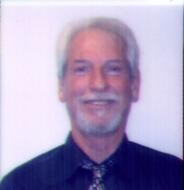
R. Alan Woods
San Diego: Rhema Rising
Copyright 2007
Words are tools and as such, they give expression to our reasoned thoughts. Words are either spoken or written. A writer should and most often does take into account their audience before they chose a topic and a thesis- the perspective through which an opinion is made and an approach to presenting a focused point-of-view.
A “Christian Author”, as I intend it’s meaning to be, is someone who writes on a variety of topics, either Biblical or extra-Biblical, from a uniquely Christian perspective that emanates from its subsequent “mind-set” in presenting a highly focused and “specialized” point-of-view that is intended primarily for an audience that is holy (sic) Christian in its worldview.
For Christians, understanding “The Faith” requires the reading of the Bible both “devotionally” and “expositorially” which seems to justify the admonition of the apostle Paul who said ‘...[You] should study the Word of God to show yourself to be approved of God’.
For a Christian to become an author there are two primary disciplines to master. The first is theology, which emanates from the body of the canon of scripture. The second is- if English is the predominate language of their audience- English composition in the specialized context of expository and creative writing.
The Christian author has fulfilled a need not fully met by pastor/teachers. Pastor/teachers have limits because of the constrictive nature of the expository techniques they train in seminary to master that utilize the two main interpretive analytical tools of hermeneutics and exegesis. A more analogous and appropriate description would be to describe them as pastor/interpreters. The typical pastor/interpreter also has some additional constraints as well- Time. He has but sixty minutes allotted on any given Sunday to cover a Biblical topic taken from scripture and can only traverse a limited amount of territory and of that ground not much below the topsoil. It would take a week of Sundays to exhaust a topic on just one chapter in the Bible!
The Christian author is not limited to just the interpretation of scripture per say, but is free to synthesize from it practical applications by filtering them through a uniquely Christian “world-view” and the subsequent mind-set which allows freedom to then write on a variety of “extra-Biblical” topics. One can then illustrate these focused topics to be applicable where the rubber-meets-the-road in a Christians daily life.
The publishing industry has more than responded to the needs expressed by the Christian community and it’s uniquely focused post-modern world-view. This phenomenon has created a “cottage industry” which consists of a milieu of specialty Christian publishing houses who only publish and market books that are written by Christian authors. Publishers who have been traditionally “secular” heretofore in the context of the subject matter, world-view, and content contained within the books they have published have also responded to this felt need in the market place, and the subsequent specialized market trend this need has produced by developing “spin-off” companies that cater to this very market.
It is exactly this manifested need that has been born out of necessity that the “Christian community” of the postmodern church has expressed. It has given rise to the phenomena of the Christian author and has effectively legitimized their function while concurrently establishing it as a unique and needed ministry for all Christians.
The Christian community is hungry for the knowledge, understanding, and wisdom that a menu of such a rich variety offers to them and from which they can make selections that will satiate that hunger. The Christian Author has become a five star gourmet chef on a global scale to Christians and the corporate expressions of their spiritual communities.
The old English adage first coined by Edward Bulwer-Lytton in 1839 for his play Richelieu- “The pen is mightier than the sword”- expresses aptly the power the written word has to inform the minds and change the hearts of men. John F. Desmond in his book “Walker Percy’s Search for Community” says, “The gift of language has been linked to the gift of Logos and the sacramental gift of life, the Eucharist” (p. 105). If this is true, then do Christian Author’s mediate as minister’s the Words of Life through that which they write?
Percy Walker seems to think so when J. Robert Baker says of his theosemiotic, “Human community becomes the sacrament of God’s presence manifested in the intersubjectivity created by the triadic use of language” (p. 117). Although I have attempted to make it clear what I mean when I use the term Christian author, I said in my critical review of Baker’s article, “Mr. Baker does a much better job”, and Baker does this by choosing to review the work of two writers who epitomize the definition of that terminology. O’Connor and Walker as perfect examples of the Christian author illustrate that their understanding of Theology and their Christian life experiences informed their work (Woods, p. 3, 3p). James McClendon’s thesis in his book “Biography as Theology: how life stories can remake today’s theology” speaks directly to Christian life experiences as a means of informing our understanding of Theology or the Canon of Scripture as it relates to practical applications of Spiritual Truths where the-rubber-meets-the-road in our daily life as believers.
In their Book “The Teaching Minister” Williamson and Allen said, “For in addition to instruction in Christian doctrine per se, the congregation needs instruction in the content of the Bible (and in how to interpret the Bible), on the meaning of personal and social experience in the light of the gospel, as well as appropriate moral beliefs and behavior” (p. 83). Their thesis is that pastors need to become more than just expositors or interpreters of scripture. They need to become “teachers” in the truer sense of the term as it relates to the pragmatic application of scriptural truth. Williamson and Allen contend that this is necessary in the postmodern world where relevance is crucial in communicating understanding that will lead to wisdom for the believer.
In Wilson and Nolls’ book “The Best Christian Writing 2006” and McCurry’s scholarly article “Best Christian Writing 2006”, is ample evidence that Christian author’s are not limited to Biblical subjects but have an infinite number of extra-Biblical topics from which to chose.
In Daniel Radish’s article “The Good Book Business”, he has it made clear that the marketers and publishers of Christian oriented books such as the Bible and “life application” books are as informed as any secular publishing house in publishing, promoting, and distributing a Christian author’s manuscript.
Kristen Holm and Don Prues in their book “Writers Market, 1997” can tell you where and how to sell what you write. Rick Frishman and Robyn Spitzman in their book “Author 101” will direct you to the bestselling book publishers. Ann Byle in her book “The Making of a Christian Bestseller” provides insider information on how to secure the best Christian publisher for your book.
The earliest examples of Christian fiction are the Psuedapigraphal writings of the second century and most likely, some of the Intertestamental works contained within the Old Testament Apocrypha. In the mid twentieth century, emerge two Christian literary giants- J. R. R. Tolkien and C. S. Lewis who wrote both works of fiction and non-fiction. In the mid 1970’s, Hal Lindsey’s book “The Late Great Planet Earth” had a phenomenal success and was read by tens of millions of Christians as well as non-believers. Pastor Rick Warren’s book “The Purpose Driven Life” has to date sold more than eighty millions copies in sixteen different languages worldwide.
The Christian Author is a unique and necessary phenomenon of the postmodern Church.
Bibliography of Works Cited
Baker, Robert J. “’That was a good article you wrote’: Flannery O’Connor and Walker Percy”.The Journal of Christianity and Literature. (54:1), August 2004. pp. 111-121.
Byle, Ann. The Making of a Christian Bestseller: An Insiders Guide to Christian Publishers. Grand Haven: Faith Walk Publishing, 2006.
Desmond, John F. Walker Percy’s Search for Community. Athens: University of Georgia Press, 2004.
Frishman, Rick and Spitzman, Robyn Freedman. Author 101: Bestselling Book Publishers. Avon: Adams Media, 2006.
Holm, Kristen C. and Prues, Don. Writers Market, 1997: where and how to sell what you write.
Cincinnati: Writers Digest Books, 1996.
McClendon, James William. Biography as Theology: how life stories can remake today’s theology. Nashville: Abingdon Press, 1974.
McCurry, Jeffrey. “Best Christian Writing 2006”. First Things: A Monthly Journal
of Religion and Public Life. (170), February 2007. pp. 52-53, 2p.
Radish, Daniel. “The Good Book Business”. New Yorker (82:42), 2006. pp. 54-59.
Williamson, Clark M. and Allen, Ronald James. The Teaching Minister. Louisville: Westminster/John Knox Press, 1991.
Wilson, John (Series Editor) and Noll, Mark A. (Introduction). The Best Christian Writing 2006. New York: Jossey-Bass; Rev Ed edition (October 3, 2005).
Woods, Rodney A. The Sanctification of Humanity En-Godded by Christ in The Christian Worldview’s of Flannery O’Connor and Percy Walker as Incarnational Reality: A Critical Review of ‘that was a good story you wrote’ by Robert J. Baker. San Diego: Rhema Rising, 2007.