Mouse Memory
Abstract
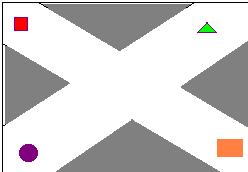
Have you ever wondered if different species of mice had different levels of memory and intelligence? Nobody really knows if different kinds of mice are smarter than each other� yet. Are the Egyptian Spiny mice more intelligent than the Furry mice, or vice-versa? Well, in this project, we are going to try and find out. Our genetics group will put a certain shape in the Egyptian Spiny mouse�s cage and Furry mouse�s cage for about a week. We have built a simple maze in the shape of an X, and we will put the mice, one at a time, in the center. There are four corridors leading off the center, and different shapes are at the end of each hallway. If the mouse goes through the hallway with the correct (or familiar) shape at the end, that proves that they have a certain level of intelligence and memory, and we will give them a small treat if they go to the right shape.
Problem Statement
The question that sparked our research is which kind of mouse had a better sense of memory and intelligence, and Egyptian Spiny or the Furry mouse.
Hypothesis
The Egyptian Spiny mouse will have a better sense of memory than the Furry mouse.
Materials
Cardboard
Cardboard box
Scissors
Markers
Tape
Bedding
Furry Mouse
Egyptian Spiny Mouse
Mouse seed
Procedure
Collected Materials
Cut cardboard
Made maze
Made shapes
Colored shapes
Taped one shape on side of cages
Put note on cages asking people to place mice food in front of shape
Data & Observation
Results
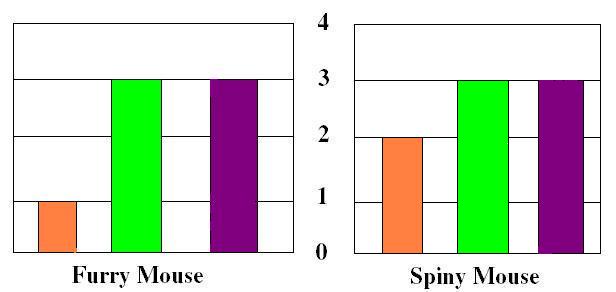
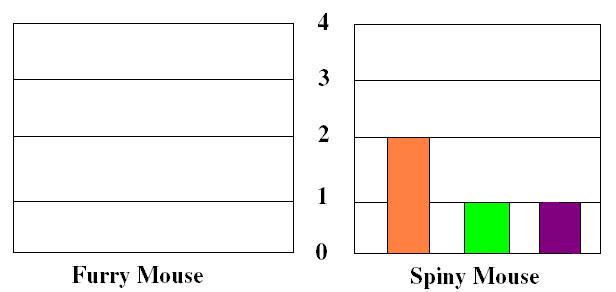
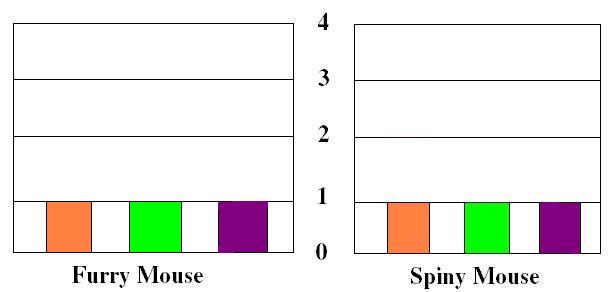
In this lab experiment, we first used Morgan, a Furry mouse. When we put her in the center of the X, the first thing she did was go to the green triangle, but then she turned around quickly. Morgan then went down the hall with the purple circle at the end, and there, she managed to climb out of the X. When back at the center, Morgan went straight to the purple circle again, and she then headed for the green triangle. After looking around curiously, Morgan went down a new hall, the one with the orange rectangle at the end. Morgan had now gone down every hall except the one with the red square, the shape that she should be familiar with. Morgan then went to the purple circle again, and she was about to go to the red square, but she turned around immediately and went to the green triangle. In that hallway, she mingled, washing herself. After this, she attempted to climb out of the X. Since the experiment wasn�t working, we put the food behind the red square. After that, Morgan quickly went down the hallway with the red square.
The second time we did the experiment with Morgan (we kept the food behind the square) she went straight to the red square, except slowly. She went to the familiar shape in 2.33 seconds.
The third time we did this experiment with Morgan, we took out the food. Morgan went down the many hallways and mingled before finally going down the correct hallway. It took her 37.97 seconds.
Now, I will discuss the results of the Egyptian Spiny mouse, Roo. When we put him in the maze, Roo first went to the orange rectangle, where he washed himself. He then climbed out again, and he soon ended up in the center. He then went to the green triangle, followed by the purple circle. Finally, he went to the red square.
The second time we completed this experiment with Roo there was food behind the red square. Roo went to every shape once, except orange, he went to that twice before he went to the red square. It took Roo 46.32 seconds.
The third time, we took out the food, and he went down every hallway, mingling and washing himself, before he got to the red square. It took him 102.74 seconds.
Conclusion
When I started this project, I thought it would be just another boring report. Well, I was wrong, I had such a good experience, and I have learned so much from it. It was even (the rarely used word when describing a report)�fun! My hypothesis was that the Egyptian Spiny mouse was smarter than the Furry Mouse. I was wrong about that, too. Our results show that the Furry mouse actually had a better memory than the Egyptian Spiny mouse, but I am not sure that this is correct. The only trial where the Furry mouse got to the red square with going to less shapes than the Egyptian Spiny Mouse was when there was food behind the shape. That opens another possibility; does the Furry Mouse just have a better sense of smell? This proves that our results may not be accurate. But then again, the timing shows that the Furry mouse was smarter by far. Maybe someday I�ll try this experiment again.
Another thing I found very strange was what seemed like the avoidance of the red square (except when there was food behind it) with both mice. Possibly, the mice were too familiar with this particular shape. Maybe the mice had looked at it so often and they were so used to it, the shape didn�t stand out at all to them. They might have wanted to explore the other, new shapes, before going to the old, boring one. I also noticed that both mice seemed fond of climbing over the walls of the maze (we didn�t make them high enough), but that�s probably just because they wanted to be back in their own cage. I also saw both mice when running quickly throughout the maze suddenly stop to wash themselves, although I�m sure this is natural behavior for the mice.
All in all, this project was great! I learned an overwhelming amount of information, and maybe I discovered some things that people didn�t know before. I hope to do more experiments like this in the future.
Abstract
Have you ever wondered what type of mice has a better sense of memory? In our research, we tested an Egyptian Spiny mouse and a Furry mouse to see which of them had a better memory.
Problem Statement
The question that sparked our research was what type of mouse has a better sense of memory, a furry mouse or an Egyptian Spiny mouse?
Hypothesis
The Egyptian Spiny mouse has a better sense of memory than the furry mouse.
Materials
Cardboard
Cardboard box
Scissors
Markers
Tape
Bedding
Furry Mouse
Egyptian Spiny Mouse
Mouse seed
Procedure
Collected the materials
Cut the cardboard
Made the maze
Made the shapes
Colored the shapes
Tape the shapes on the side of the mouse�s cage for a week
Made a note asking the animal helpers to put the mice food in front of the colored shape
Results
When we did our experiment with the Egyptian Spiny on the first trial it took Roo six tries to find the red square with food in the maze. On the second trial it took Roo 102.74 seconds to find the red square without any food in the maze. On the last trial it took Roo 46.32 seconds to find the square with food in the maze.
When we tested the furry mouse on the first trial it took Morgan 6 tries to find the red square with food in the maze. On the second trial it took Morgan 2.33 seconds to find the red square with food in the maze. On the last trial it took Morgan 37.97 seconds to find the square without any food in the maze.
Conclusion
From our experiment, I have learned that our hypothesis was wrong. The furry mouse actually has a better sense of memory than the Egyptian Spiny mouse. I also learned that when driven by food the mice found the red square faster. I think that is because when the mice put the shape and the smell of food together they went to that shape. When there was no food in the maze, it took them longer because they only had the shape to look for instead of the shape and the smell of food.
I think the furry mouse had the better sense of memory because the furry mouse was a little bit older than the spiny mouse. The furry mouse�s memory was more developed than the memory of the Egyptian Spiny mouse. In conclusion, I have learned that memory comes with age and that mice remember better when driven by the smell of food.
Abstract
Have you ever wondered who is smarter out of a Furry Mouse and an Egyptian Spiny Mouse? Have you ever thought about I f they are attracted to color or to food?
Problem Statement
The question that sparked my group�s experiment was �Who is smarter? Is it the Furry Mouse or the Egyptian Spiny Mouse?� My group�s response was not easy and we were not sure what the answer would or should be.
Hypothesis
Our hypothesis was that the Egyptian Spiny mouse would be smarter.
Materials
Cardboard
Cardboard box
Scissors
Markers
Tape
Bedding
Furry Mouse
Egyptian Spiny Mouse
Mouse seed
Procedure
For this experiment, it took a lot of planning and patience in order to finish it. The first step that we did was draw out an outline for what the maze would look like. After that, we started to construct the maze. There were many time stopping interruptions but we managed to construct the base and outline of the maze in the first week. The second week, we put on the finishing touches and then set off to find the perfect Egyptian Spiny Mouse and a Furry Mouse that would pay attention to the road ahead. After that, we started to make sure that the mice were used to the maze. On the outsides of the cages, we put a red colored circle on each of the cages so that the mice would be familiar to them. We also left a note on the cages, asking people who take care of the mice to please put food in front of the shapes. We did this so that we could record what the animal would do when we put them in the maze.
Results
We tested to see what the outcome would be to the experiment. We put Morgan, the Furry Mouse, in first and saw what she did. She stayed or kept her distance away from the Red Square. We then re-inserted Morgan back into the maze facing the Red Square she ran over to the Purple Circle. After three more tries, Morgan sill did not go anywhere close to the Red Square.
After this, we tried out Roo and it was the same outcome. He would not go near the Red Square even if we placed him directly in front of it. When he turned around and saw the Red Square, he ran to the Green Triangle. We then re-inserted him into the maze and he went to the Purple Circle.
Conclusion
Prior to the experiment, we thought that the Egyptian Spiny mouse was smarter because it seems to know what is edible and not edible. We did not think that the Furry Mouse would be smarter because it usually ran around not even thinking or knowing what it is doing. We found out that both mice were not smart enough to find the shape with the food behind it. Both did not like the idea of going even near the Red Square. That still leaves us with a question though.
In conclusion, our group found out that neither of the mice was smarter than the other. When both the mice were in the maze, they went to different colors. My theory is that they got sick of looking at the color red and they were familiar to it. When they were in the maze and saw other different colors, they wanted to explore. Another theory is that they were not hungry because the food was in front of the Red Square all that week. In this experiment, I learned that not one mouse is smarter than the other is and that all mice are equal whether they are hungry or not.
Mr. Purnell's Home Page
