 |
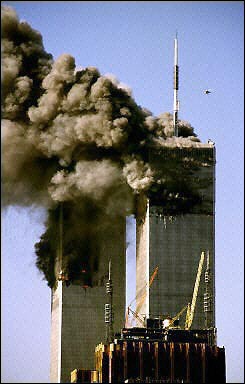
The Pilot Forum Newsletter Flight School Reform 2004 Since, 9/11 there has been little done on, �Flight School Reform� from our U.S. government. However, AOPA did issue a Security Brief to our nations Flight Schools on January 23, 2004. Security against an ultimate threat or sabotage should be priority No. 1. Proprietors, owners and shareholders of our nations flight schools and aircraft from the east to the west coast unfortunately can not do it alone and something has got to be done now. Raising fuel costs, increasing insurance liability and government uncertainty of our nations security deem this program necessary and over due. The Transportation Security Administration has accomplished recently an aviation security review and ammendment. Go to www.tsa.gov and www.aopa.org and read more! Sources: The Federal Aviation Administration, Department of Transportation, Department of Labor, Post Secondary Proprietary School Registration all 50 States, Board of Regents all 50 States, Bureau of Employment Apprenticeship and Training all 50 States, National Academy of Sciences, Civil Aviation (Aeronautical) Education Administration, Government Aviation Regulatory Agencies all 50 States, National Transportation Safety Board, The Air Safety Foundation, The Regulatory Commission all 50 States, and Homeland Security Includes all immediate government organizations AAOFSAA is working with to establish a bonafide new unprecedented aviation apprenticeship pilot training program. Enhanced for job creation and apprenticeship advisory status AAOFSAA will continue to map out its success. This bold move to track our nations flight schools performance and maintain their students progress is beneficial to the security of our nations aviation schools, and is a benefit to our corporate aviation sector and the student to job placement. A mild stone in the proper training necessary for our nations corporate flight departments requirements and early on paid job assistance that could be possible. Assistance that could be the answer to many of the demands our pilots face in short. Anderson Aviation of Ohio LLC Anderson Aviation of Ohio LLC Flight Schools of America Association, AAOFSAA was planned and written on paper the month of May 2000 in Toledo, Ohio. In short, our nations unfortunate grave lose and great tragedy, 9/11 showed its ugly face September 11, 2001. On that very day for the first time in U.S. aviation history the FAA grounded all U.S. flights domestic and abroad coming inbound to the U.S. All U.S. pilots and general aviation for the first time suffered 40 days of flight time lost. How do you repay for such time lost? How does the flight school recover from such time lost? Make no mistake about it, general aviation and the student pilot will be paying for this time lost in U.S aviation history for years to come. Anderson Aviation of Ohio LLC, marketing AAOFSAA to general aviation, can make a difference and will make its stake in aviation education & safety. In pursuit of an unprecedented U.S. professional aviation pilot apprenticeship registry program. Flight Schools of America Association The Pilot Forum Commentary Contact Us @ [email protected] http://www.hometown.aol.com/aaofsaa http://groups.aol.com/aaofsaaga please copy and paste into your browser http://groups.yahoo.com/group/rfsaa2005/ Hot News from the U.S. National Associated Press AP January 7, 2007 Powered by Yahoo! The Pilot Forum Editorial December 31, 2004 The Pilot Forum Editorial Copyright � 2004 Anderson Aviation of Ohio LLC FSAA A Matter of Opinion & Fact Update Anderson Aviation of Ohio introduces, Flight Schools of America Association for Flight School Reform. AAOFSAA� its mission its purpose is to broaden the scope of aviation apprenticeship base programs especially for pilots in training. In doing so, AAOFSAA is setting a new standard and purpose to support GA education training and general safety resulting in an unprecedented, "Professional Pilot Apprenticeship Registry Program� The voice of flight schools today comes at a time when: 1.) Aviation product liability costs are rising again including, 2.) Aviation insurance premiums are rising 3.) Aviation fuel costs are rising 4.) Airport Real Estate and flight schools are becoming more vulnerable to development takeover 5.) The National Airspace System is in question, in its security and safety overhaul, and in need of more upgrades 6.) Flight school security and safety, is in question 7.) Mandatory background checks for students, in various States namely, Michigan for one are being done 8.) Employment concerns are on the rise on the flight school and intern pilot levels 9.) The 9/11 Commission committee further legislative proposed rule making, is still upon us 10.) Continued complacency in different flight school training r�gimes in several areas of discipline are in question. These top ten issues are just a few and there are many more to mention. A Union for flight schools was thought of in the year 2000,and yet described as being not well received in the majority of the general aviation public. Then an Association was considered to be the voice for flight schools and their students, so the above mentioned issues and the FAA top 11 flight school safety suggestions, (CNN.com FAA issues new flight-school safety suggestions, January 10, 2002) could be further addressed. The Department of Labor Bureau of Apprenticeship and Training, (Employment and Training Administration) Lucas County Ohio stated in a letter to AAOFSAA, September 03, 2003 that an Assessment could be done on all available FAA Airmen Certifications and Ratings describing in detail all classes and category functions, how these FAA approved certifications and a new apprenticeship methodology would be achieved and asked, who would want it in general aviation? The Department of Labor Bureau of Apprenticeship and Training, Employment and Training Administration gave materials tocomplete and described an assessment evaluation instructions in detail to AAOFSAA. The Bureau described how a Union or an Association would be the overall advisory body over the flight schools apprenticeship and training program. Maintain balanced structured apprenticeship workshops to further enhance the student and flight schools mission in a safe FAA approved standard training environment. This proposed apprenticeship method of flight training in flight schools today would bring new jobs, strengthen liability issues, secure students, and may prevent CFI's from leaving to early showing an improvement on the FAA�s safety suggestions to flight schools since, 9/11. Air Commerce and general aviation have suffered many set backs in the last 20 years and will continue too in the attempt to overcome the current war on Terrorism until Terrorism is finally defeated. Unfortunately the economic condition and impact the war on Terrorism has had against our nations flight schools has been 10 fold. Flight school owners are questioning their role in the fight against Terrorism our economy has faced since 9/11, and how hard that cost may even be to overcome in the future? Flight School Reform for 2004 - 2005, is as needed right now as Homeland security was the days after 9/11. This kind of reform its purpose its mission as described above can only be achieved with participation from all in our government and aviation schools across the (country) in aviation education across the board. A part from: Airline Deregulation Act of 1978, to the Wendall H. Ford Aviation Investment and Reform Act for 21st Century (AIR-21), to Flight Safety Academy (ab initio) flight training programs Airline FAA Part 135 - 142 CRM (ab initio) flight training programs of the last two decades including: Flight Safety International FAA Part 142 continued flight training programs Cessna Pilot Training Centers FAA Part 141 flight training programs Piper Pilot Training Centers FAA Part 141 flight training programs University Aviation Association FAA Aviation Education Programs K-12 1990's, National Coalition for Aviation Education 1993, AOPA, EAA, NBAA, NASAO, NASA, NAA, CAP, and the NASEA National Academy of Sciences 1996, National Aviation and Space Education Alliance 1997, All aviation alliance groups and FAA Part 141-142 organizations maintain a strong education forum in aviation education camps and schools across the country. The Aerospace Career Education ACE camps, Air Academy Camps from the EAA, Durham Flight Camp in, Oshawa Ontario, to the Flight Training Adventure Camps FTAC, and the U.S Flight Academy in, Litchfield County, Connecticut, are just a few of the 180 on call today and growing. These programs are great and hold promise for the future student. However, the future student will need to gain access to the future aviation job market with equal opportunity and competitiveness. This market today is as highly competitive as the days before the Product Liability Laws in 1992 were rewritten for free enterprise. Aircraft manufactures are advancing greatly into the single engine land turbo prop market and advanced stage 3 avionics in the cockpit, for a more state of the art flight cockpit program. New Primary Flight Data PFD technology is sweeping the market place from Garmin Ltd. a leader in Avionics equipment & GPS systems and others alike namely Northrop Grumman and King Avionics that are on the same competitive edge. Training in advanced aircraft and equipment with more real time is not only the main primary reason to this, Flight School Reform initiative. Making all our flight schools a more competitive, balanced, creditable, safe and secure place to learn is the other main initiative for such a bold move to Flight School Reform by Anderson Aviation of Ohio FSAA. Anderson Aviation of Ohio LLC FSAA, started its study as a private interest public concern in 1986. AAOFSAA, has studied the trends and economic changes influencing flight schools for the past 18 years. Growth in our nations flight schools has only begun for a few and has yet to happen for many. The few flight schools today recognized by the Magnet Schools of America, Inc., organization located at 733 15th Street, NW Suite 330 Washington, D.C. 20005, are making great strides. Institutions like, Embry Riddle Aeronautical University, Daytona Beach FL., and the Flight Safety Academy,Vero Beach FL, that are a part of the collegiate & corporate climate are offering state of the art training in many airway science disciplines. There are over 17 Institutions to date recognized at a Vocational School level under the Vocational Act of 1963 teaching technical and pilot training combined. In short of all the 488 collegiate programs available under the Higher Education Act of 1965 there should be a more standard balanced post secondary platform of education and training as suggested in the Jeppesen & FAA Aeronautical Decision Making Guideline Curriculum, AC 60-22 December 13, 1991, so the FAA Part 61 regulated flight training facilities can receive the same compliant recognition as the FAA Part 141-142 Schools have been granted. The student and the flying public can then appreciate the level of training many of our domestic institutions are striving for as a matter of excellence. Today as the majority of the FAA Part 61 flight training facilities out number FAA Part 141 - 142 flight schools and their collegiate counterpart institutions combined this environment can only be discouraging on a fundamental level and in some cases surprising. In some cases by overwhelming the student, having to repeat, take over, or lose creditability in learning, and bear the higher cost as he or she may choose to advance in to programs at a higher or different institution of learning. Instructors on the other hand have a larger paradox to overcome. As a certified CFI or CFII with 400 or 500 hours total time their marketability to the job market is, slim to none, until in most cases their experience reaches a magnitude of 1000 to 1500 hours total time or more. On the other hand the flight training facility may invest their time & money in to their instructor program and wind up losing that individual or individuals to their competitiondue to attrition and then the flight instructor finds him or herself having to repeat or start over leaving the prior school looking for personnel. Broadening the scope of aviation apprenticeship (occupational) programs in pilot training would mean success for your flight school. Thus enhancing attrition at the grass roots of pilot training where its needed and not at the instructor level would make your stake inadvanced pilot training more noticeable vocationally and more competitive. Join AAOFSAA the grass roots move to an unprecedented professional pilot apprenticeship registry. In closing overall there has been new proposed rule making already passed and up for ratification for a new Sport Pilot Airmen Certificate. In the last 20 years there has been several modifications done by the FAA to try enhance their education program. 1.) Reduction of the required hours to obtain an instrument rating that took place in the mid 80's. 2.) Recreational certification that may have had something politically to do with ultra light recreational flying in the 80�s and 90�s. A complete list of Single Engine Land & Sea Powered aircraft have been introduced as meeting the new qualifications to the new Sport Pilot Airmen Certificate as noted in the http://www.aopa.org/sportpilot/ Light Sport Aircraft summary. AAOFSAA takes a stand on this kind of new proposed rule making as questionable. It seems that the FAA has taken a back seat to post secondary pilot training education, has reduced the required qualifications once again to flying in hopes that this would spur new interest in pilot training, perhaps. While some Airmen are for or against this new rule; Interest in pilot training has always been prominent and public interest strong. To try and explain it away it is AAOFSAA (s) opinion that the FAA is merely once again reducing the airmen certification requirements to Light Powered Aircraft without a required medical that should not be. AAOFSAA opposes this kind of rulemaking and will support flight schools across America and aviation organizations that would like to join its ranks and fight for future jobs and proper training methodology for their students. Supplement Resources & Data: Wendall H. Ford Aviation Investment and Reform Act for 21st Century (AIR-21) http://stats.bls.gov/oco/ocos107.htm http://www.wsdot.wa.gov/aviation/DocLibrary/FAQonAIR21forweb.pdf http://dmses.dot.gov/docimages/pdf46/77108_web.pdf http://www.mop-shop.org/laws/air-21.htm http://www.osha.gov/pls/oshaweb/owadisp.show_document? p_table=FEDERAL_REGISTER&p_id=17780&p_text_version=FALSE Copyright � 2004 Anderson Aviation of Ohio LLC Flight Schools of America Association AAOFSAA |
 |

|
   |
 |
 |
 |
 |
 |
 |
 |
 |
| Join AAOFSAA Today! |
 |
 |
 |
 |
| Membership |