The law defines it as a house �occupied by three or more families, living independently and doing their cooking on
the premises; or by more than two families on a floor, so living and cooking and having a common right
in the halls, stairways, yards, etc.� (Riis 13)
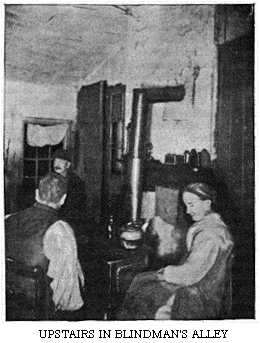
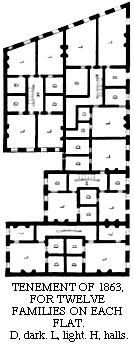
The rooms in the tenement houses were subdivided without regard for light or ventilation. Even though they were small, they were packed with people, sometimes as many as 12 in a room less than ten square feet (Anbinder 73). To make matters worse, ceilings in some rooms were very low Many rooms did not have windows, making health conditions even worse than normal. Of course, this meant that there was little light in the rooms � not that there was much to see anyway. Most of the rooms did not have tables, chairs, or much of any other type of furniture (Anbinder 23).
Many tenement owners tried to get the most out of their property. They constructed back-lot tenements, and converted basements and attics into living spaces. Some even went as far as to construct small shacks to get any extra rent they could from the city�s poor immigrant population (Anbinder 75).
The sanitary conditions in the tenements were very poor. The outhouses were rarely cleaned, causing very noxious odors to permeate the tenements houses, especially near the windows. The sewage, dirt and other unhealthful things caused many diseases, and the close proximity of the residents to each other meant that diseases were easily spread.
Walking around in these tenement houses was dangerous. They were very dark places, especially in the brick buildings. The staircases were dark and steep, and accidents were frequent. This created problems for those women with children, clothes and groceries to carry up to their rooms. The stairs were also problematic for anyone with a bad back, or weak limbs (Anbinder 81).
Another problem about living in the tenements was that there was little protection against extreme temperatures. The cold winter drafts frequently entered the buildings through the cracks in the roof and through the windows. The summer brought very hot, sweltering temperatures which turned the brick tenements into virtual ovens. The heat was so oppressive that many residents were outside most of the day, and many decided to sleep outside on the fire escapes during the night (Anbinder 88-89).
One must keep in mind that many of the immigrants in these tenements put up with these conditions because they were often used to dealing with it. Author Anthony Jackson reports that many Irish, before coming to America, lived in �windowless one-room mud cabins shared by pigs and poultry, with a dunghill outside the hole that served for door, light, air and chimney� (Jackson 10).
All of these conditions are not only deplorable by today�s standards, but they were also deplorable by the standards of the 19th century. It is interesting to note that modern housing projects seem to have some similarities to the old tenements � poor upkeep, lots of crime and violence, and construction made to fit as many people in one place as possible at the expense of reasonable living conditions.