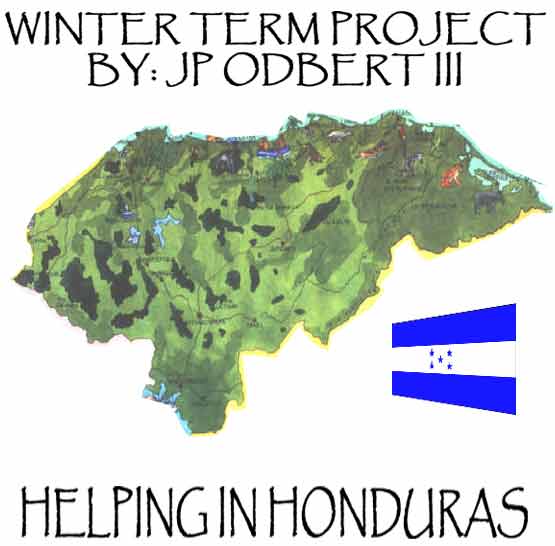
| Honduras is a small country located in Central America between El Salvador, Guatemala and Nicaragua. Honduras has about 112,000 square kilometers (43,420 Square miles) and about 5,751,000 people. It is the second poorest country in the Western Hemisphere. Most of the country's inhabitants live in the rural areas and work primarily as farmers and handcrafters. Most families are large and don't have access to the things that people enjoy in the city areas. For my winter term I traveled to this country, and worked as a computer teacher at an Episcopal School in Puerto Cortes (a small port city on the coast). I also helped build houses for a community of people who lost their homes during hurricane Mitch. Living in Honduras was like being in a completely different world. A world of extreme poverty, amazing beauty, and almost unbelievable kindness. It would be nearly impossible to describe in words all that I learned from my daily interactions and observations. Every experience from going to the grocery store to talking with kids on the streets, to experiencing a Honduran disco, affected me profoundly. In total, these experiences enabled me to leave the country with what I believe to be a more realistic and complete understanding of the world and myself. |
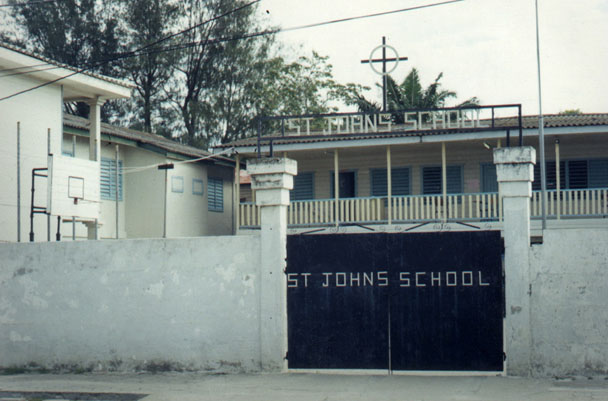
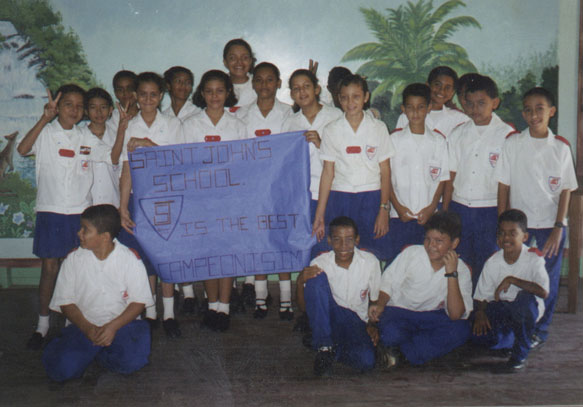
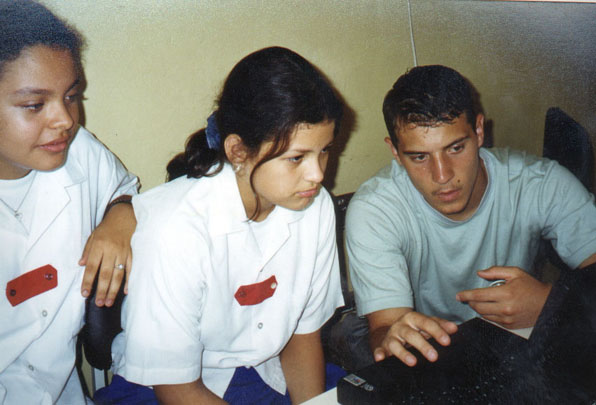
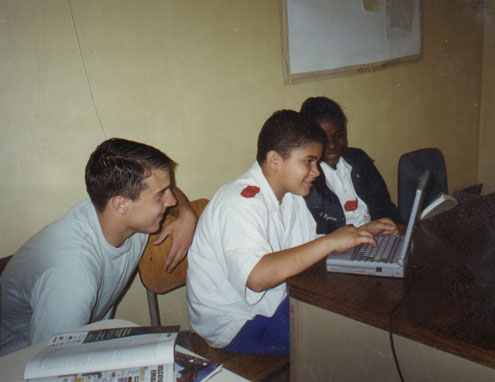
| The school where I taught was bilingual and run by the Episcopal Church. The 350 students made up grades k-11. The children's parents had to pay tuition for the children to attend the school, so most of the parents were from the upper class and owned some type of business in town. Using two laptop computers that I brought along, I taught the basics of computers to fifth and sixth grade students. Most of the students had never used a computer before, which made my time there all the more important. I taught 3-5 classes a day and by the end of the month, students were navigating their way through Microsoft office, using several types of media files, and creating a web site for their school. Though I am not exactly fluent in Spanish and the kids were not particularly fluent in English, we were able to piece together enough of each language to communicate. Because I worked with the children in small groups, and spent a lot of recess time with them, I got to know each of them. This made leaving all the more emotional. |
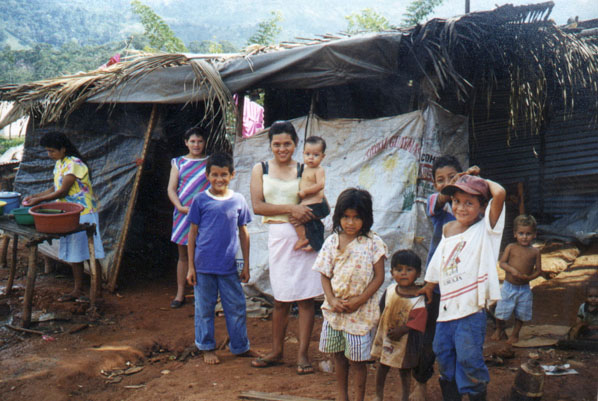
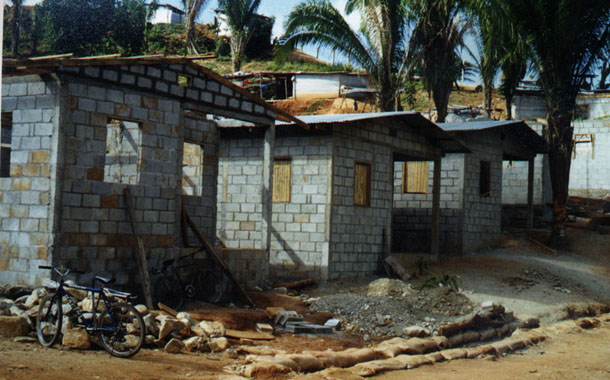
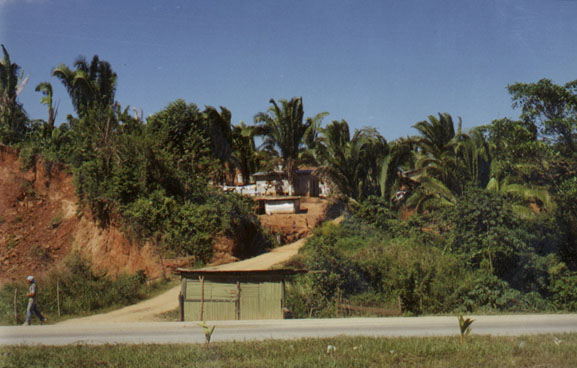
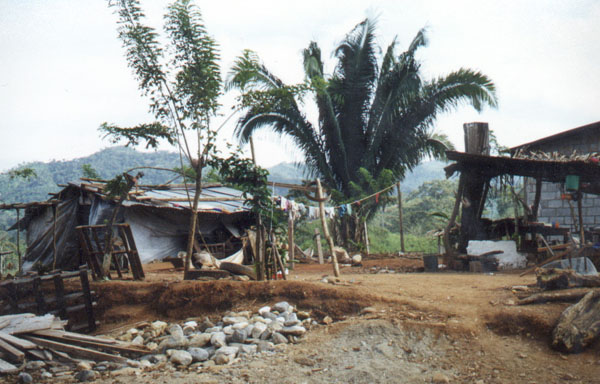
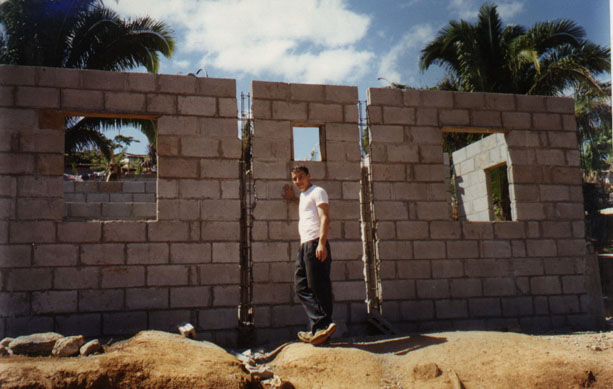
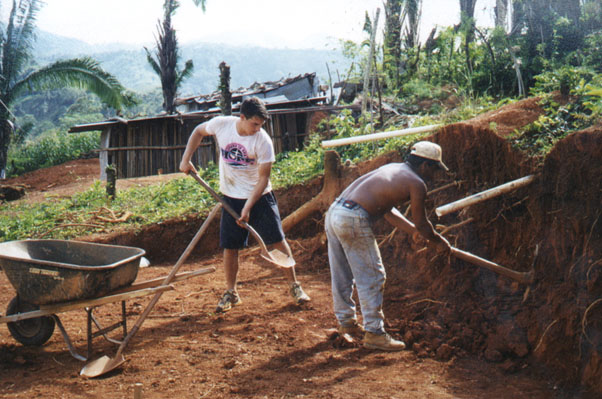
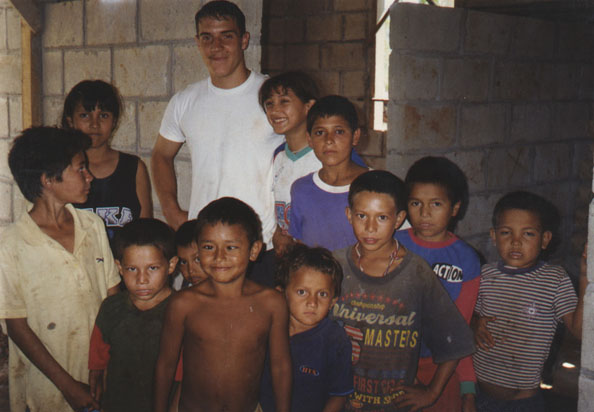
| The other half of my project took place about five miles outside of town. Each day after I finished with classes I traveled by city bus, which are old U.S. school busses, to a small village that was destroyed during hurricane Mitch. Most families, who had little to begin with, lost everything and have been living in thatch shacks on a piece of donated land. Only now, thanks to the generosity of several relief organizations, have they found the resources to build 75 simple block homes. Each family is in charge of their own home, though a few community building are being worked on together. Most of the houses are being built by the fathers and their sons, and in some cases only by the father because their son's are too young or they only have daughters. During my time there I helped several different "La Colonia" families with the construction of their homes. Some of the things I did included mixing cement, making windows out of wood, and digging into the side of a mountain to make a flat area where a foundation could be laid. I usually worked for 3-4 hours a day all the while talking to young children who were fascinated to see a "Gringo", or white person, working in their community. Communication at "La Colonia" was more challenging because no one there spoke any English. As a result, most of the time my Spanish was accompanied by hand gestures and pointing. Despite this obstacle I was able to make friends with many of the adults and by the last week, I was playing soccer and picking coconuts with the children after the day's work was finished. |
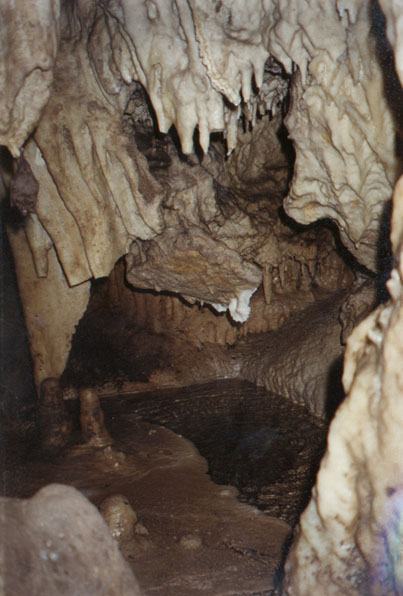
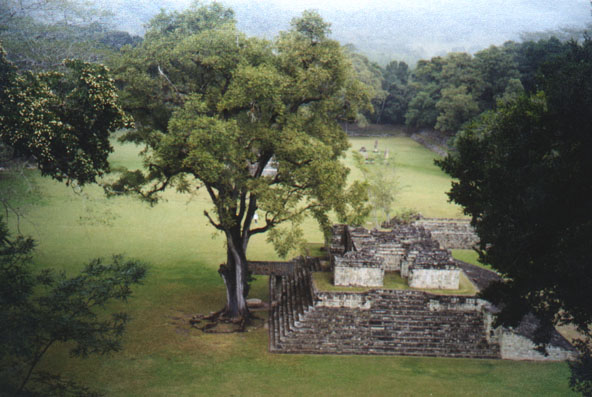
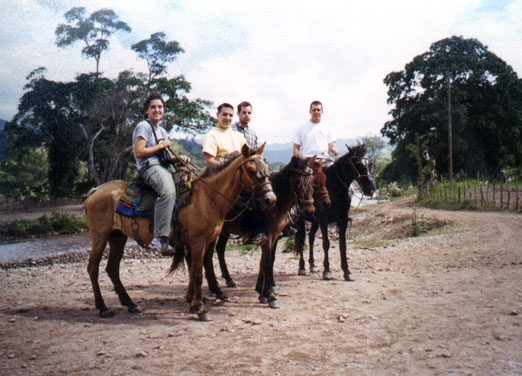
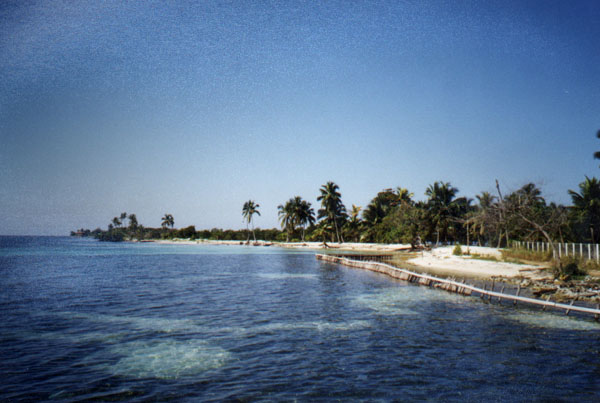
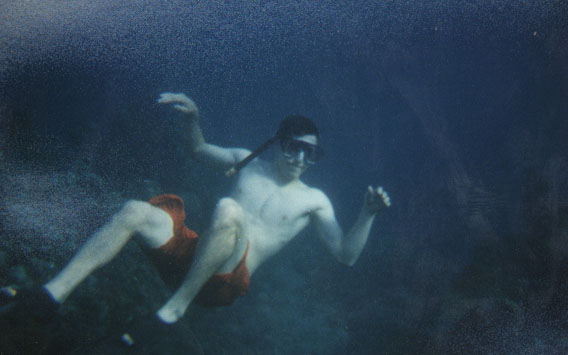
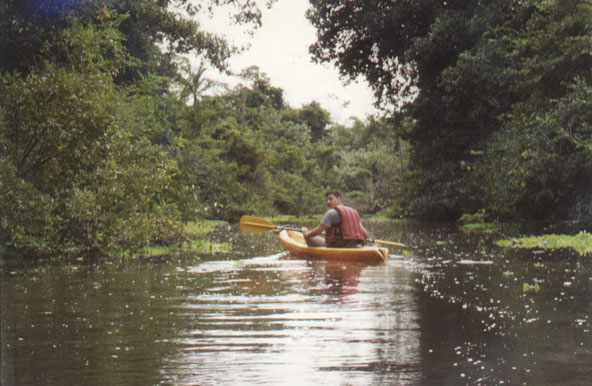
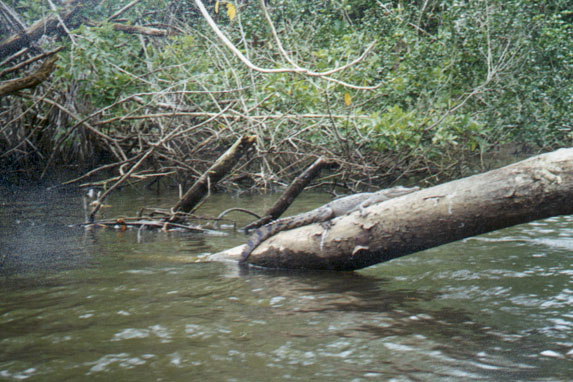
| While I did spend most of my time working in Honduras, I was always free on the weekends. So each Friday my sister and I would travel to different parts of the country to do what most Americans do in Honduras, site-see. The first weekend we explored a four-mile cave in the mountains, and visited an enormous waterfall near by. I also visited a Spanish fort that was built hundreds of years ago but never used. The next weekend we traveled to Copan, a quaint mountain town, where we toured the ruins of a Ancient Mayan City. Here we rode horses into the mountains and hiked thorough the lush vegetation characteristic of Honduras. My next weekend adventure took me to a small island off the coast called Utila. This is the cheapest place in the world to become a certified scuba diver but unfortunately we didn't have enough time to complete a full course. Instead, we went snorkeling around the reefs where we saw a rainbow of tropical fish and stingrays. My last weekend in Honduras was spent in the town of Tela. The United Fruit Company was once headquartered here, but left after Hurricane "FiFi" destroyed most of the Banana Plantations. In this area, my sister, a few friends, and I, went on a kayaking trip down a jungle river that was in a wildlife reserve. During the trip we saw exotic birds, wild iguanas and even a few four-foot crocodiles. We traveled to all of these places, except the island, by bus. Which is the most common means of transportation in Honduras. Though sometimes we were forced to stand up in the middle isle for hours at a time, the bus system in Honduras was surprisingly efficient, always on time, and extremely inexpensive. The most expensive bus ride, which was four hours long, cost only 45 Lempira (about 3 U.S. Dollars). |
| Working in the school and at the village, along with traveling around the country, gave me a well-rounded look into the socio-economic structure of Honduras. From my perspective there were basically two types of people there, people who had money and people who didn't. Unfortunately the latter was the more dominant type. This is why I liken Honduras to a different world. Sure they have a few cities with malls, fast food, and many other modern conveniences. But all of that could be down one street, and the next street over would be a dirt road lined with houses made of tree branches, or a market place lined with small wooden shacks where people sold fruit and crafts. There seemed to be two separate worlds thrown into one country. And in this country these two groups do a lot of crossing but virtually no mixing. |
| In the end I was very sad to have to leave my sister and all the friends I made in Honduras. The children that I taught got together and threw me a surprise going-away party, complete with cake, soda and a piñata. Just another example of the friendly, giving nature of the country's people. I am certain that few experiences in my life will rival my journey to Honduras. The people, the culture, and even the food were so unique to anything I have every experienced. My journey there has helped to reinforce an important lesson that I was taught growing up: no one person is inherently better than another, some of us are just more fortunate, and it is our responsibility to help those who are not. |