Revolutionaries proclaimed liberty as their highest ideal, the question of slavery in the French colonies was inevitable. France had many colonies in the Caribbean in which economies were reliant on plantation crops. The most important and largest was Saint Dominique, having a slave population of 500,000. From the earliest days of the National Assembly sympathetic deputies called for the abolition of slavery in the colonies. From October 1789 Saint Dominique�s French Governor expressed concerns over the influence of the revolution on the slave community. High income from the plantations made the Assembly reluctant to react.
In March 1790 the National Assembly exempted the colonies from the constitution promoting increasing agitation from the black communities. Following only limited amendments affecting only free blacks, the slaves of Saint Dominique rose up in Rebellion, becoming what was the first successful slave revolt in history. Faced continued fighting and the threat of British or Spanish invasion, the Assembly abolished slavery in Saint Dominique in October 1793, and all colonies the following year.
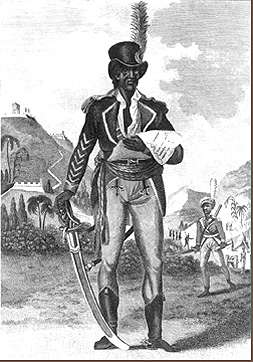
A symbol of Liberty for the slaves was the leadership of Toussaint L�Ouverture. [Left] Unusual for a slave in being literate, L�Ouverture rose to become the leading General in the ranks of slave revolutionaries. In 1797 L�Ouverture was made Commander-in-Chief of the island by the French Convention, at which time he began making grounds towards the ultimate liberty, independence from France. In 1804 after failed repression of the revolt by Napoleon�s armies, the remaining slaves established the independent republic of Haiti. |