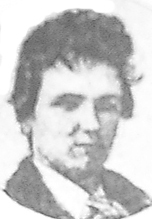
| GALLANT TOM M’NAUGHTON by John J. Hood, Jackson, Mississippi Published in The Confederate Veteran, p. 499, ca. 1890 A soldier visiting Fort Donelson after a lapse of twenty-eight years wrote in the Nashville American March 10, 1890: “A thousand Middle Tennesseans, comprising the 41st Regiment, under command of the tried and brave Col. Robert Farquharson, disembarked from a steamboat February 13, 1862, at the Dover main landing. They marched up the street to the perpendicular turn leading to the courthouse. Here the head of the column was halted and the line was exposed to the cannon shot of the enemy." The writer was one of a half dozen at its head, neither of whom had any conception of the danger from shells bursting about them until a piece struck Capt. Thomas B. McNaughton, killing him instantly. While commissary of the regiment, McNaughton volunteered to go into the battle. He was instinctively a gentleman, and dressed elegantly as if in command of an army on p “Somehow, somewhere, he had procured a remarkable gun. While perhaps of great There were more boys than men in the regiment. They sought refuge by fences and houses from well-directed canister, so that many of their faces were read with fright, as if painted. When the orders ‘Forward; file right’ were given, the regiment started up the main street toward the courthouse, and the first shocking information that went along the line was: ‘McNaughton is dead.’ “Dr. J.W. Smith, who lived near Dover and does still, saw him fall, and said he was never tempted to take anything during the war but that beautiful gun. The gun was taken up by Lieut. H.W. L. Little, of the regiment, and was carried and used through the three days’ battle, and stacked in the general line of surrendered guns. A Federal officer of high rank took the gun from stack, with others, on the morning of our surrender, and carried it away." McNaughton’s body lay by the line of march as the command hurried by. The cape of his overcoat, thrown over his head hid from view the awful mutilation of his shoulders and chest by the bombshell. “It was my pleasure to have known intimately and as a brother Thomas B. McNaughton while attending college at Shelbyville, Tenn. When I first met him, he was clerking at John Nevin’s bookstore. Young, bright, magnetic, genial, manly, he had many friends among the students. He was of such charming personality that his acquaintances instinctively admired him. He was a fascinating conversationalist and a delightful entertainer, a close student, and highly cultured. He contributed to the press of Tennessee and elsewhere many brilliant poems and articles that adorned its glowing columns. When the war broke out, he had written enough for a volume and was arranging to have it published." “From Shelbyville he went to Fayetteville, and was a partner of or traveled for Kelso. Almost wholly self-made, Tom McNaughton was a prominent and worthy son of his grand old State; and had he lived, he would have left his impress as a soldier and a literary man." “He was close to me in thought, in sentiment, and in brotherly love, and I hold his memory impearled in tears, sacred in my heart. When McNaughton fell, the first martyr of his regiment to that crushing disaster at Donelson, no nobler son of Tennessee could have been immolated in her cause.” |
|||||||
|
|
|||||||
 |
|||||||
|
|
|||||||
 arade.