|
The Nick Hoffman Series by Lev Raphael |
The Edith Wharton Murders
Death of a Constant Lover
Little Miss Evil
Rating: ***1/2
Note: It's best to read these books in order.
Reviewer: Meg
Evil lurks in the sacred ivy halls of academia? Boy, does it ever. Anyone who has ever worked in a college setting (as I have) will recognize the nasty goings on among the faculty and staff of the State University of Michigan (SUM) as chronicled by Lev Raphael. From the back stabbing to the circumvention of the employee search protocol, all the political pettiness of the university hierarchy is here. Complicated by alcoholism, homophobia, redneck academic trend setting (announcement of the new Department of White Studies in the last book), murder is an inevitable outcome.
Raphael's amateur sleuth Nick Hoffman, Edith Wharton archivist and English Composition 101 instructor, with the help of his lover Stephan and his cousin Sharon, manages to work his way through the murders of students, professors, department chairs, and guest writers in residence, exposing the dark underbelly (heh) of the academic world as he goes. He persists in his investigations regardless of his lack of tenure, under continuous threat that he will never get it. Will Nick get tenure? This is one of the problems that intrigues us along the way. We also follow that path of the relationship between Stephan and Nick through Stephan's ups and downs in the world of publishing and the depressions that accompany the downs. This is a valuable series for other writers because the relationship is complex and at the same time enduring. Outgoing, energetic Nick and introverted, contemplative Stephan make an interesting contrast to one another.
Characterizations of Nick, Stephan, and Sharon, as well as Stephan's dad, are complex. Many of the others, however tend to be charicatures. However, if you are familiar with academic politics then they are often hilariously stereotypical. If not, it may at times be a little hard to believe. Some of the craziness that takes place each time there is a reception for a dignitary may be hard to credit unless you have been to some of these parties and seen similar things happen. I once worked for a college that stopped holding them except under the most politically necessary circumstances because of the chaos they precipitated. Academics are nothing if not outspoken, especially if aggrieved and inebriated at the same time, and even if the appetizers are very good.
Raphael's books exaggerate the situation of course, partly for the humor. The dialog is witty and the literary allusions many. After all Nick is a student of literature and a composition teacher as well as a basically happy person. He is clever and funny so you find yourself laughing and trying to remember a lot of his one liners and envying his ability to hang on to perspective.
There is not much overt violence in these books. Often Nick takes the Marple/Poirot tactic of gathering all the suspects together in one spot and forcing the confession through logical revelations that eliminate them one by one until the final conclusive evidence leaves the alleged murderer obvious to everyone else in the room. A confession follows and the mystery is wrapped up. What is interesting is how Nick gets us there when there are always a dozen suspects and sometimes more than one kind of crime that may or may not be related to the core murder.
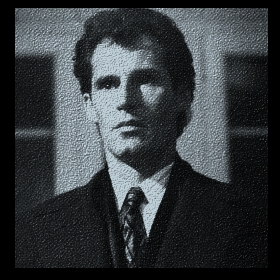
These books have good mystery plots and central characters who are appealing. You end the series as it is so far wanting more. By the way, Nick insists that Stephan looks like Ben Cross, so I have included a picture of Mr. Cross, because they tend to be hard to find. This one is not from "Chariots of Fire," but from "Dark Shadows: the Resurrection." So, this is Stephan; you have to decide for yourself what Nick looks like.