If we decide together that receiving ministry
training through Open Door Christian Communities is best, we
will set up an in-service training plan for you, which will
include:
1. Monthly meetings with a ministry supervisor
and mentor either in person, over the phone, or online for
mentoring and guidance in your ministry growth.
2. A context in which you will do ongoing
ministry work. For most , this context is a fledgling
church planting ministry beginning as a small faith group such
as an in-home Bible study. This context may not be
appropriate for everyone and in those cases other ways of
tailoring this element of ministry training will be used.
3. Quarterly training seminars teaching basic
ministry skills. These seminars will be done at a
number of locations. If there is not a training location
near enough to the individual being trained, distance learning
options are being planned through DVDs, Audio CDs, and
computer-based courses coupled with follow-up discussions and
projects involving his or her ministry trainer.
4. One form of continuing education on theology
or ministry a year. This may sound daunting, but
this is a very flexible rule. Continuing education
may be fulfilled through an online course, a class at a
seminary, or even a weekend or day intensive provided by a
local seminary or ministry. This flexibility allows for
ministers to grow in their understanding of theology and
ministry without requiring it to be done in a way that excludes
people who might have learning styles that are not mainstream or
who don't have the financial resources to attend seminary.
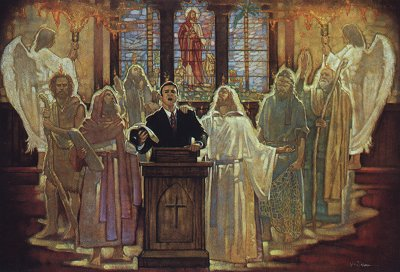 By
either entering training to become a minister or church planter with
Open Door Christian Communities, or (if already ordained and over a
church), becoming a Open Door Christian Communities minister, you
open yourself up to hands-on mentoring and training opportunities and
a community of ministers and church-planters committed to a
Christianity lived out without prejudice.
By
either entering training to become a minister or church planter with
Open Door Christian Communities, or (if already ordained and over a
church), becoming a Open Door Christian Communities minister, you
open yourself up to hands-on mentoring and training opportunities and
a community of ministers and church-planters committed to a
Christianity lived out without prejudice.