As
it will be Nanny’s 86th birthday in a few
days time, I would like to remind all of you of our family gathering
this Saturday, Sept 21 at 7.30pm over at Myron’s place.
As far as I can remember, Boudewyn’s gathering main item
has always been the menu…lots to eat as well as to bring
back too! However, I will not center this first article on the
food for the evening as all of you should know the quantity and
quality will be there.
I
would like to give a summary of Nanny’s health over the
past months and an update of her present condition too. This update
would benefit all of us and help us to better understand her during
our visits. I will be sharing with you, nanny’s health bi-weekly
as well as sharing articles that would help us to take care of
nanny. All the articles are either from books, magazines or internet.
Feel free to share in the our website guestbook.
As
a family, we are nanny’s safety net in case she “falls”.
Our religion teaches us, to help carry the cross that Jesus has
given to nanny. We are all given this opportunity to show our
love when we are faced with a crisis within the family. In fact
we are caregivers to her. We have to accept the fact that it is
part of our life to grow old and that is the time when we will
need someone to take care of us. If we understand what nanny is
going through, it would definitely be easier for us to take care
of her.
What
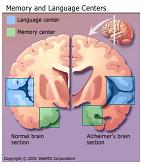
is Dementia? It is a loss of mental functions
such as thinking, memory and reasoning and that is severe
enough to interfere with a person’s daily functioning.
Dementia is not a disease itself, but rather a group of
symptoms that are caused by various diseases or conditions. What causes dementia?
Degenerative diseases of the nervous system, such as
Alzheimer’s, Parkinson’s etc
Diseases that affect blood vessels, such as stroke,
or multi-infarct dementia, which is caused by multiple
strokes in the brain (this is what has happened/is happening
to Nanny).
Head injury – either a single severe head injury
or longer term smaller injuries like in boxers
Illness
other than in the brain – kidney, liver and lung
diseases can all lead to dementia
Are dementias treatable?
Yes only if they are due to long-term drug abuse, metabolic
disorders (Vitamin B12 deficiency), tumors that can be
removed. The non-treatable causes of dementia are Alzheimer’s
disease, Dementia due to Parkinson’s disease, AIDS
dementia complex and Multi-infarct dementia.
In
the past few months, we have noticed how Nanny changes in her
behavior. Every evening, she will wait for Myron to return from
work to bring her “home”. It puzzled us daily as
to her confusion of her whereabouts. Then, one evening, I read
an interesting article on dementia in the internet. When a person
with dementia asks to go home, they don’t necessarily
mean their previous physical home, but rather they are expressing
the desire to return to what they were when they could speak,
understand and communicate, to a time when they had their minds.
As for Nanny, she tends not to recognize her present home and
she wants to return to another “home” where she
will recognize her surroundings. Myron has patiently ask her
simple questions that she is able to answer and it helps to
calm her fear and confusion. This would give us the next bandwidth
of bringing her, to her room and getting her to sleep. This
is repeated nightly until the next confusion takes over…..
Here
are some tips, which I observed, that might help
you when you visit her:
When
you speak to nanny, hold her hands first. At your touch,
she will turn to look at you, only then should you talk
to her slowly and in simple phrases.
If she is not in her best of moods, ask her open questions.
If she is finding it hard to tell you what she wants,
change the subject by talking to her or asking her a
simple open question.
Nanny will also be telling you of things like children
running in the house and why the upstairs people are
not here today etc etc Do not be afraid cos it is part
of the medication that makes the patient hallucinate.
If you feel uncomfortable in answering her, you may
choose to change the subject or excuse yourself to take
a drink.
It
is a sad thing to see nanny in this stage but we must understand
and not feel guilty that we are not concerned about her.
There is nothing we can do to cure her condition but we
can always pray for her and spend time with her. At the
same time, we must understand the fact that she might not
even acknowledge that we are there with her.
I
am sure all of us will agree that Eni is doing a great job
in looking after nanny. She is so patient with her and the
countless times she has to repeatedly answer her questions
daily, has taught me a valuable lesson on patience.
I would like to
share some action steps taken from an article which I read this
week.
Treat
the “patient” as a person
Appreciate and acknowledge the Dementia patient as a person.
Through words and touch, try to do everything you can
to relate to this individual as a valued human being with
emotional and spiritual needs.
Avoid talking about the person as she will feel hurt inside
and it would be harder to gain her trust.
Do address the patient by name and avoid cruel descriptions
like “spoilsport”, “bedwetter”
etc.
Avoid isolating the individual from visitors and encourage
her to join in the conversation
Communicate
slowly and calmly
Speak slowly and in simple sentences. Slow down your rate
of speech and lower the pitch of your voice.
Give the person time to hear your words and prepare a
response.
Communicate one message at a time. Long messages will
only confuse the patient like ”Good morning, Let’s
get dressed and come down and eat our breakfast”
Instead, divide the message into sections such as:
- Good Morning. You need to get up now.
- OK, you’re up. Now let’s get dressed.
- OK, let’s go downstairs now.
- It’s time for breakfast.
Keep in mind that the person can’t tell time. Instead
of saying, “ Davida will be here at 2pm”,
say “Davida will be here after your bath etc.”
Be
positive and reassuring
Be positive, optimistic and reassuring to the person.
Use expression as “Everything will be OK, Don’t
worry. We will get through this. I am here to help you.
I love you always.
Use comforting and non-controlling statements. Try to
identify feelings rather than argue about facts. If the
patient insists on going out, you may put limits by saying,
I want to go outside too! Let’s do it after we eat.
I’m hungry. As an alternative, you can distract
the person by saying, “Yes, it’s nice to go
outside. That’s a nice sweater you’re wearing.
Tell
the person what to expect
Prepare the person for what’s about to happen. Like
saying, “we need to get up now”, then gently
move forward to help her.
Provide suggestions and structure. For example, don’t
ask “Do you want to take a bath?” Instead
say, “It’s time to take your bath now”.
Match
your actions and words
Be aware of your body language. Even though you might
use kind and gentle words, the patient will pick up tension
in your face and body.
Use or repeat the same words to the patient, he needs
time to understand each word and when you repeat with
new words, she will need to understand it all over again.
Maintain eye contact, smile and use touch to comfort and
reassure the person.
Repeat
enjoyable activities
Encourage the patient to do activities which might help
distract the person from feelings of anger or depression.
However, be prepared the short span of focus she might
have.
Create the opportunity to reflect on life. Many patients
enjoy going through old photo albums and talking about
happy and enjoyable events. (This is what I am trying
to do with all the old photos)
Allow the person to tell stories even if she repeats the
same story over and over again.
Music or songs she is familiar with or when you observed
her humming to the tune, try to play these often to distract
her and sing along with her.
Hope
you will enjoy this article and I will always keep it to 2 pages.