Researchers are experimenting with a "smart" structure on the Leslie Street bridge in northern Toronto. The project, involves lining the bridge's columns with fiber optic sensors and wrapping them with advanced composite materials -- lightweight synthetic that covers the structure like plastic sandwich wrap. The wrap lessens the deterioration and holds the structure together, while the sensors precisely measure possible corrosion that may be occurring underneath. All of this means less road maintenance in general and ultimately less road closures.
The new Taylor bridge in Healingly, Manitoba is outfitted with 66 fiber optic sensors. The instrumentation in the Healingly Bridge will allow Manitoba Highways and Transportations (MHT) engineers to actively monitor the behavior of the bridge structure and the new advanced materials, over time. It will also allow dynamic sensing of singular overweight events - for example, when MHT engineers grant permission for transportation of large and overweight loads across the bridge. They¹ll be able to see the response of the structure in real time.
The smart structure is also applied to Confederation Bridge, the longest bridge over iced-water spanning 12.9 km from Prince Edward Island to New Brunswick, Canada, to monitor the long-term effects of wind, ice and traffic loads on the bridge.
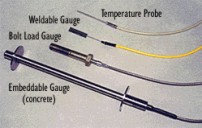
Fiber optic sensors
used in smart structures.
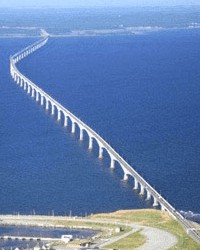
The
longest bridge over iced-water spanning 12.9
km from Prince Edward Island to New Brunswick
The fiber optic sensors are the same kind of hair-thin cables used in the telecommunications industry except they are wrapped around or embedded in concrete.