

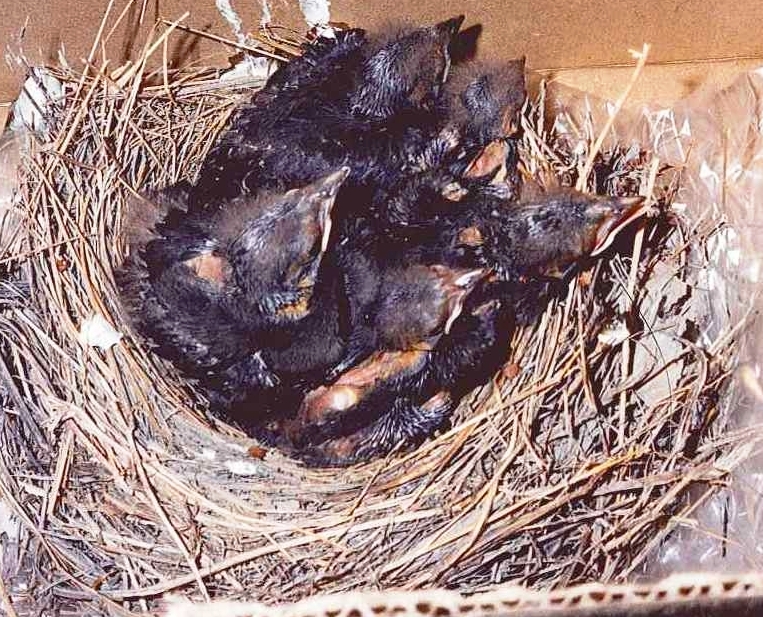
It is extremely time consuming, costly and labour intensive to raise baby birds and although we can successfully raise and release them, it is preferrable for many reasons to leave the young with their parents. Many birds, for instance, learn species specific behaviours and songs from their parents which are necessary for the proper development and survival of the birds. Many birds will also migrate alongside their parent. These are things, that despite our best rehabilitating efforts we cannot provide.

* DO NOT REMOVE UN-INJURED, FEATHERED BABY BIRDS FROM THE WILD!!! THEY MAY APPEAR ALONE AND HELPLESS, BUT THEY ARE NOT. THE PARENT(S) ARE WATCHING THEM CLOSELY FROM A SAFE DISTANCE.
* IF A BABY BIRD HAS FALLEN OUT OF A NEST...PUT IT BACK IN THE NEST IMMEDIATELY. THE MOTHER WILL NOT ABANDON THE BABY BECAUSE YOU HANDLED IT.
* IF A NEST HAS BLOWN OUT OF A TREE, TRY TYING THE NEST BACK ON THE BRANCH WITH CORD, OR USE A SUBSTITUTE NEST LIKE A MARGARINE CONTAINER LINED WITH DRY GRASS NAILED TO THE TREE INSTEAD IF THE ORIGINAL NEST HAS FALLEN APART. (MAKE A FEW DRAINAGE HOLES IN THE BOTTOM OF PLASTIC CONTAINER) AS LONG AS THE NEW NEST IS IN THE SAME LOCATION AS THE OLD ONE, OR CLOSE TO THE OLD LOCATION, THE PARENTS WILL USUALLY CONTINUE TO FEED THEIR YOUNG.
* IF YOU FIND AN UNFEATHER BABY BIRD LYING ON THE GROUND AND YOU CANNOT LOCATE THE NEST, PLACE IT IN A BOX WITH A WARM TOWEL AND A HOT WATER BOTTLE. MAKE SURE YOU DO NOT BURN THE BABY BIRD. TAKE THE BIRD INTO A VETERINARIAN OR A LOCAL REHABILITATOR IMMEDIATELY AS THEY REQUIRE IMMEDIATE AND FREQUENT FEEDING TO STAY ALIVE.
* GOSLIINGS AND DUCKLINGS SHOULD BE IMMEDIATELY PLACED WITH A FOSTER FAMILY OF THEIR SAME SPECIES FOR THEIR BEST CHANCE OF SURVIVAL. BOTH DUCKS AND GEESE READILY ACCEPT YOUNG OF SIMILAR SIZE TO THEIR OWN YOUNG. IF YOU ARE UNABLE TO CONTACT WILDLIFE AUTHORITIES OR A REHABILITATOR FOR ASSISTANCE, LOCATE A MOTHER DUCK OR GOOSE OF THE SAME SPECIES WITH YOUNG OF APPROXIMATELY THE SAME SIZE AND QUICKLY PLACE THE ORPHANED YOUNG INTO THE MIDDLE OF THE NEW BROOD. LEAVE THE AREA QUICKLY TO ALLOW THE FAMILY TO SETTLE IN AND WATCH FROM A DISTANCE TO ENSURE THAT THE FAMILY ACCEPTS IT. DUCKLINGS EXPECIALLY, ARE VERY DELICATE AND WILL QUICKLY DIE FO STRESS (USUALLY WITHIN 24 HOURS) IF THEY ARE NOT RE-UNITED WITH A FOSTER FAMILY OR ANOTHER GROUP OF DUCKLINGS.