

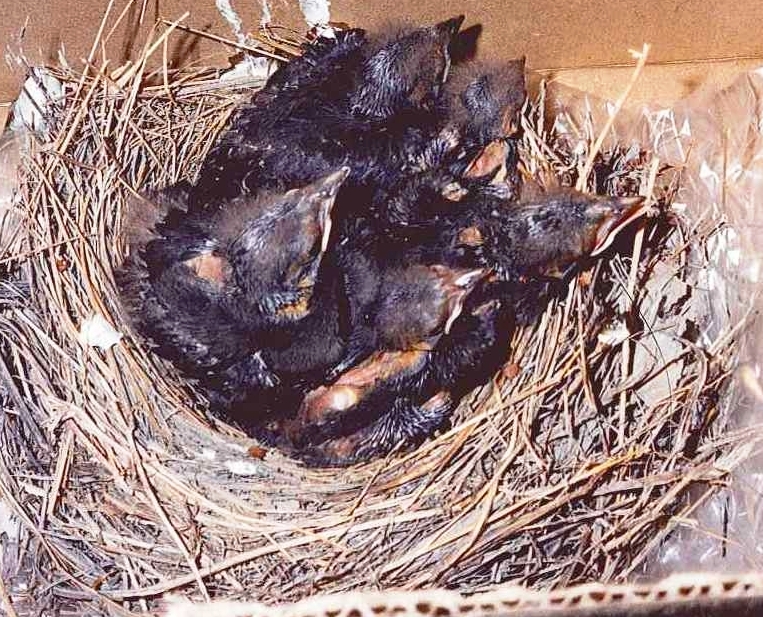
* Finding a baby skunk
* Dealing with problem skunks humanely and effectively
- Problems live-trapping skunks
- Alternatives to trapping (repellants, barriers)
Skunks are very misunderstood animals and feared by most people. They can, however, co-habitat quite easliy with people and normally do not become a problem unless people leave dog food or other food sources out in the open at night. Skunks sleep during the day, so are seldom seen, and at night forage for food. They eat predominantly yard and garden pests, including mice, voles, grubs, cutworms and bugs, that most people try desperately to get rid of in their gardens and lawns. They are very benefical to a yard and will seldom spray unless cornered or aggressively provoked.
What to do if you find a baby skunk
Skunks are nocturnal, so they are most active at night and sleep during the day. Young skunks are very curious and will often stray short distances from their den to explore during the day while their mother is sleeping. If you see an alert young skunk, or a group of young skunks without their mother, do not pick them up or assume they are abandoned. They will return to their den on their own, or their mother will come to collect them. She may wait until night or when it is safe, however, to do so, so provide her ample time to do that. She will be able to locate them easly by their crys and scent. The mother will not abandon her young if you have handled it.
If you find a skunk has made a den under your house or cottage, please refer to the problem section below.
Problems live-trapping skunks
Many people believe that live-trapping skunks is the most humane and effective option in dealing with skunk problems. There are, however, many problems associated with live-trapping, as follows:
* Apart from the obvious, that you will likely get sprayed, removing an adult skunk from an area will result in her young starving to death.
* relocated animals are at a disadvantage, and will often die, as they have no den or food stores or sources, and will likely be chased from the area by more dominant animals.
* Removing one animal from an area will only create a habitat void which will encourage another animal to take up resisence in that space, and home owner problems will begin again. A better solution is to remove food sources and use a repellant and a barrier device, if necessary.
Skunks in places you don't want them to be
Removing food sources, such as dog food and garbage, is the easiest and best way to discourage skunks from moving in. Most often, simply removing a dog food bowl, or open garbage is enough to cause a skunk to move on. To prevent skunks from nesting under cottages etc, block the entrance hole with a concrete slab or a piece of wire mesh and use a repellant. First, check the area to make sure the skunk is out of the area and make sure there are no babies in the den. Spaying repellants, or putting moth balls at the den entrance for a couple of days will usually be enough to cause the skunk to prompty vacate the area, however, allow at least a few days before permanently blocking the hole as she will move her babies out at night. Once the skunk and her young have left the area you can block the entrance hole and place repellants in the area. There are commercial dog and cat repellants available that work well or you can use mothballs, Cayenne pepper, cloths soaked in ammonia, or the following organic repellant recipe:
Skunk repellant recipe - 2 Tablespoons of tabasco sauce plus 1 tablesspoon of Cayenne pepper in one litre of water. (Fill squirt bottle and spray the area you don't want chewed or the skunk accessing.) *Note: reapply every few days.