 |
|
|
|
|
|
|
|
|
|
|
|
|
|
|
|
|
|
|
|
Greased Geese |
|
|
|
 |
|
|
|
 |
|
|
|
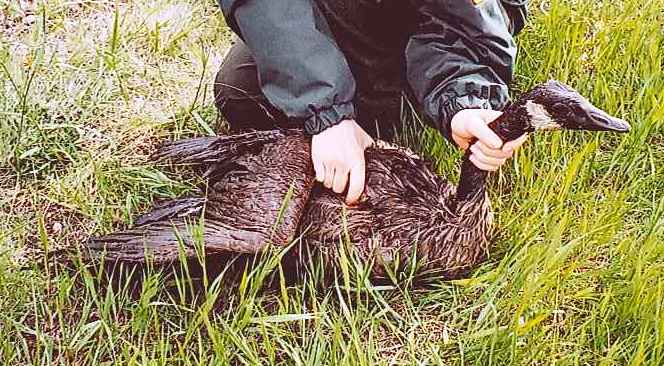
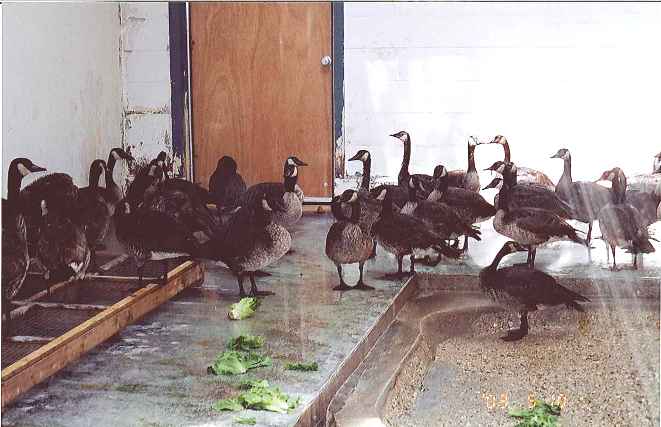
Wildlife Rescue received a call from a farmer that there were a number of geese that looked liked they had been covered in black grease wandering around a several acre area near his farm. Wildlife Rescue arrived at the field shortly after and found that a flock of fifty geese had landed in a waste oil pond owned by a local company. The geese were completely covered in oil and as a result could not fly and were losing their body heat rapidly. Volunteers collected the geese and began the laborious process of washing the geese in order to remove the oil. Each goose had to be re-washed up to five times over a one month period in order to remove the remainder of the oil. All but one of the geese survived and they were released to the wild later in the summer.
Waste oil ponds, oils slicks and patches of oil on the ground all look like water to birds. Once bird feathers are coated with oil, the birds are unable to fly and maintain the body temperature and become vulnerable to predation. Most oils are also toxic to birds and birds will die if they ingest sufficient quantities while trying to clean their own feathers. Please ensure your yard and work areas are bird and wildlife safe. Waste oils and chemicals should be promptly sent for disposal to a waste handling facility. |
|
|
Capturing the geese. |
|
|
|
|
|
 |
|
|
|
|
|
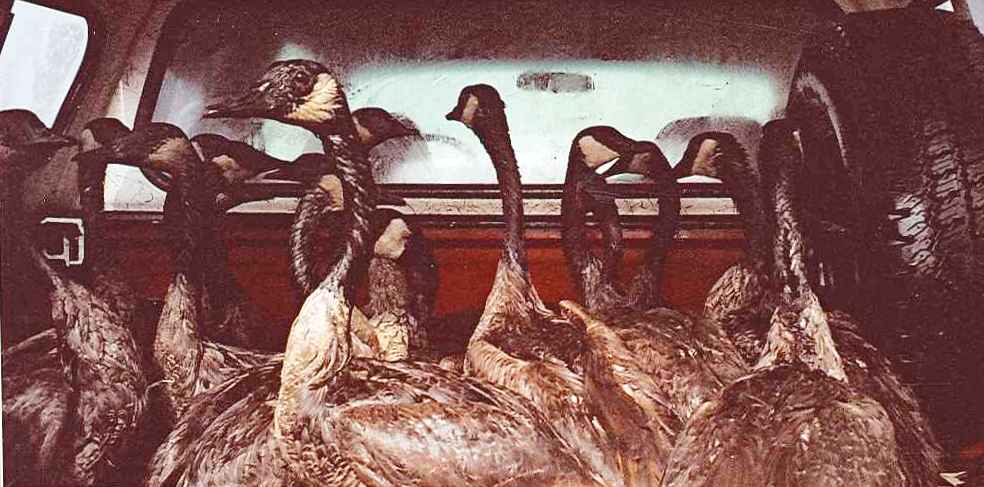
Transport to the Centre for cleaning. |
|
|
|
 |
|
|
|
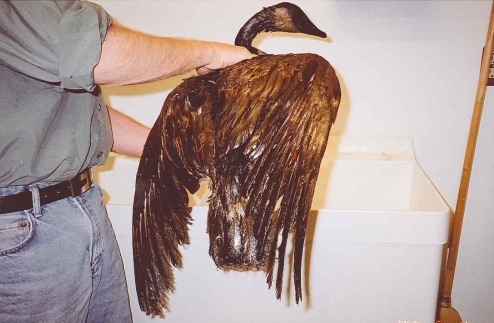
Preparing goose for first wash. |
|
|
|
|
|
 |
|
|
|
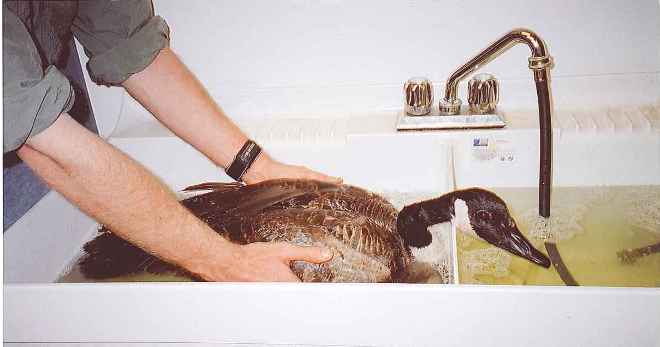
Washing geese to remove oil. |
|
|
|
|
|
 |
|
|
|
Final stage of recovery prior to release. |
|
|
|
|