My basic research
interests lie in a wide range of topics from theoretical organic chemistry
(application of quantum mechanical devices to organic chemistry problems),
natural products chemistry (ecofriendly friendly plant corrosion inhibitors),
QSAR studies, Science and Religion etc…
I teach mainly
theoretical, synthetic and mechanistic organic chemistry and of course quantum
mechanics and chemical applications of group theory. See this page for
details
Generally, for
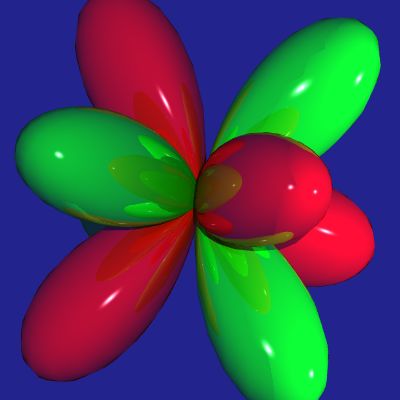
studying the bonding properties in molecules, there are two theories -
Valance Bond Theory (VBT)and Molecular Orbital Theory (MOT). Both of
them are having their own plus and minus sides, and a lot of scientists
are trying to decrease the rift between them, so that we can bridge them
one day to explain all the bonding parameters with more ease. Let us look
forward for the day in which the scientific community be able to
accomplish this dream. Many are now trying to give their own small
contribution to the process. An interested reader may refer to an article
published in Accounts of Chemical Research by great Professors Hoffmann (Nobel laurate), Shaik and Hiberty. The article
is
"
A Conversation on VB vs MO Theory: A Never-Ending Rivalry?"
My
dream project is to develop a Quantitative framework to Fagan’s Rule in
order to estimate the partial bonding characters like partial ionic and
covalent bonds. It needs a lot of patience and time. I didn’t start
working with the problem.
Presently one of
the problems that we are engaged is about the quantum mechanical study of
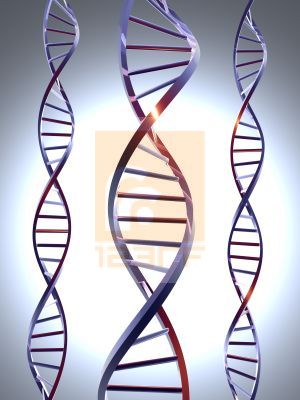
some novel substitutes for hetrocyclic bases in DNA (substitutes for
adenine, thiamine, uracil, cytosine, guanine etc). The work is in
collaboration with Mathew Varghese of School of Pure and Applied Physics,
M.G University.
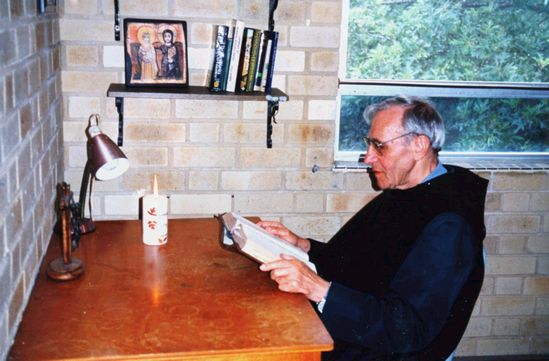
Let me introduce
a new method of study from the ancient western Father of Church St
Benedict. I have been deeply touched by the Benedictine spirituality and
its method of study called ‘lectino divina’. It is a method for
slow and contemplative study of scriptures/text. This is well advisable
method for students. I strongly urge my students and readers to read
beyond their subject to get a mature overview of various aspects of
scientific and philosophical issues
Theology and Philosophy of different religions and
denominations are of very much interest. Now a day, we can find that the
rift between science and religion is decreasing a lot. The emergence of
new branches of study: Science and Religion, Philosophy of Science,
Metaphysics etc are the main bridging factor between the two parallel
moving thoughts (Theology and Science) which were in constant ideological
conflict. I am spending some time in reading about this and doing some
research in it.
The scientific
heritage of ancient India is astonishing. If one examine critically,
he/she can understand that all the present revolutionary scientific
theories like relativity, quantum mechanics, structure of atom, time,
space, astronomy, mathematical paradigms etc had been known to our ancient
munis (hermits). They had written them in one form or other in various
books like Upanishads, Bhagwat Gita etc.These things are worth reading.
The Indian
Institute of Scientific Heritage in which I am a Fellow
member, is doing a lot of research for understanding the diverse and
splendid culture and scientific awareness of ancient Indians and bring it
to the common people.
Recently, some
western scientists suggest a new phenomenon called the decay of
velocity of light (cDK). It means that the velocity of light,
which is believed to be a constant, is decreasing continuously with
respect to time. It is against the common scientific belief and if proved
right, it can shake the backbone of basic scientific beliefs like Quantum
Mechanics, Theory of Relativity etc.The scientific community does not accept the above said phenomenon.
Let us try to find the truth behind it.
Please contact
by email to share your views with me.