At this point, I've got about 1.5 years and 800 hours into the plane. The finishing kit and prop arrive two weeks from now. The engine is due in mid-August. Most of the instruments and lights are sitting on a shelf in the garage. If I can find a hangar soon, hopefully I can be flying by the end of the year.
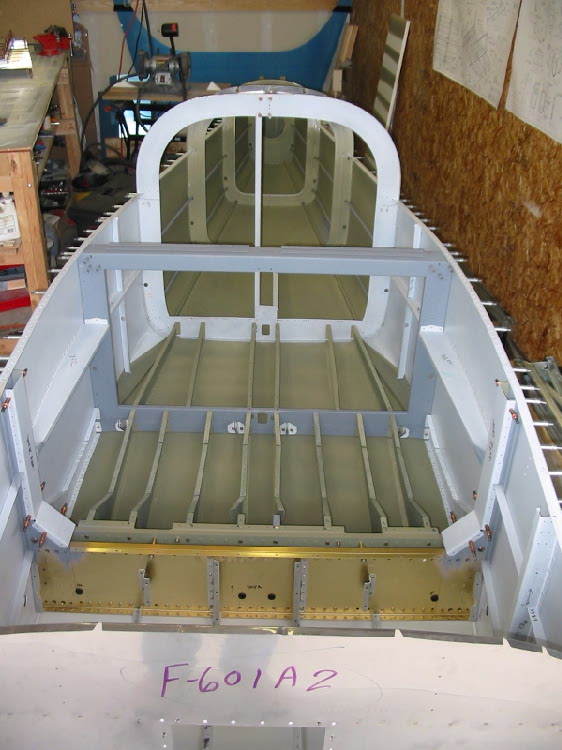
After the riveting was finished on the bottom, Kent and Aaron where kind enough to help me flip the "canoe" upright.
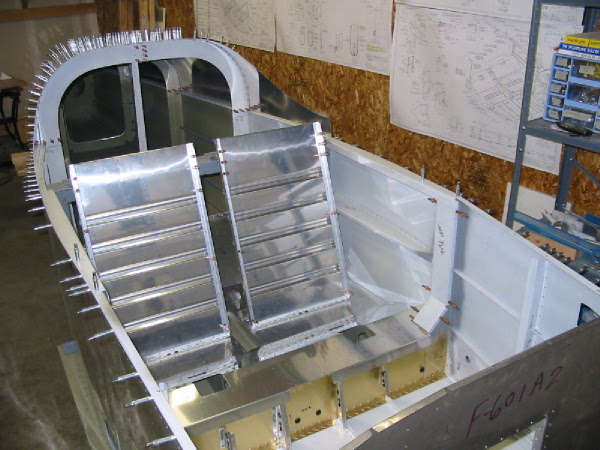
The seats consists of the seat pans which sit right on the floor ribs and two seat backs. The seat backs attach to hinges on the floor and lean against the baggage compartment bulkhead. There are three hinges per seat back so the seat position can be adjusted. In front of the seats, you can see the anodized center section where the wings will attach. The two rectangular holes in the floor are where the control sticks will come through.
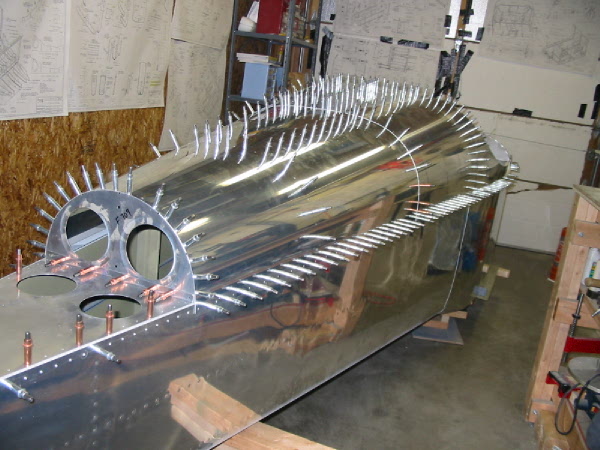
There are two top skins that cover the rest of area between the tail and the cabin. The flat piece on the left side of the photo is where the horizontal stabilizer will attach.
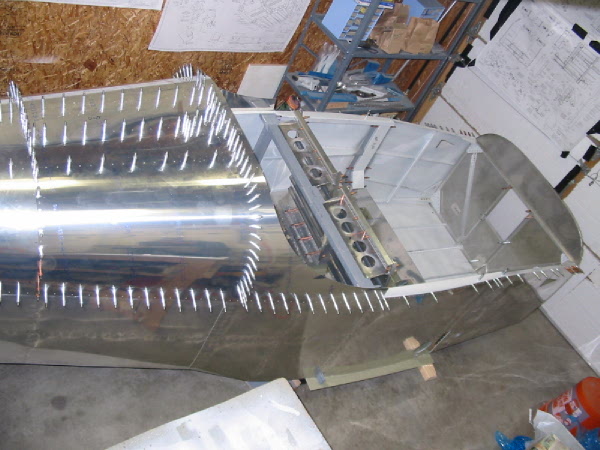
Here's a shot of the midsection. The open area behind the seats will be covered by a fixed plexiglass piece. The flat pieces behind the seats (with the four holes) brace the seats against the baggage bulkhead. The holes make the pieces lighter.
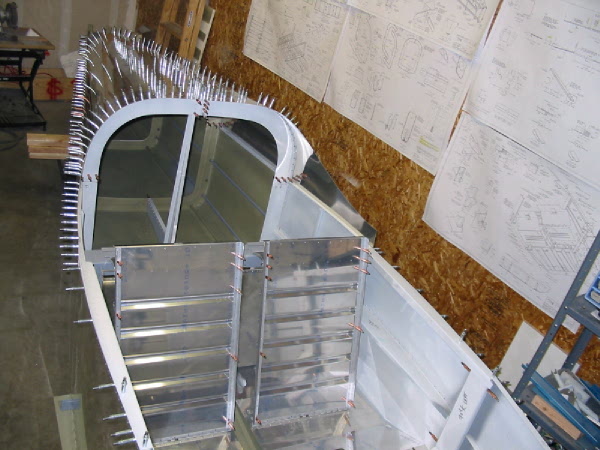
Most of this area of the cabin will be covered by the plexiglass canopy. I chose to build the tip-up canopy which tips forward on gas struts to allow you to get in. You can also build the slider canopy which slides backward. I would have gone with the slider if you were allowed to open it in flight (just like Pappy Boyington!), but you are only supposed to open it during taxi. Also, there is a roll bar at eye-level in front of you on the slider canopy so the tip up actually gives better visibility.
Back to Main page