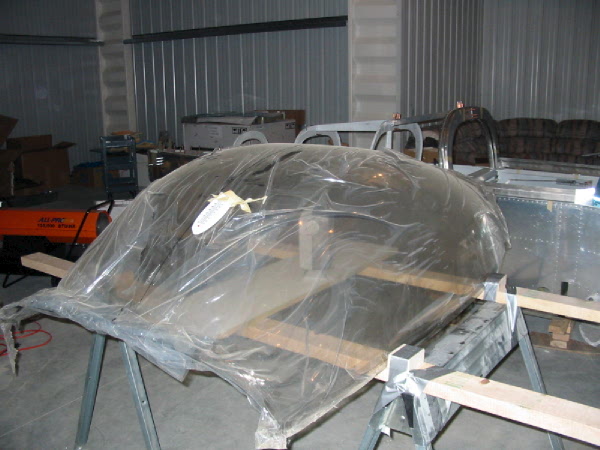
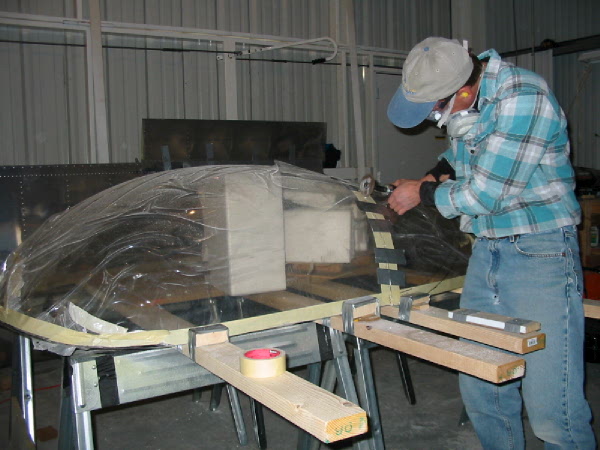
The tip-up canopy that I'm building comes from the factory as one piece. They make it by heating up a sheet of plexiglass and then pulling it down on a mold. You've got to trim away all of the extra plastic on the edges where it was clamped in the mold and split it at the airplane's roll bar. You can see a thermometer taped to the canopy in this picture. You're supposed to heat the plastic to around 75-80F before cutting it. Since it was 40 deg outside the uninsulated hangar, I had to use the 125,000 BTU kerosene heater in the background to get it warm enough.
Leaving nothing to chance, Van's Aircraft supplies the fiber disc to do the cutting. You run the disc in an airpowered die grinder. The disc looks whimpy when you take it out of the bag but it'll actually zip through steel bolts pretty quickly. My only problem here was that the die grinder would use up the 30 gallon compressor tank in 5 minutes and then blow the circuit breaker when the motor tried to start up against the partially filled tank. I ended up emptying the tank before I started cutting and the compressor motor ran the whole time I did the cuts.
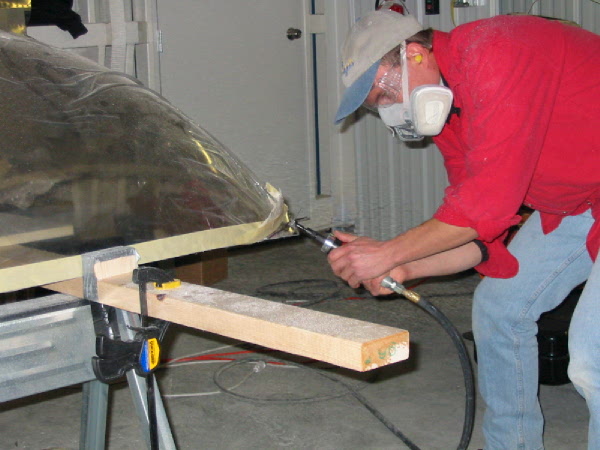
The front of the canopy takes a few tries to get the fit right. The front edge here will be finished with fiberglass to make it blend into the aluminum skin.
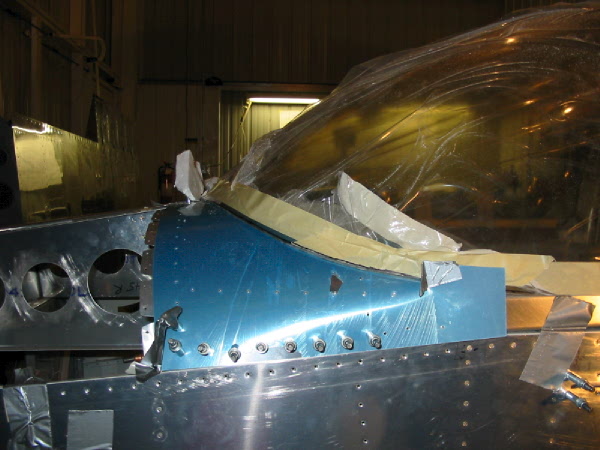
After the lots of iterations of cutting the extra plastic and putting it on the fuselage to check the fit, you mark the split line between the tip-up and the fixed part of the canopy.
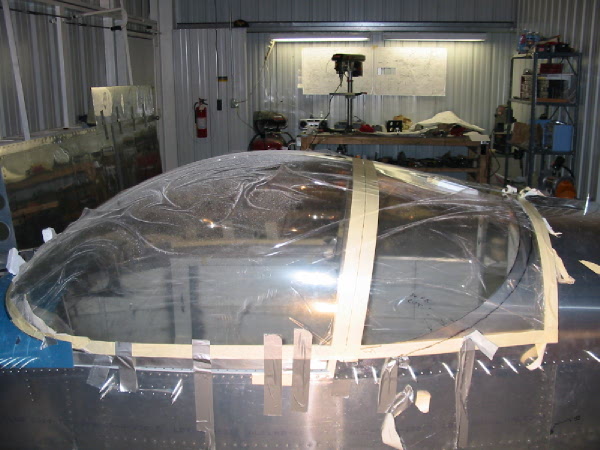
It's good to take a breath here and make sure everything's lined up right. You only get one chance at cutting the split line. You duct tape the split as you go so the canopy stays aligned as you cut.
After the two pieces are split, you finish the edges with sandpaper to help prevent cracks from starting.
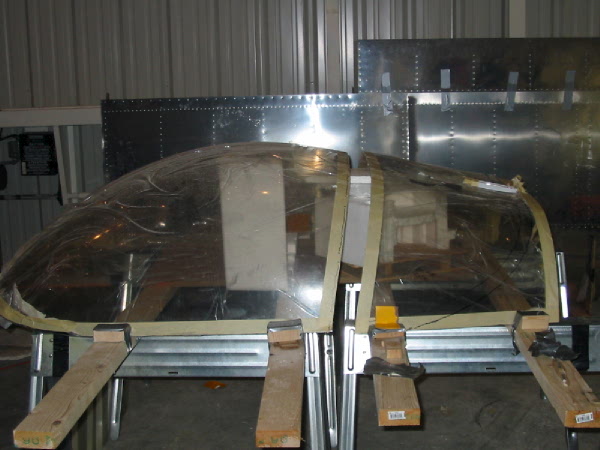
The rear piece that covers the baggage area gets more trimming to fit the contour of the aluminum skin. You can see the edges have holes drilled in them for screws. The front of this piece screws into the rollbar and the back of it is held with screws and nuts to the skin behind the baggage area.
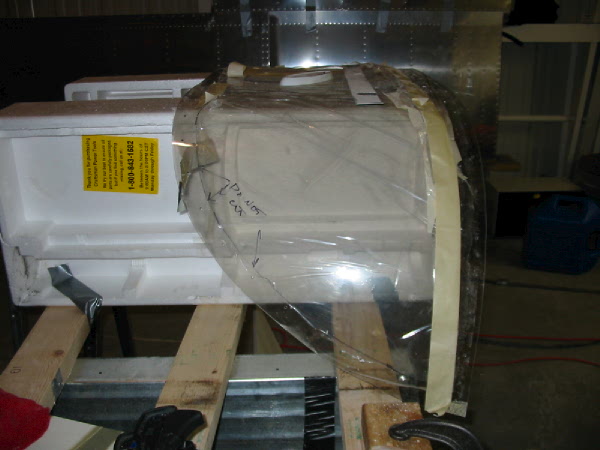
The thought of cutting that $700 canopy is nerve-wracking at first but the fit to the fuselage is amazingly good and the cutting isn't too bad after a bit of practice. The worst part is that even with chemical goggles on, the plexiglass still managed to fly in my eyes and under my contacts. I spent about 4 days (27 hours) on all this cutting. I need another couple of days to finish the screw holes and miscellaneous stuff.