Chapter Seven:
The Dark Side Of Videomania

With Oxymoron's ever-increasing success came a lifestyle that could best be described as 11experiencing the world on fast-forward", as was eloquently summed up by Gill Giles, reluctant child of the video age.
They were interviewed to the point of conversational burnout by an eager, information-ravaged media, who enthused rapturously about the band, which they saw as a welcome diversion from the current mid-Eighties trend of "techno-pop-with-panache".
"I didn't realize that being in an up-and-coming rock band could be so damned exhausting!" Gill exclaimed at one point after working nine consecutive hours in the recording studio, followed by a lengthy interview for a lesser-known rock music magazine.
"Well, it's not always a day at the beach, I'll admit that", Peck replied, preparing to go home after what he felt was a waste of time in the studio: Nothing had worked for him that day, and it was damned frustrating. "But I wouldn't trade all this for scrounging around in those grubby little dives like we used to in the not-so-good old days."

Michael, who like Peck, was frustrated with the recording session, feeling that the band was just not working closely enough together this time, poured intensively over Oxymoron's recently penned music and wondered if his lyrics should be scrapped altogether.
"I just didn't feel comfortable with this stuff", he said in such a way as not to sound too critical or judgmental. "This one song, "Out From Under" doesn't have a great deal of credibility with the music accompanying it. Don't you agree? Didn't it sound stiff and wooden, like it was being forced out of a funnel with too small an opening in it?"
Peck and Giles turned simultaneously to stare at Michael, their mouths frozen in tight lines. "What?" Peck asked, his nerve-endings spraying tiny sparks into his muscle tissue. "Are you saying that our instrumental sucks?"
Michael shook his head and waved his hand in a gesture of protest. "No, not at all, Burton. You guys worked really hard on that music and it's up to me to work the lyrics around it. But I can't on this one. Maybe I've got a mental block because of the subject matter." "What do you mean by that?" Gill asked, pushing over a chair and straddling it in a movement of protective defiance.
Michael, Peck could see, was feeling uncomfortable, as if he realized that he had planted both of his feet squarely in his mouth and was unable to extricate them. He had to keep going, however. "Well, you know, it's about someone who feels that they are being crushed, in a way, by something powerful. He or she is struggling to escape, and.... And, well, I guess I should just rewrite it. The music is too, well, it's just too comfortable. It's too much like an old pair of slippers, and --"
"An old pair of slippers? And old pair of slippers you say?!" Peck had had about all that he was going to tolerate for one interminably lengthy day. "Micheal, I think, and be sure to correct me if I'm wrong, I think that what you're pathetically trying to tell us is that our music doesn't suit the tone and atmosphere of your words. Am I basically correct in my lame assumption?"
Michael wasn't certain if he should breathe a sigh of relief or cringe in dread of more verbal spears. "Yeah. Sorry I mentioned it. I'll go work on the damned thing some more."
"You do that. The music stays the way it is. Call me unreasonable but that's it. End of discussion." Gill rose and turned away, feeling the first in an ever-growing number of riffs among the members of Oxymoron. They just weren't working together as a unit as swimmingly as they used to before all of the incredible pressure began building up.
Video production was another stumbling block over which all of them regularly tripped and fell. "A necessary evil", Taylor had replied when asked what he thought of the video industry itself. "I fully realize that a musician must produce a four-minute moving illustration of his or her song to sell it to the public, but that doesn't mean that I have to be wholly enthusiastic about it all."
He most certainly wasn't, and neither were Gill or Paul. Michael was the sole supporter of the film medium as an exciting wealth of endless opportunity of expression.
The others were content to let him be the creative force behind their efforts, a role that Michael was only too happy to take on.
When, after much deliberation and rewriting, "Out From Under" was finally recorded, but did not, in the end, become the first single to be released from the album.
The more commercial-sounding "Creative Insanity", whose lyrics were anything but mainstream (Peck: "Yes, yet another oxymoron for all of you trivia freaks.") was a personal favourite of Paul's, whose girlfriend, Lucinda, an accomplished artist, had once been admitted to a psychiatric facility for a period of time, suffering from acute schizophrenia. She had ultimately been one of the fortunate ones and recovered sufficiently to be released.

This information was never to be made public knowledge, for all of the band members guarded their private lives quite fiercely. Michael had written the lyrics to "Creative Insanity" with Lucinda in mind, for he was one of the few people that the young woman allowed to get close to her. Her quiet, non-judgmental manner shone through her thick screen of psychotic confusion. He would go to visit her regularly in the hospital, distracting her with amusing anecdotes about the band and what it had been up to that particular day.
Lucinda would even occasionally smile, something she did not engage in, even at the best of times, with any regularity.
Paul never experienced feelings of jealously toward Michael for being able to reach his troubled partner, basically because Michael was more of an older brother to Lucinda than anything else.
Paul viewed Michael as a non-threatening entity, for he knew him better than either Burton or Gill, with regard to his basic insecurities. Peck assumed that, because Michael had, on many occasions, confided in him about his unsavoury past and family of undesirables, he was well-versed in the facets which went into the manufacture of Oxymoron's lead singer.
However, Peck 's assumption was quite erroneous, for Perry and Perry alone held the knowledge too painful and self-effacing for Michael to relate to even his old college chum: He did not have a clear and definite formulation of his sexuality. Michael Hope was neither undeniably straight or unmistakably gay. This may not seem to be too gut-wrenching a dilemma, but in actual fact it presented infinite problems and difficulties, as a person with no gender identity to speak of cannot experience any kind of genuine feelings or attractions for anyone of either sexual persuasion.
In North American society, particularly, men pride themselves upon their abilities to perform sexually, and place just as significant importance upon this as women put upon their identities as child-bearers and mothers.
If a man feels comfortable and confident in his masculine activities, he is much health~er emotionally, less likely to possess problems of any .pathological nature, and much less likely to harbour ill feelings toward men and sometimes women, whose sexual preferences deter from the norm in any way.
Women, by the same token, are more stable and productive in society if they feel that they are able to express their mate capabilities surrounding the care and nurturing of children.
The major difference here, of course, is one involving the issue of choice: Women may make a conscious decision not to have and raise babies, but men do not have the option of such luxury, for they either perform adequately in bed or they suffer the ill-fated consequences. They often feel ashamed, essentially useless, and harbour emotions of self-hatred and self-ridicule, leading to a variety of negative conclusions.


Michael was no exception to these pertinent facts, in that he felt as though he were some kind of sideshow freak of nature and if anyone at all were to discover his dark secret, his universe would burst into fragments.
Michael was often unconsciously interweaving threads of this into his professional life, reflected as it sometimes was in his lyrics, stage persona and overall public demeanor.
Sexual ambiguity became unofficially stamped onto his forehead, whether he liked it or not, and he found that, ironically, it worked to his advantage in many ways.
The general public, fascinated as it was and always had been with rock music's representatives, particularly with regard to their quirks and unconventional habits, found Michael Hope's enigmatic sexual identity worthy of much debate and speculative conversation.
Burton Peck, well aware of the emotional choke hold that his band mate had upon Oxymoron's fans, was not without a liberal amount of envy, spiced as it was; however, with some selfish relief that he was not in the scrutinizing spotlight to such a degree.
"You really have an interesting way of sparking public debate", Peck had remarked to Julian one night in 1987, after perusing an article peppered with innuendo regarding the vocalist's apparent dearth of lyrics concerning love between himself and anyone of the female persuasion. "When are people going to realize that we do not nece~sarily, if we do at all, write about ourselves and our own feelings? I tell you, sometimes I get real sick of everyone telling me what I'm like and what's on my mind."
Michael had nodded in agreement. "Well, it goes with the territory, I guess. People have an inordinate craving for gossip and juicy details. They always have. If we want to be in the spotlight, we have to be prepared to feel like amoeba squashed on a slide rule and shoved questioningly under a microscope."
All of the analytical logic aside, Michael despised being at the core of so much controversy, afraid as he was that he was somehow far too transparent. Fostering the image of the brooding intellectual often overcome with angst at the atrocities and abominations of society, he managed, over the years, to triumph over a great deal of the petty conversational nitpicking to achieve a strong sense of respect, not only for his band's artistic achievements, but also for his own personal integrity. His gritty determination to try to change things he found despicable and blatantly wrong earned him the following that he hadn't actually expected but was grateful for anyway. Because of this, Michael Hope almost made it. Almost.
Paul Perry, having been privy to a great deal of Michael's journal entries of the mid-Eighties, learned that his 1986 relationship with Devon Sinclair, the fifty-ish, white-haired director of the video, a somewhat irreverent creative genius who commanded a great deal of respect in the cinematic world, threw up his hands as Michael protested his role and tried to make alternative suggestions.
"Who's directing this---you or myself?" Sinclair snarled impatiently, dismissing Michael's negative comments with a gesture of contempt. "I have definite ideas of the way this is going to work. Now what is the problem, exactly?"
Michael, Peck could see, was clearly unhappy. "Can't we use an actor to play the guy in the graveyard? We're all musicians. None of us are particularly comfortable about taking character roles."
Devon Sinclair was not the sympathetic type. "Are you boys aware of the concept of the video? You are selling your product! And who are you selling it to? Your audience, of course. And who, precisely, makes up your audience? Young people who watch MTV. Young people who put posters of you up on their walls and go to your concerts. They don't want to see some schmuck from the Screen Actors' Guild in an Oxymoron music video! They want Oxymoron for God's sake! Am I getting through to you, son?"
Michael knew when to back down. He relented dutifully going through the required motions of pretty-boy 1980's video persona. As the song laments, "Video killed the radio star". The world of rock and roll was changing in dramatic ways and not all of them boded well for the musicians.
Peck was pleased with the results of Devon Sinclair's totalitarian direction of "May I Remind You?" Gill, always willing to try new avenues of expression and be an eager participant where the furthering development of his band was concerned, also concurred. Paul, slow to warm to change, perched on his familiar seat, squarely straddling the fence It was Michael who held the most vividly contrasting opinions about the entire concept of videomania: Film was an exciting and innovative canvas with limitless possibilities, but acting in front of the camera. That was, putting it simply was pure hell.
Though many favoured him as the most visually appealing of Oxymoron's members, Michael did not share this belief. In fact, anchored as he was in the stagnant mud lands of bulimia, he could not accept his own physical appearance and despised its many flaws being displayed in music videos for public scrutiny.
Fears were actually grounded within a certain framework of reality. There was, in the music video industry of the early-to-mid-Eighties, an insidious, underlying push by the conglomerate itself to squeeze the young rock performers into a pre-constructed mould that could very well be stamped, "One Size Fits All". In other words, there was an unstated "accepted norm" of physical appearance to be adhered to in the music video: That was, youthful, exceedingly attractive, and, above all, impossibly and unrealistically thin.
For the growing number of female rock musicians, the dilemma was "old hat", because the world of modelling had, for many years, dictated that they look like walking zippers, but this was something entirely new and previously unheard of for males. All of a sudden it was imperative that, musical talents aside, they look so visually captivating that they send giggling pre-pubescent girls descending upon record stores like locusts.
The pressures placed upon these young men, some of whom were fortunate enough to be naturally slim and flawless, were massive, and created the hitherto rare phenomenon of male eating disorders, touched upon previously in some detail in this book.
One does not have to possess a medical degree to observe the effects of these unrealistic demands upon some of the rock groups that flourished during this groundbreaking period in video history. Anyone who is and has been a fairly regular viewer of rock music videos can easily pick up the blatant negative effects as they are personified graphically and sadly by these "victims of rock and roll fashion".
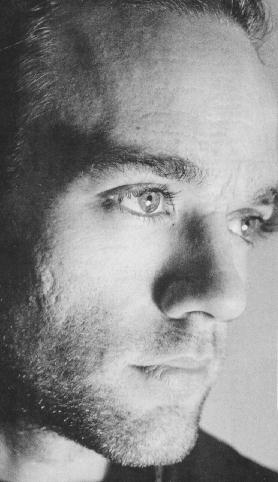
Avoiding "the temptation to lapse into any more pedantic rhetoric of the medical text book, it will, instead, be more effective for the purposes of a work of fiction to listen in on a conversation between Gill Giles and his close friend, Geoff Perlman, who was once the lead singer for a British pop sensation, Albert Hall , a quintet of "stunning, peroxided living mannequins festooned in pancake powder and eye-liner", as one dour music critic once wrote in the British tabloid, "The Sun".
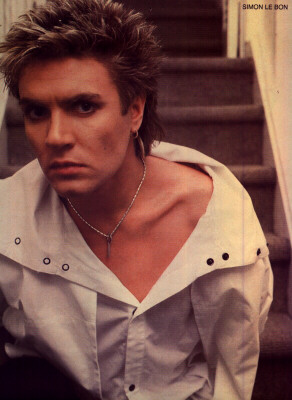
Giles was visiting Geoff at his impressively decorated and unabashedly lavish home in Atlanta, his American base (he owned another equally immodest mansion outside London, England). He began a conversation which, though originally meant to be superficial and inconsequential, turned quite quickly into something much more insidious:
"Hey, Geoff, you miss working, or are you happy that Albert is becoming a fading memory? After all, weren't you with them for over four years?"
Perlman, a fine-featured, prettily-handsome twenty-five-year-old with short-cropped black hair and large, essentially expressionless brown eyes, hesitated before answering. "Well, I don't miss most of the that went on, that's for certain. The total lack of any privacy, constant flashing of camera bulbs, the God-awful clothes, and all that make-up. Not what I imagined when I became a musician, actually."
Gill grinned, recalling the hundreds of photos he'd seen of Albert Hall, with their baby-blue eye shadow, plucked eyebrows and hair coiffed to glamour-boy perfection. "I don't know how you put up with it all. I mean, stuck in that crazy look that completely overwhelmed your music. I would have said, "The hell with it", right from the start, as soon as they began telling me I had to look a certain way and if I did then who cared what we were singing or playing."
Geoff suppressed a laugh, saying in a jocular voice, "Gill, my friend, you couldn't possibly make it on your looks alone anyway! I mean, when people look up how to sketch the picture of the stereotypical nerd, they find your photo beside the instructions!"
Gill wasn't particularly amused, but had to ruefully admit that with his six-bit, unprofessional hair-cut, decidedly "uncool" eyeglasses and teeth that literally cried out for the white knight of Orthodontia, he was not what you could in any way call "hunk material".
"All that aside, Geoff, I still think that Cohn Gallant, your lead singer, could have put his perfect foot down and said, "No more of this ! We want to be taken seriously, dammit!"
Perlman shook his head. "It's not that simple, Gill, old boy. Cohn, myself and the other guys got caught up in ~his---thing, that took over and got a life of its own going." He lit a cigarette and dragged hard on it for a moment. "Those teenage girls, the millions and millions of them who saw our video, "The Tiger's Cage", went bananas over the way we looked. Not our sound, or the song itself, or even the artistic quality of the video, but the way we got them all hot and bothered! We didn't plan that at all. Cohn was even more shocked than I, as we'd never fancied ourselves to be the glamourous types, you know."

"Yes, but you must have orchestrated it a little", Gill protested, sensing that his buddy was becoming overly defensive, "I mean, after all, "The Tiger's Cage", which was a really solid and intricate piece of work, started your slide into that synthesized, techno-pop thing that so many got stuck in a few years ago".
Geoff's back stiffened as Lee zapped his achiles heel with his lightening-bolt words. He got another drink but didn't offer one to Bryan, saying abruptly, "What the hell would you know about it? You may call yourselves alternative but we paved the way for you American blokes. You seem to conveniently forget that, Giles. You can be a real pompous ass with all the subtlety and finesse of a bull in heat".
Gill put his half-empty glass on the coffeetable and stood up. "Well, obviously I've worn out my welcome here, Geoff my friend. I honestly didn't mean to insult you. I'm not sensitive like Michael and Paul are. I just say whatever pops into my head and then regret it later. Will you accept an apology?"
"Sure, friend. I'm just a tiny bit sensitive when it comes to our band and music. We were just hitting our stride in the mid-eighties and looked forward to a smashing, wild future. But it wasn't to be". Geoff gulped his drink as if it were spring water. Gill recalled Peck's benders and came to the conclusion that he was a tea-totaller compared to his English buddy. "You guys have it all, you lucky stiffs. You're famous, popular, rich and talented, not necessarily in that order". Geoff began pulling at his spiked, black hair and continued on in a kind of dreamy and reflective manner. "We had all that once, but you know what they say about fame, that it's fleeting. How true those words are. They hit me like pellets while my creativity spirals down the drain. I'm bleeding emotionally, Gill. Do you know what that's like?"
Gill cleared his throat and playfully punched Geoff on the arm. "Hey, you're not going to dissolve into a puddle of self-pity are you? Wallowing is futile and only makes you feel worse. Why not start a new CD? Your last one of two years ago netted you a few hits. It ain't over 'til it's over, Geoff. But you've got to take better care of yourself. You used to look great but now you're a bone rack. Just like Michael. It's scary and I wish there was something I could do to help the two of you but my hands are bound tighly behind my back".
"Is Michael getting help?" Geoff asked, putting his own pain aside for a moment. "I mean, I can't understand why he's starving himself. The last time I saw him was two years ago and he looked healthy. You guys tour and all that, so how can he keep up that level of energy if he's wasting away?"
Gill frowned and wiped some lint off his favourite pants. "My God, don't you think we're doing all we can for him? But the stubborn fool won't listen to us. He thinks he still looks fat and he's getting emaciated under all those clothes he wears, I'm sure. He may have been somewhat chubby in the early to mid-eighties but nothing to freak out about. I was the fat one. The other band members called me "lardo" until I lost fifty pounds and scared them all to death. Once you get on this anorexic train, you don't get off. Oh, there may be the odd stop along the way where we enjoy reasonably good health, but those episodes never last".

"So you figure it's the music videos that are at fault". Gill was trying to make some logical sense out of Geoff's meandering and droning diatribe. "Well, I've seen some pretty portly musicians in videos and they don't end up like the two of you. I came here for a visit and to talk to you about these issues". Giles felt the air thickening around him. "But I never suspected music videos. It makes sense, the way you have explained it, and likely if you're a teen idol you can't afford to be overweight. Our band hasn't reached the proverbial pinnacle of super-stardom. I don't know. Sometimes Michael makes me so very angry, but then I hear him sing those lyrics that only he could write and I can't stay pissed".
Gill glanced at his watch, well-aware that it was a rather rude thing to do when visiting someone who, probably due to all the alcohol he consumed, could ramble on for hours. Gill just found the whole afternoon devastatingly depressing. He'd hoped for some answers and help for Michael, but instead ended up feeling like the tired, nicotine-stained fingered bartender who was more of a shrink rather than someone pouring drinks for a living.
On the long drive back home, Gill had more than ample time to reflect upon his dismal visit with a former glowing comet in the heavens. Could this happen to Oxymoron too? Or would they spontaneously combust and not even reach their ultimate goals. Gill wondered what Michael Hope considered more important, his band and music or his relentless pursuit of thinness. Gill was depressed and upon reaching Waco he flopped like a loose-jointed doll onto his bed and slept until the next morning. Sometimes, sleep was the only way to escape.