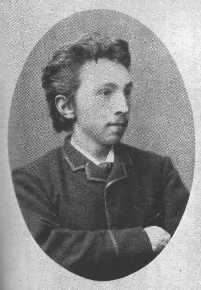
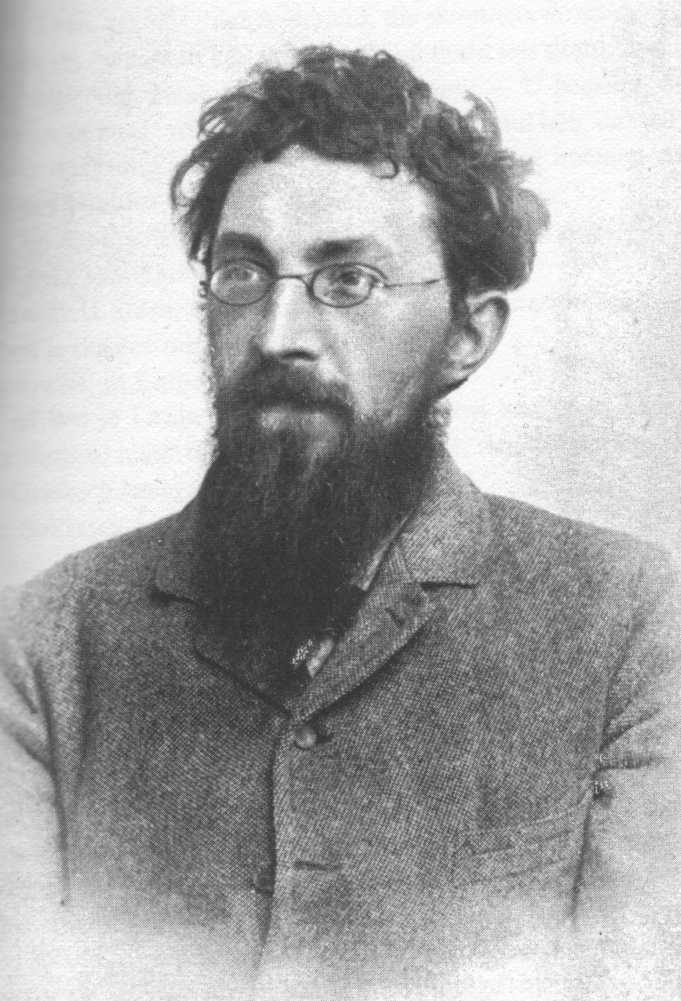
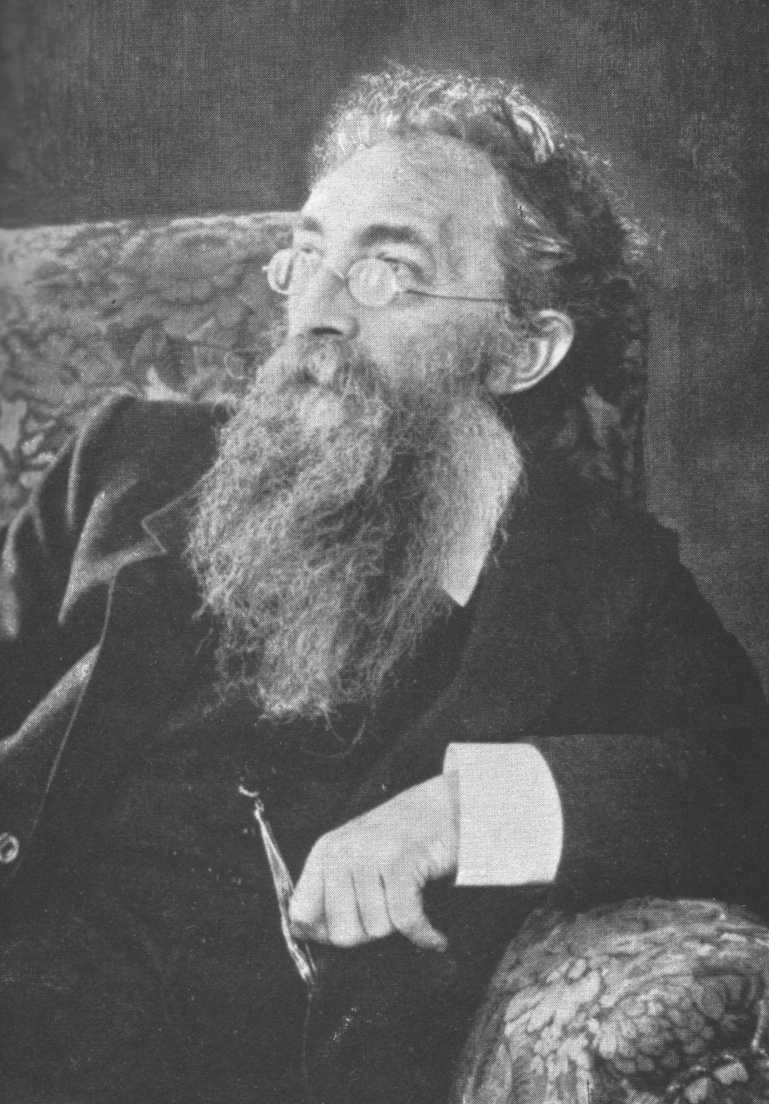
1 Preface Dutch poetry is little known outside of the Netherlands. The main cause lies in a natural language barrier. Also, few translations exist of Dutch poetry into other languages. This does not mean, however, that the country has only produced poetry of minor importance. These notes serve as an introduction to the life and poetry of Johan Andreas der Mouw, a major Dutch writer of the early 20th century. He is not widely read in Holland and, to my knowledge, his work has never been translated. Because it is one of the most important languages in this world, I have translated some of his sonnets into English. These appear elsewhere on this website. May they serve to acquaint an international readership with these poems and give them the recognition they deserve. 2 Youth Johan Andreas der Mouw was born on the 24th of July 1863, son of Anna Elisabeth Zillinger and Jacobus Cornelis der Mouw. His father was a small-time bookseller. His mother, intelligent and having a strong personality, was the centre of the family, being the one to whom young Johan, a sensitive and physically not too strong boy, could take refuge. Also, being a music teacher, she introduced Johan to this art. His grandmother was the other important figure to him. She read him stories from the Bible that introduced him to religion. A religious feeling was to stay with him all his life, though it underwent changes as we shall see later on. After Primary School, Johan went to Grammar School in 1877. We know little of these years, but in his poetry happy memories from these years sometimes resound. He followed classes in cosmography. It is thought that during these years he had a cosmic epiphany while looking at the stars and Milky Way in the night sky, an occurrance of which he speaks in his poems. In the year 1883 he goes to the University of Leiden where he reads Latin, Greek, philosophy and Sanskrit. Again, few details are known of his University years. He completed his studies in 1887 when he passed his doctoral exam. |
| J.A. DER MOUW BIOGRAPHY & INTRODUCTION TO HIS POETRY |
| 3 Teaching Years In 1888 he was appointed as teacher of Latin and Greek at Grammar School of Doetichem, while at the same time working on his dissertation, called "Quomodo Antiqui Naturam mirati sunt?" (How did the Ancients view nature?), which he finished in 1890. Some words about this dissertation are necessary as they show views of the author that are important to a proper understanding of the poetry he wrote in later life. As the early Greeks came from the east and conquered Greece, these people viewed life and nature as a unity, according to Der Mouw. Slowly this feeling of unity is replaced by dualism, as spirit and nature are separated. At the height of greek culture, the spirit is placed over nature and this spirtualism was strengthened in the days of Christianity. In modern times, Der Mouw argues, man and nature are seen as fully separate from each other. However, modern man still experiences a feeling of loss and has a latent wish to regain the feeling of being one with nature. In 1893 he marries Hendrika Wijnanda van Ernst. She is now his refuge, protectress and companion, much as his mother was in youth. Der Mouw and his wife wanted their marriage to be a Platonic relationship, viewing the sexual aspect as low and animalistic. Children were no option as Der Mouw thought of procreation as a purely selfish act. He had a pessimistic view of life and suffered from depressions which made him loathe life and wish for death as the sole solution. His wife knew that Der Mouw kept a bottle of chloral hydrate ready at all times. Not surprisingly his pessimism was echoed by the works of Schopenhauer that he read in these years. At the same time he found that he and Schopenhauer shared an enthusiasm for the ancient Indian writings such as the Veda's and Upanishads. In 1904 a conflict between Der Mouw and his Headmaster ends his teaching carreer. Der Mouw accuses the Headmaster of fraudulent behaviour with regards to Final Exams. The ensuing conflict comes to a head and Der Mouw sees no option but to empty the bottle of chloral hydrate. He is transfered to a hospital in Arnhem and survives. The press gets the wind of this attempted suicide and after a court case in which Der Mouw is convicted of slander he resigns his teaching post at the Grammar School of Doetichem. |
| 4 Continued Studies & The step towards Poetry After the disaster at Doetichem Der Mouw moves to The Hague, where he continues his philosophical studies while working as a private teacher. Slowly the thoughts of Der Mouw center upon two problems. Firstly: "How to bridge, using reasoning alone, the gap between the reality of my consciousness and the other person." Secondly: "Who am I? How do I know the subject that encompasses my entire being?" His studies occupy him in the years from 1905 to 1912 and, by his own confession, these studies are motivated by the religious feeling that was instilled in him during childhood. He loses his Christian faith as he objects to its anthropomorphic God, anthropocentric view of the world and dualism of life on earth and life in the here-after. In 1911 a crisis occurs in Der Mouw. It is thought that he started to doubt whether all his enquiries would ever yield the final answers he was looking for. He critcizes metaphysics as clouding the original mystical feelings of man and hiding them within a philosophical system. We see here a train of thought we already encountered in his dissertation. He reads the Veda's and Upanishads again and finds in them what he considers to be true mysticism that parallels the experiences of epiphany from his youth. Then comes the all-important realization: the metaphysical "I" is the same as the All-Encompassing, Infinite and Eternal Being and so he finds the unity between himself and the rest of creation he was looking for, as well as an answer to the question "Who am I?" Brahman now becomes the name for this unity that encompasses Der Mouw and creation at the same time. This realization he has to conquer and relive over and over again, each time experiencing the feeling of liberation it brings. Now the thought comes to him to express these insights in poetry, as scientific treatises are fully inappropriate to this end. In the following years, from 1913 to 1919, he devotes himself to writing his poetic works and continues as a private teacher. Der Mouw came into contact with the Dutch writer Frederik van Eeden, who recognized the poems as "real, from start to finish and very special." Van Eeden urged Der Mouw to publish his poetry. In the year 1918 several poems appeared in literary magazines. A publisher is found and writes to Der Mouw on the 3rd of July 1919: "Your book will be printed this week." On the 4th of July Der Mouw was found by his wife. He had lost consciousness while working in his study. He died on the 8th of July. On the 29th of July the first volume of poetry appears, called "Brahman I". The second volume ("Brahman II") appears in 1920. These notes are an abstract from "Biographische Aantekeningen" (Biographical Notes), written by Dr. A.M. Cram-Magre and published in J.A. der Mouw: "Volledig Dichtwerk" (Amsterdam, 1986) |
 |
 |
 |