|
Harp Seal Description Habitat Food Predators Reproduction Facts
Harp seals spend most of their lives in the cold, icy waters of the Artic seas. They also spend time on ice floes. Harp seals can be found all along the shores of the North Atlantic Ocean as well as the Arctic Ocean, from Russia to Greenland to Canada. Seals can dive to very great depths, up to 100 fathoms. They can also stay underwater for as long as fifteen minutes without coming up for air. Since harp seals live in the sea, it is not hard to imagine that their main food is fish. They eat small fish such as cod, anchovy, and smelt, as well as crustaceans like shrimp and crab. When they catch shellfish, they crush the shells with the flat teeth at the back of their mouths. They swallow their food in large chunks instead of chewing it.
The polar bear is an enemy of the harp seal. When a seal comes up through a breathing hole in the ice to get some air, a polar bear is often waiting to catch it. The polar bear’s paws are so strong that it usually only takes one smack to kill the seal. Other enemies of the harp seal include the killer whale and people. Hunters especially like the soft white fur of the baby harp seal and have killed great numbers of them by clubbing them to death. Laws have been passed to protect the seals, and now only natives of the Arctic are allowed to hunt them.
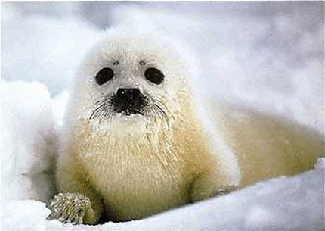
Seals breed in the spring. The babies are born about a year later, also in the spring. When they are born, the baby seals have pure white fur, which lasts for about two to three weeks. The white fur is not very warm, so the baby seals must stay with their mother until they grow a thicker, darker pelt that will keep them warm in the cold Arctic waters. A mother seal can always find her baby by its scent. The mother seal nurses her babies for about two to three weeks. The mother’s milk has lots of butterfat. This helps the babies grow fast and by the time they are finished nursing, the babies will have grown to a quarter of their adult weight.
|
Page created by Elaine
Rehm
Arcadia University 7/25/01
E-mail
us
| Home | Animals | Activities | Gallery | Resources | Credits |
 Harp
seals grow to be about 6 feet long and they can weigh up to 500 pounds. They
are part of a family of animals called pinnipeds.
Harp
seals grow to be about 6 feet long and they can weigh up to 500 pounds. They
are part of a family of animals called pinnipeds.