|
Top
Caribou
Scientific Name:
Rangifer tarandus
Description Habitat
Food Predators
Reproduction Facts
Description
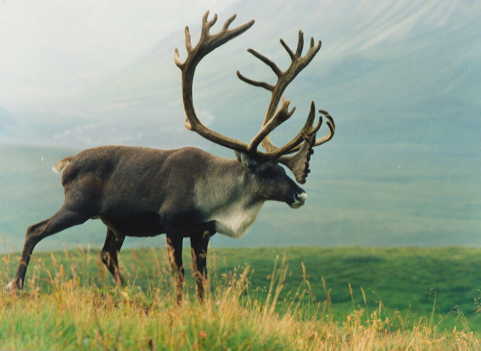 Caribou
are large animals that belong to the deer family. When they are fully
grown, males are about 6 to 8 feet tall, and females are about 4 to 6 feet
tall. Caribou can weigh from 200 to 700 pounds. Both males and females
grow antlers that can be up to 4 feet wide. Every year the caribou shed
their antlers and grow new ones. Caribou have very thick brown fur, which
helps to keep them warm. The males have a white mane on their
chests. The caribou's fur has special hair that can trap air. This
helps the caribou float while swimming through the rivers on their annual migration. Caribou have a wide
muzzle on their faces and wide
hooves. The hooves help them walk through the deep snow. They are
excellent swimmers and runners.
Caribou
are large animals that belong to the deer family. When they are fully
grown, males are about 6 to 8 feet tall, and females are about 4 to 6 feet
tall. Caribou can weigh from 200 to 700 pounds. Both males and females
grow antlers that can be up to 4 feet wide. Every year the caribou shed
their antlers and grow new ones. Caribou have very thick brown fur, which
helps to keep them warm. The males have a white mane on their
chests. The caribou's fur has special hair that can trap air. This
helps the caribou float while swimming through the rivers on their annual migration. Caribou have a wide
muzzle on their faces and wide
hooves. The hooves help them walk through the deep snow. They are
excellent swimmers and runners.
Return
to top
Habitat
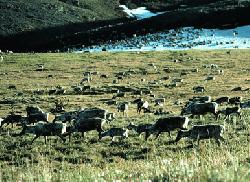 Caribou
live on the tundra in northern Canada, Alaska, and Greenland. They can
also be found in northern China, Russia, and Scandinavia. They live in
herds and migrate great distances every year. In late fall and winter,
caribou travel to the forests in the southern Arctic, and in summer, they
migrate northward to the tundra. Caribou are very noisy and make loud
grunting sounds as they travel. When they migrate, caribou use the same
trails that their ancestors have used for hundreds of years.
Caribou
live on the tundra in northern Canada, Alaska, and Greenland. They can
also be found in northern China, Russia, and Scandinavia. They live in
herds and migrate great distances every year. In late fall and winter,
caribou travel to the forests in the southern Arctic, and in summer, they
migrate northward to the tundra. Caribou are very noisy and make loud
grunting sounds as they travel. When they migrate, caribou use the same
trails that their ancestors have used for hundreds of years.
Return
to top
Food
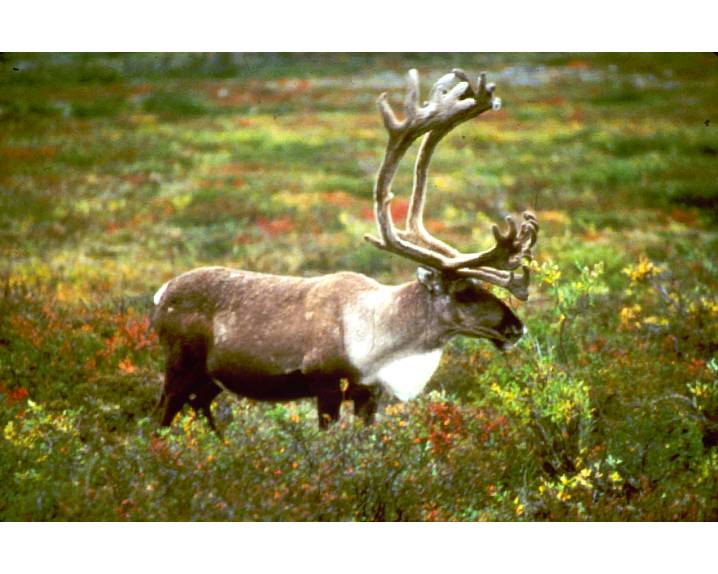
The main food of caribou is
lichen, a small, scaly plant that grows on
rocks and trees. They also eat mosses, grasses, tree shoots, mushrooms and
sedges. The caribou eats almost all day
long
Return
to top
Predators
Enemies of the caribou include wolves, lynxes, foxes, and grizzly bears.
Wolf packs often follow and attack a migrating herd. As the herd
scatters, they prey on the oldest, weakest, youngest or
pregnant animals. Sometimes eagles will swoop down from the sky and
attack young calves. Mosquitoes are a big problem for caribou.
Swarms of mosquitoes enter the noses, ears, and eyes of the
animals and suck large amounts of blood. Sometimes it drives the animals
wild.
Humans have also been enemies to the caribou. Although the
Inuits (Eskimos) hunt caribou and use all parts of the animal for food,
clothing, and tools, people who hunt caribou for sport have killed many of
them. Also, the oil spills and poisonous chemicals left behind by humans
working on modernizing the Arctic region have hurt the caribou.
Return
to top
Reproduction
Caribou mate in September and October and have their babies in May and
June. Females return to the same calving
grounds on the tundra each year to give birth. They go back to the place where
they were born. Since caribou mate for only one year, the mother raises
her baby alone.
Caribou have only one baby at a time. The baby is called a calf. A calf
can run about an hour and a half after it is born. It must be able to keep
up with the migrating herd.
Return
to top
Other
interesting facts
-
The male caribou is called a bull.
-
The female is
called a cow.
-
The
baby is called a calf.
-
The life span of the caribou is about ten years.
-
Caribou's antlers grow forward. They use their antlers like shovels to dig
through the snow for food. They also use them to defend against enemies.
Rival males sometimes use them to fight.
-
The caribou has a four-part stomach, which it uses to store chewed food as
a cud for later digestion.
-
When the caribou senses danger, it gives off a special scent that warns
other caribou to stay away.
-
The caribou has a keen sense of smell, but its eyesight is not as good.
Return
to top
|
