
 Death has always been a part of life and it is the prize everyone has to pay for the gift of life, nobody understood this better than the ancients, who lived in a time of wars, famines, wild animals, cold winters, diseases, and other threats.
|
Betra er lifðum en sé ólifðum, ey getr kvikr kú; eld sá ek upp brenna auðgum manni fyrir, en úti var dauðr fyr durum. Haltr ríðr hrossi, hjörð rekr handar vanr, daufr vegr ok dugir, blindr er betri en brenndr séi, nýtr manngi nás. Deyr fé, deyja frændr, deyr sjalfr it sama, en orðstírr deyr aldregi hveim er sér góðan getr. Deyr fé, deyja frændr, deyr salfr it sama, ek veit einn at aldrei deyr: dómr um dauðan hvern. |
It is better to live, even to live miserably; a living man can always get a cow. I saw fire consume the rich man's property, and death stood without his door. The halt can ride on horseback, the one-handed drive cattle; the deaf fight and be useful: to be blind is better than to be burnt: no ones gets good from a corpse. Cattle die, kindred die, we ourselves also die; but the fair fame never dies of him who has earned it. Cattle die, kindred die, we ourselves also die; but I know one thing that never dies, judgement on each one dead. |
|
Þat ræð ek þér it níunda, at þú náum bjargir, hvars þú á foldu finnr, hvárts eru sóttdauðir eða eru sædauðir eða eru vápndauðir verar. Laug skal gera, þeim er liðnir eru, þváa hendr ok höfuð, kemba ok þerra, áðr í kistu fari, ok biðja sælan sofa. |
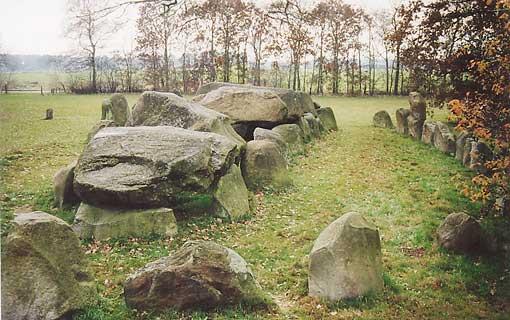
This is thee counsel ninthly: that thou corpses bury, wherever on the earth thou findest them, whether from sickness they have died, or from the sea, or are from weapons dead. Let a mound be raised for those departed; let their hands and head be washed, combed, and wiped dry, ere in the coffin they are laid: and pray for their happy sleep. |
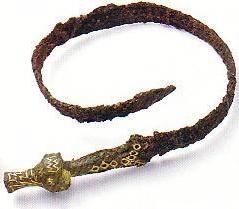 Cremation:
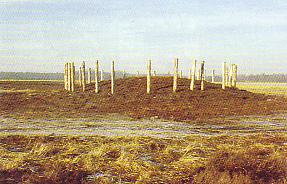 There were many different forms of cremation:
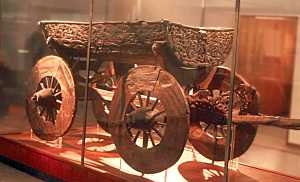 Charlemagne also introduced the so called "death-roads" (doodswegen) over which the dead had to be transported to the cemetary because using normal roads for this was considered to bring bad luck.
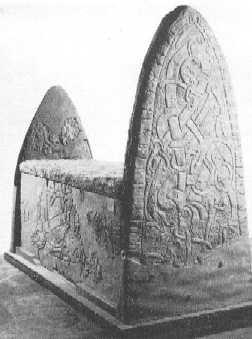
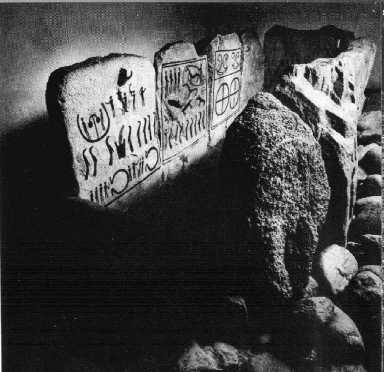
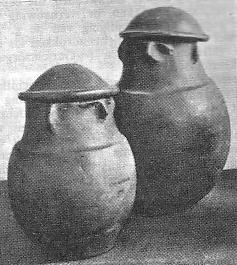 In a burial the personal belongings of the dead person were laid besides him; grave gifts were very common in Germanic culture and many graves often contained valuable objects like jewellry and weapons.
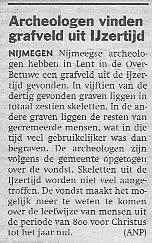 The newspaper article to the right was published in the "Metro" on April 17, 2001.