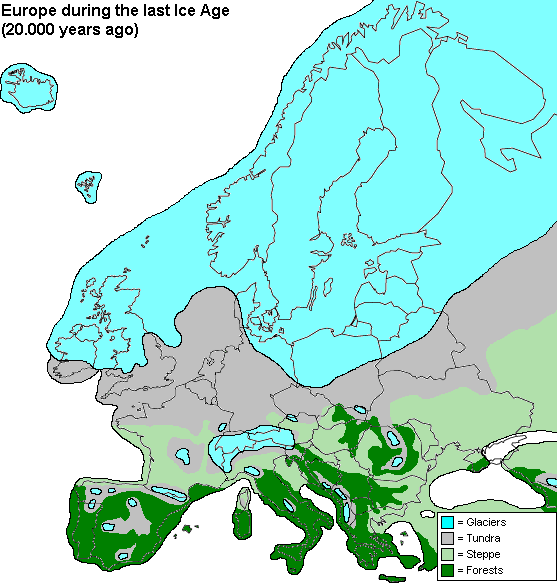

|
Ár var alda, það er ekki var, var-a sandur né sær né svalar unnir; jörð fannst æva né upphiminn, gap var ginnunga en gras hvergi. |
In ancient times, when Ymir lived, there was sand nor sea nor cold waves; earth did not exist nor the heavens above, only a yawning void and grass nowhere. |
|
Þá gengu regin öll á rökstóla, ginnheilög goð, og um það gættust; nótt og niðjum nöfn um gáfu, morgun hétu og miðjan dag, undorn og aftan, árum að telja. |
Then went the Regin all to their judgement seats, the all-holy gods, thereon held council: to night and to the waning moon they gave names; morning they named, and mid-day, afternoon and evening, whereby to reckon years. |
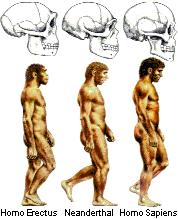 Primates can be divided into monkeys (Mandrills, Baboons, etc.) and apes (Gorillas, Chimpanzees, Humans, etc.), the apes (also known as Anthropoids) are more intelligent than monkeys and are very closely related to eachother, even more than many humans wish to admit; for instance the genetical similarities between the human and its closest relative the chimpanzee are 99%.
 Less than 2 million years ago the Homo erectus appeared, its origins are still debated but it is believed to have evolved out of the Homo habilis, the Homo erectus was taller than the modern human but had a smaller brain, it was also the first type of human to migrate out of Africa into the rest of the world; around 1,8 to 1,6 million years ago the Homo erectus migrated from Africa into Arabia and the Middle East and along the coasts of the Indian ocean into tropical Asia, when the Homo erectus discovered how to use fire it also colonized colder parts of the world like northern Asia and Europe.
|
Uns þrír kómu úr því liði öflgir og ástkir æsir að húsi, fundu á landi lítt megandi Ask og Emblu örlöglausa. Önd þau né áttu, óð þau né höfðu, lá né læti né litu góða; önd gaf Óðinn, óð gaf Hænir, lá gaf Lóður og litu góða. |
Until there came three mighty and benevolent Æsir to the world from their houses, they found on earth, nearly powerless, Ask and Embla, who were without destiny. They had no Spirit, no sense, no blood, no ability to walk, no good colour. Spirit gave Odin, sense gave Hoenir, blood gave Lodur, and good colour. |
 In many places the Homo sapiens cro-magnon replaced the Homo sapiens neanderthalensis, although the Neanderthal is often considered to have been a modern human belonging to the Homo sapiens branch there is still some debate about that because despite its many similarities with us it was anatomically not entirely the same as the modern humans that inhabit this earth today.
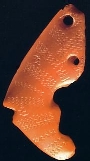 During the end of the Paleolithicum ("Old Stone Age") the Cro-Magnons entered northern Europe and claimed the land for future generations, they are believed to have entered from the west via France but new theories suggest that the northern Europeans are descendants of a different group of Cro-Magnons who came from eastern Europe or the Balkans, but this is still a much debated topic.
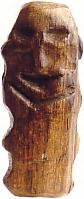 Very few is known about the prehistoric religion of northwestern Europe but most of it has probably been preserved in the later Germanic religion, even today there are many superstitions and rituals that may have very ancient roots, like for instance throwing a coin into a pond or fountain and then making a wish that should be kept secret to make it come true (bog- and water offerings).
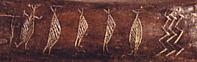 During the Mesolithic period people buried their dead with red ochre on their bones, a practice that is believed to be very old and continued into the Neolithic period, some time after the burial the skeleton was probably exhumed again and painted with red ochre after which it was laid in its final resting place, this may have had a symbolical meaning in which the body was given "new blood" (red ochre) to allow the deceased person to reincarnate again.
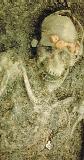 One of the first large Nordic cultures was the Ertebolle culture (also known as Ertebølle or Ellerbek), this culture came into existence at the end of the Mesolithic period around 6000BC and lasted to 3500BC, though this dates are still debated.