


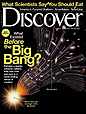
Here's why. A myth is a person thing or idea whose existance in not verifyable, it lies in the imagination. A Theory is something that attempts to describe the world around us by making predictions that may be proven false but hasn't been yet. You can never prove a theory to be true, but if the smallest thing doesn't agree with that theory, it is disproven and a new theory must be made to make up for the discrepancy. The BBT may have been a myth when it was first concieved, but in the time it took for it to go from idea to myth, it became a hypohthesis. A Hypothesis is an idea that is able to make predictions but hasn't been tested, when tested, and if proved false it remains a hypothesis. If it passes it's initial test it becomes a theory, but then must continue to pass every other experiment or test thrown at it to remain an accurate model.
The Big Bang passed its first test so it is a theory and will remain a theory. There have been discrepancies found, but other 'models', (i.e. other threories) have been made in conjunction with the Big Bang so as to adjust for the discrepancies.
In recent years another 'theory' has come out that borders on the fine line between myth and theory. It's calle String Theory I won't get into details here, but I will tell you that if string 'theory' is accurate we have not only the four dimensions we're familiar with (that includes time) but a grand total of 11 different dimensions. The problem with string theory (and this is not something I know for sure since I don't have the mathmatical capabilities to research it) is that it doesn't yet have any predictions which are testable, it is at the moment just a lot of really complicated math. So, I sent a fox among chickens here in the EPS building with the gradstudents; should it be called string theory, or string myth? I have to go to class (phys. 213) and the discussion is still going on so I'll post the opinions of my superiors later on. Mr. Sexson, if you could please add your comments on the subject (or anyone else for that matter, I'd greatly appreciate it.
Above is a link to an article about a hypothesis which may be an explanation for what caused the Big Bang. Unlike the String Thing, this has actual predictions which can be tested, but since it's a work in progress, they haven't been tested yet.


