| Man
has always acted as an extinction factor for many animals.
However, it was in the XIX century that the problem
started to worry biologist all over the world. The
european expansion over to North America, after 1860, was
side to side with an amazing killing of all its natural life.
About that
time, the Corrier-pigeon was one of the most numerous bird on
Earth. Birds would take 3 days to fly over an area, at a
rate of 3 million per hour!! Less than 100 years latter,
in 1914, the last one died in the Cincinnati Zoo.
Another sad
american story happened with the Buffaloes. At first
there were 30 to 40 million of those animals, even if the
Indians hunted them for meat and furs.
With the
arrival of the europeans, over 2,5 millions were killed
every year, between 1870 and 1875, just for their tongues
and fur. In 1900 only 500 were alive in the wild.
The
survival of an increasing number of animals is threatened,
mostly by the destruction of their natural habitats.
Already in
1988 was known that 4589 species were threatened with
extinction. This number included 555 mammals, 1073 birds,
186 reptiles, 54 amphibians, 596 fishes and 2125 invertebrates.
At the
current rate of animal extinction, hundreds of
vertebrates and about a million insects will be extinct
in a few years.
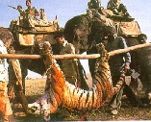
The main causes of animal extinction, besides destruction
of habitats, are hunting and competition with domestic
animals.
One of the groups in most peril is our own, the Primates,
with most if not all, of its species endangered.
These are
some of the strange and beautiful animals that we are at
risk of losing forever, if we don't do anything to
prevent it:
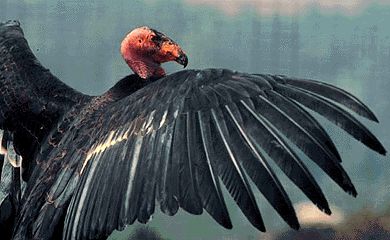
in North
America, the Condor, one the largest birds of prey in the
world. This wonderful bird was at the brink of extinction
but a careful project to save it is starting to show some
results. Don't think it's all over, the Condor is not
"out of the woods" yet;
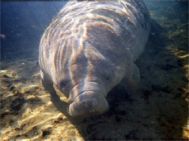 in South
America, the strange Manatee, that the Indians consider a
kind of mermaid of the rivers. This slow moving and
peaceful mammal feeds on the river herbs, mostly in
shallow waters. Because of that, can easilly be hurt by
motor boats, the main reason for its decline; in South
America, the strange Manatee, that the Indians consider a
kind of mermaid of the rivers. This slow moving and
peaceful mammal feeds on the river herbs, mostly in
shallow waters. Because of that, can easilly be hurt by
motor boats, the main reason for its decline;
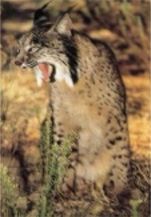
in western Europe,
the Lynx, the most endangered feline of the
planet. This small wild cat was very common in eastern
Europe, namelly Portugal and Spain, but today, due to
habitat destruction and hunt, it's almost extinct. In the
90's there were only about 100 of them in the wild;
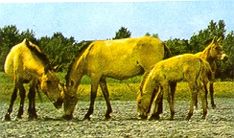 in
eastern Europe, the Przewalski Horse, the only real wild horse left
and the oldest member of their family. The competition with cattle is
the main reason why these horses are on the verge of extintion; in
eastern Europe, the Przewalski Horse, the only real wild horse left
and the oldest member of their family. The competition with cattle is
the main reason why these horses are on the verge of extintion;
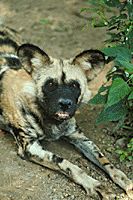 in Africa,
the Mabeco or Wild African Dog, another of the most
endangered mammal predators. Mabecos live in packs, like
most canines, with a very organised social structure. All
the members of the pack are very close, helping to take
care of the young ones or hunt. The food is shared by all
animals, even the ones who can't hunt anymore; in Africa,
the Mabeco or Wild African Dog, another of the most
endangered mammal predators. Mabecos live in packs, like
most canines, with a very organised social structure. All
the members of the pack are very close, helping to take
care of the young ones or hunt. The food is shared by all
animals, even the ones who can't hunt anymore;
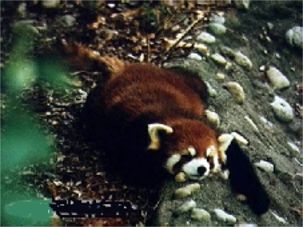
in Asia, the Red
Panda, a smaller relative of the so well known Giant
Panda. This beautiful and shy animal spends most of its
life on trees, feeding on leaves and fruits. Once again,
the destruction of the rain forests where it lives is
causing the decline of this, and many other, species;
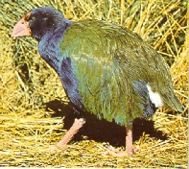
in
New Zealand, the Takahe, a wonderfully colored non-flying bird. This
bird was considered extinct for over 50 years, until in 1948 a small
population was found in a remote mountain area. The destruction of
their habitat and the attack of their nests by domestic cats are the
causes of these birds decline.
|
 In our busy every day
life we don't think that a few less trees or the
extinction of some obscure insect, known only to some
scientists "with nothing better to do", can
affect our well being. But can we trust it to be so?
In our busy every day
life we don't think that a few less trees or the
extinction of some obscure insect, known only to some
scientists "with nothing better to do", can
affect our well being. But can we trust it to be so?
 Plants
 Biology
