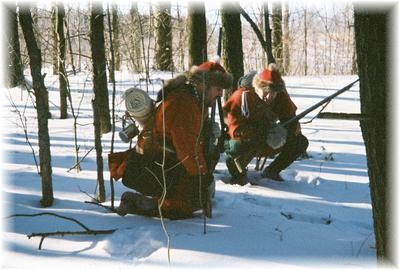
The Winter Scout
Soldiers typically used snowshoes for easier movement upon the snow. At times skates were even used by troops on winter scouts; "I [Major Robert Rogers] sent Lieutenant Phillips with fifteen men, as an advanced guard, some of whom went before him on scates…."2 Ice creepers were yet another means of making travel on ice easier.3 Equipment and extra provisions were often toted on toboggans or hand sleighs.
Encamping detachments in the winter was done by a couple different methods. Lord Loudoun described one of the ways detachments could encamp in a plan for a winter attack on Fort Ticonderoga. "As soon as you take up your Ground, they make Bush Tents of Pine Boughs, two opposite to each other, leaving a Space between them in which they make great Fires, and the men in each of the Tents lie with their Feet to the Fires in which Situation they are tolerably comfortable."4 John Knox recorded how a detachment in Nova Scotia spent a night out in the winter. "We made beds of spruce tops, laid in a circular form, with a fire in the center, and shaded round the windward side with larger branches: thus we lay after the manner of the Indians."5 Making beds of branches and leaves wasn’t uncommon, Capt. Jeduthan Baldwin on a scout near Lake George in March of 1756 wrote; "Lodgd not on feather beds but on hemlock boughs."6 Anne Grant wrote a third method in her memoirs when she describes a hunting party of British troops that set out from Fort Ontario in the month of February. She wrote; they were "provided with a competent supply of bear-skins, blankets, &c. to make their projected wigwams comfortable."7
Read this
article on keeping warm 
55th of Foot Light Infantry Company Website Menu

