|
|
Women and Work Though
some view women's emergence in the modern day paid workforce as the
beginning of them 'working', all through history women have done work of
some sort. Whether it was collecting food or working in gardens growing
crops for their families, creating fabrics, or in the home cooking,
cleaning, and raising families, women have always worked as hard if not
harder than any man in a recognised job. They have not always been
recognised as doing such however.
A Woman's role in society has almost always been taken for granted. The
husband who considers himself the 'bread winner' of the family has often
overlooked just how hard his wife is working to keep his house and family
in happy order. Appreciated or not though, over time women have sacrificed
a lot in their lives for the sake of their families. Like with anything,
there comes a time when one wants to be recognised- maybe even
congratulated or respected for their effort. Over time women have
recognised their need for not only appreciation, but also financial
independence and equal gender rights. They have rebelled against their
limited societal expectations and expanded their roles and their rights,
giving women of today freedom and choice, not only in the workplace but in
many other areas too.
The first event to change the course of women's working life (away from
the home) came with one of the most significant and influential events of
the last few centuries- the industrial revolution. This changed everyone's
working lives, lifestyles and social conditions, and was really the roots
of today's modern world of technology.
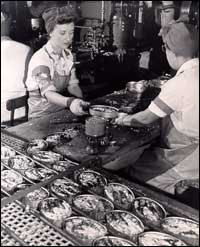
In 1861 more than a quarter of women over fifteen was working, often doing
13 hour shifts, with only Saturday afternoons and Sundays off. This posed
a problem which still exists today- balancing work with looking after a
family. Women with babies either left them at home with slightly older
children or with other women unable to work. Usually babies who were too
loud or distraught being away from their mothers for long periods were
given 'Godfrey's Cordial'- which contained opium and was highly addictive.
Many babies died from this. Though family and other issues were used as
arguments for women not to work at all, they stayed in the factories
because they needed to make money. Women were also limited in the work they were allowed to do. During the 1800's and early 1900's women's roles and rights in the workforce gradually progressed. In the beginning, while some laws were made to try and improve workplace conditions for women, these laws were often much more restricting than liberating. British parliament passed laws restricting women from 'skilled jobs'. While laws were passed in the interest of women and girl's ( as young as 6 years) safety, they were all generally overworked in what today would be considered as terrible working conditions. Women were also limited to low paying jobs. |
|
|
|