
|
|
Feminist Movement in the 1970s The Feminist Movement of the 1970s, also known as the Second Wave Feminist Movement, provided the foundations for Feminism today. Traditional attitudes and women’s status in society were being challenged more than ever. 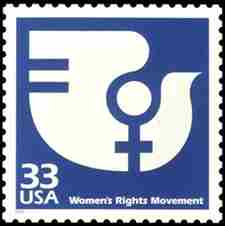 Equal Rights AmendmentAfter women were granted the right to vote in the United States, in the 1972 Equal Rights Amendment (ERA), led by female politicians like U.S. representative Bella Abzug of New York and the National Organization for Women (NOW), women led massive demonstrations, and focused on gaining other rights for women, and prohibiting all inequalities that still existed in society between men and women. The ERA supporters campaigned to gain the passage of the amendment at the state level. Opponents of the ERA such as the Conservative politicians and organizations claimed that a legal doctrine of equality threatened to abolish traditional differences between men and women and that it would destroy the distinct roles men and women play in their society. In 1982 the ERA failed to gain amendment when only 35 out of the required 38 states had passed the measure. The
Battered Women’s Movement The 1970s Battered Women’s Movement tackled the issue of domestic violence and rape. The feminists, community activists and women who have experienced the horror of rape and domestic violence, sought to improve the situation. The movement provided shelters for the victims. Feminism and ArtFemale poets, writers, painters, scholars, critics and teachers also began to gain more recognition in the 1970s. Works by women artists began to be represented in galleries and museums. The 1970s Lesbian MovementThe Lesbian Movement was another radical movement taking place in the 2nd Wave Feminist Movement, perhaps the most remarkable. Lesbians who were active in previous movements such as the Civil Rights Movement, anti-war and peace struggles, student movements and feminism, started to turn attention towards their own direction, focusing on Lesbian issues. They worked to forge against their oppression as women and lesbians. These radical lesbians did not emphasize the simple question of sexual object choice, lifestyle, or assimilation into the mainstream heterosexual society. Their area of focus extended to the field of politics – they aimed to deconstruct, decentre and destabilise the patriarchal society. Political actions were organised by these Lesbians to criticise homophobia within the women’s movement in the 1970s. The political strategies they undertook included “creating the womyn’s culture”, in which they recreated society through music, art and literature; “rewriting language”, in which they replaced women with wimmin, womon and womyn. Some of the key organizations formed during the movement were: Chicago Lesbian Liberation (1971 – 1974), the Lesbian Separatist Group etc. Today, many women active in the 1970s lesbian feminism turned to other projects, ranging from music to writing.
|
|
|
|
|
|